
Panoramic view from Grandfather Mountain: ridge after ridge of the Blue Ridge fading into the distance above a green valley and lake
1 Corinthians, Bible Studies, Spiritual Healing

The Frame and the Masterpiece

Reflections on 1 Corinthians 11:12

Every fine line painted, every tendril curled. If He cared that much for a single flower, He cares for every detail of you.

“For as woman came from man, so also man is born of woman. But everything comes from God.” (1 Corinthians 11:12, NIV)

For ten verses Paul has been talking about heads, hair, and coverings, and for two thousand years people have argued over what that means we should wear. But in verses 11 and 12 Paul does something we often rush past. He says “nevertheless,” and lifts our eyes above the custom to the Source of it all. Woman came from man; every man since has come through a woman; and everything comes from God. This verse is not finally about what we put on our heads. It is about who our God is.

To see why, we have to go back to the beginning, and to why there was a beginning at all.

An answer the universe needed

Before this world was made, lies had been told about God by one who knew Him well and chose to misrepresent Him. Satan insisted he was Christ’s equal. If there was no difference between them, why was he shut out of God’s counsels? Those lies were no small matter. Left unanswered, they could have destroyed the harmony of the entire universe. For the sake of all His creation, God needed to reveal Himself as fully as He possibly could.

Creation was that answer. This world became the palette, the storyboard, the book in which God would show the angels and every watching world who He truly is. And the first thing it showed was that Christ is no angel. No created being could speak a world into existence. At Creation, Christ revealed that He was, and is, God.

The God of every leaf

Look at the care in it. God is not simply powerful, blowing everything into place and walking away. In the single day He made the plant life, every beautiful detail of every leaf and flower was attended to. The power was magnificent, but so was the charm, the beauty, and the wisdom of a God who put so much of Himself into it all. If He cared that much for a leaf, He cares for every detail of you.

The frame and the masterpiece

Day by day the story built toward its crowning act. Everything else, the light, the land, the seas, every creature, was the frame. Man was the masterpiece, the most complete revelation of God’s character that He could give to His created beings. Adam was formed from the dust of the very earth he would live on, and God breathed into him the breath of life (Genesis 2:7). He was full grown in body, but young in heart and mind, placed right into the middle of a conflict he did not yet understand.

Then God did something remarkable. He took Eve from Adam, the only person ever to come into being that way, so that the same breath of life given to Adam would be shared by her. She was like him in every way, yet her own person, free to think and choose as she would.

What does that tell us about God? The same, yet very different. Christ came forth from the Father (John 8:42), yet He is fully God (John 1:1), not an extension of the Father but a real Person acting on His own. We see a small picture of it in our own children: they come from us, but they become who they choose to become.

Back to Paul

Eve came from Adam, but every man since has come through a woman. Man does not rise above woman. They share completely in everything, and neither can grow into all it was meant to be without the other, or without the God from whom we both came. That is not a rule imposed on us; it is the natural law of how relationships work, written into the way we were made. When we honor each other, we honor God’s answer to the lies told about Him. When we lord it over each other, we contradict it.

So how do we usually read the Creation story? We blast right past the big finale to get to the fall, or we blow it all off as a fairy tale. But there is something truly huge here. Every detail matters, because every detail is God telling us who He is.

The next time you read Genesis 1 and 2, slow down. Ask the Holy Spirit to sit with you, as He sits with me when I try to put these thoughts into words. Read it as the answer God gave the whole universe, and the love story He is still telling to you.


A wooden boardwalk through bare winter woods, two railings running side by side with one path between them
1 Corinthians, Bible Studies, Spiritual Healing

Two Halves Made Whole

Reflections on 1 Corinthians 11:11

A wooden boardwalk through bare winter woods, two railings running side by side with one path between them
Two rails, side by side the whole way, never merging, holding one path between them. “In the Lord woman is not independent of man, nor is man independent of woman.”

“Nevertheless, in the Lord woman is not independent of man, nor is man independent of woman.” (1 Corinthians 11:11, NIV)

Reading this verse across the translations, one phrase keeps showing up: in the Lord. The NEB says it beautifully: “in Christ’s fellowship woman is as essential to man as man to woman.” The Living Bible puts it simply: in God’s plan, men and women need each other. The Remedy carries it further. In God’s design, and in unity with Him, husband and wife are united in an intimate bond of love and trust.

One version did not sit right with me. Phillips says that in the sight of the Lord neither man nor woman has any separate existence. But Paul is not erasing the two people. The whole beauty of the verse is that two distinct persons, made differently, complete one another.

Made to complete each other

This is the perfection in the truth that “the two shall become one flesh” (Genesis 2:24). We are different in how our bodies were made, in how our minds process information, and in how we relate emotionally to life. There is a balance we give to each other. Two working, happy, healthy minds become more together than either could be without the other.

When you are looking for your “other half” for life, it is not the heat of the moment that makes the union last. It is not the draw to a pleasing look or body type. What makes a good fit for a lifetime is a mate who fills in where you lack. Your weaknesses are his strengths, and his weaknesses are yours. The rest comes over time as respect grows.

Women are drawn in by care for the heart. Men notice the view first; that is simply how they are made. But often what catches a man’s eye is the inner light of a beautiful soul shining through to the outside. If nothing catches his eye, he will never look deeper. A man who walks with Christ, though, doesn’t stop at the view. He comes to find the mind and soul even more attractive. A man without Christ is only seeking something to own for his pleasure, with no regard for the heart and mind of the woman.

It takes three

To truly become one takes a third party: Christ. Without His life in us, healing the sin-sick condition we were born with, a true union is impossible. The life of Christ in us is the glue that joins two into one. It makes the one they become more than either could ever be alone. As Solomon said, a cord of three strands is not quickly broken (Ecclesiastes 4:12).

This is the natural law of relationships, the true Law of Love in marriage. The husband has Christ as his head, the wife has her husband, and Christ has the Father as His head (1 Corinthians 11:3). That is the order God designed for a happy life.

Don’t settle halfway up the mountain

No matter how healthy we are, emotionally, mentally, or physically, alone we are only half of what we could be. But to marry poorly is to doom yourself to a mediocre existence. Even with Christ in your life, trying to fit together two halves that don’t complement each other leads to an unremarkable union, one that brings second-rate gifts to the cause of Christ. He will still lead us onward and upward. But the journey is so much richer when the one we travel with is our true soulmate, able to share and complete us well, and we them.

Who you join your life to is one of the most important questions you will ever answer. So spend more time with the Lord. Take the time to really get to know the person you’re with. Discover their heart, and let the inner beauty of their soul dazzle you with the invitation to spend a lifetime exploring its depths. That is the work of a lifetime, and a joy to do. And be that someone for them too: open, honest, and free to become more.

Become whole first

This is the life Christ is calling you to. But don’t sit around waiting for the prince of your dreams to suddenly appear. Work now to make your life as strong and whole as it can be without your completing other half before— Before what? That is for you and the Lord to decide. Without putting in your time with Christ, you will never become the person who fits the full life He has for you, with the other half who fits you perfectly.

Walking the road together

Dara walking a railed mountain trail under rhododendron, her friend George a step behind, both with walking sticks
My dear friend George walking the trail with me, years ago, with Michael behind the camera as always. George has since gone to his rest, and I still miss him.

Paul’s “in the Lord” reaches past marriage, too. In Christ’s fellowship we were never meant to walk alone. He gives us friends who walk the road beside us, and He Himself is the Friend who never leaves.

Every true union begins with our friendship with Him.

1 Corinthians, Bible Studies, Spiritual Healing

Made from, Made for

Reflections on 1 Corinthians 11:8–9

Two large palm fronds rising side by side from a single stem, lit from behind
Two fronds rising from one stem, each its own shape, both drawn from the same source. “As woman came from man, so also man is born of woman. But everything comes from God.”

“For man did not come from woman, but woman came from man; neither was man created for woman, but woman for man.” (NIV)

These two verses have been used for centuries to put women in their place. I don’t believe that is what Paul is doing here at all. This is not a bunch of rules on how to address a husband or how a woman should dress; that would be petty and not worth a place like this in the Scriptures. This is a conversation, given under inspiration, about the natural laws of relationship between a husband and wife – laws that, if ignored, will cause strife and pain.

A Picture of the Godhead

God created man a social being; he needed a companion to share his life with. But God was also doing something more. In the creation of man and woman He was demonstrating the relationship between Christ, His Father and the Holy Spirit. Christ came out of God, and after that all other created beings, worlds, the entire universe came from Christ. In the same way Eve, woman, drew her original life from Adam.

Yet Adam has no ability to conceive and bear children. That is what woman does, with the cooperation of man. Every man since Adam has come through a woman – Paul says exactly this a few verses later: “as woman came from man, so also man is born of woman. But everything comes from God” (1 Corinthians 11:12). God is revealing Himself in this. And here is the beautiful part: this was the way God planned to reveal Himself before the fall, so sin never marred this part of the illustration. Every child born is still a small sermon about where life comes from.

The Lies It Answered

Satan was already spreading lies about the Godhead. He had access to and knowledge of the relationship between them that no other angel had witnessed, and there were no other witnesses to refute what he said. The creation of Adam and Eve, two becoming one flesh, one in heart, mind and purpose, gave the universe something it could see for itself: an unmarred representation of the three in one.

The Most Important Choice

How does this relate to us today, after sin has destroyed the perfection of God’s creation? Marriage is the most important relationship we form in this life. No one else can have the influence a married couple have on each other, for good or ill. A man who lets God be his head will begin to reflect the character of Christ – it is a law of worship that cannot be avoided. The woman who accepts him as her head will in the same manner begin to reflect his character, and he will mirror hers. The two become one.

This is why God said, “It is not good for the man to be alone. I will make a helper suitable for him” (Genesis 2:18). Man needed woman, and she was created to fill that place in his life – to grow into, mature and become exactly the partner for him. As you spend years with a person, loving and caring for them, you develop traits to fit them best, to please them. You become an extension of each other. And sadly, this choice is often made in the heat of the moment, with little thought of what it will do to our personality, character and happiness over a lifetime.

Made For Growing

So what does it mean that woman was made “for man”? Not for his convenience. There would have been no way for Adam or Eve to mature into loving, dependable creations of God without someone to care about. We need people to care for, those we can do for and make happy. Without that, life would be completely self-focused, and a self-focused life is not an expanding or happy life.

One translation, The Remedy, puts it beautifully: woman was created “to help man enter into the fullness of Godlike Love by being the selfless recipient of man’s humble, loving service.” Eve gave Adam someone to love, and in loving her he became more like God. And the same was true for her. Neither is the servant of the other; both grow by giving. That is the circle of Love God built into the very first home.

1 Corinthians, Bible Studies, Spiritual Healing

A Covering the Angels Can See

Reflections on 1 Corinthians 11:10

Close-up of a white daisy, its golden center made of hundreds of tiny florets arranged in spirals, glowing with soft light
The golden heart of a daisy is not one flower but hundreds, each tiny floret complete in itself, all spiraling together as one bloom. Two become one and remain themselves.

“It is for this reason that a woman ought to have authority over her own head, because of the angels.” (1 Corinthians 11:10, NIV)

Why the angels?

Of all the strange verses in this chapter, this one seems the strangest. What do angels have to do with what a woman wears on her head? The translators can’t agree on what she wears—some say a symbol of subjection, others a sign of authority—but every one of them keeps the angels. They are watching.

Looked at through the eyes of Love, it is not hard to understand. Christ intended the relationship between Adam and Eve to show the Love relationship within the Godhead, and how that Love flows out into all creation in the care given to each created being. Paul says elsewhere that we have been made a theater to the world, to angels and to men (1 Corinthians 4:9). Woman’s relationship to her husband is God’s character of Love played out on that stage.

Growing into one

As Eve honored Adam in her heart and mind, the angels could see her growing more like her husband, taking on his traits of character. And since Adam’s head is Christ, and he mirrored the Glory of Christ—His character—that was the character Eve was drawing into as she became one with her husband. Not just joining him, but being drawn into something that called to her. Being drawn in usually means losing yourself, but in perfect Love you don’t. Love encourages you to be who you are.

This is what being one with someone is like. You share your hearts only to discover you were already thinking along the same lines. You don’t need to pick up the phone and check with your husband on most things, because you already know you are on the same page about the foundations of your life together. The answer already lives in your heart and mind. His loving presence fills you even when he is away. You are covered with his love and care—all the little things fixed, his hands always busy doing something to please you, not because you asked, just because he wants to make you happy. And that love is returned in all you do to make his home a pleasant, welcoming place for him.

Love speaks in different ways, though. My husband is a fixer. He knows that because of the confusion of my upbringing and the abuse I suffered, when I am in emotional turmoil I cannot tolerate clutter or brokenness around me; I just start cleaning. So when something has gut-punched me, sweet little things done to straighten and put in order calm me quicker than a hug. Jumping in with me to clean a closet while I sort out my hurt is the best way he can support me. Other husbands may speak their love in words, or with flowers. Do not judge your relationship by someone else’s. Allow your husband to express his love, and be willing to see it in who he is. Nurture the one you have. It is good, and it is perfect for you.

This is the covering a woman wears. His authority is not laid on her from outside; it has become her own. His character, his love for her, is part of who she is. It is not domination or subjection, simply the natural law of relationship: you become like the one you worship and admire. So her head shines out of her eyes. What the angels see is love drawing two separate people to work and act as one while each remains fully themselves. All the specialness of you is still in you, and you glow from the inside out with the personality that is uniquely yours. The two have become one, but remain themselves.

The answer to Satan’s lies

This union was God’s answer to the accusations against Him. God is Love. Everything He does is for the best interest of His whole creation, and because Love flows from Him throughout His universe, all creation thrives—growing, becoming more, happy in who they are, wanting to bless everyone in their sphere of influence. A man uplifting his wife through loving care was how God planned to show the angels how His own Love works.

Very little time was given for that to play out. Then Adam fell, and everything changed. He threw Eve under the bus: Why did You make her? It was her fault—and Yours. It was the first self-protecting act the universe and the angels had ever seen. How shocking it must have been to watch the man who had been willing to die with her lose all love and care for her the moment he broke trust with Christ. All that was left was fear of the future and the need to protect himself.

Seeing Him again

It has taken nearly six thousand years of healing for humanity to be able to view God again, to see the truth about Him. But we can begin to see Him again—and as we do, we become like the God we worship. The angels are still watching, waiting to see that broken picture restored. They saw the first act of self-protection. Now they are seeing damaged humanity healed, acting in love for others without regard for self, and they rejoice (Luke 15:10). What they long to see on our heads is not a piece of cloth, but Love.

Questions to sit with

  • If the angels looked at your closest relationship today, what would they learn about God?
  • Where have you felt that being one with someone made you more yourself, not less?
  • When fear pushes you toward self-protection, what helps you see God’s Love again?
1 Corinthians, Bible Studies, Spiritual Healing

Nailed in Place by Love

Reflections on 1 Corinthians 11:6–7

“For if a woman does not cover her head, she might as well have her hair cut off; but if it is a disgrace for a woman to have her hair cut off or her head shaved, then she should cover her head. A man ought not to cover his head, since he is the image and glory of God; but woman is the glory of man.” (1 Corinthians 11:6–7, NIV)

A hard verse, and a harder morning

I will be honest. When I sat down with verse 6, the paraphrases stirred something hard in me. One of them says such a woman should “advertise the fact that she is selfish and not on God’s team.” My first pages that morning came out the same way: selfish, shameful, a disgrace. I was judging “that woman” as harshly as anyone could.

Then it dawned on me. I was that woman.

I came into my adult life carrying a great deal of hurt. So many times I shamed myself and realized I had acted like a fool. A young woman just starting out, confused, with every possible outcome in front of her: at any point I could have started choosing very badly and wrecked my whole life. The harsh words on my page were not God’s words. They were the old voice of shame I had once used on myself.

What God does with “that woman”

Look at what Paul does not say. He does not say cast her out, or even discipline her. The consequences of refusing God’s design are self-evident; they play out on their own, because that is how a natural law works. You cannot step around it, because you do it to yourself. And yet this is not a lukewarm soul the Lord gives up on. This is someone He allows to remain in full standing among His people while she plays out her choices, and while He keeps working.

He does not leave you, but He does allow you your consequences. That is how we learn and grow. I know, because that is what He did with me.

The nails

The Lord kept me with a man who could walk this walk with me. And what held me there was not that I understood headship or submission. I didn’t. What kept my feet nailed to the floor was the compassion in my heart for another human being. He loved me so freely that I could not bear to hurt him by leaving when he didn’t want me to go. So I stayed.

I think of the other nails. It was not the nails that held Christ on the cross. He already knew what love was, and love kept Him there. The little I knew of love at that time was the man beside me, who had never done anything to deserve to be dumped. That was all I had to give. But the Lord was able to work with that much, and He kept me in place long enough for me to learn what love truly was.

The glory of God is His character

Verse 7 says man is “the image and glory of God,” and woman “the glory of man.” Some read that as a rule about hats. That is concrete thinking, and it misses the whole point.

When Moses asked to see God’s glory, God hid him in the rock and let His goodness pass by, describing Himself: merciful, gracious, longsuffering, abundant in goodness and truth (Exodus 33:18–19; 34:6–7). God’s glory is His character. He is Love. And He came and showed us how Love acts: He kept stepping down, down from heaven, down to this sin-infected earth, down to the death on a cross, until He had saturated this world with His Love and there was no way He could give more of Himself.

Man was made to stand uncovered before God, open to that flow of truth and love, and to reflect it. We are either reflectors of His glory or we are repulsed by it. There is no middle ground.

I was still stumbling

Then came “woman is the glory of man,” and I got tangled. Was Eve only a moon, with no light of her own, reflecting what Adam received? That didn’t fit the God I know. I wrote at the bottom of my page, “I’m still stumbling around with this.” I share that because this is how Bible study really goes. When you’re confused, read on, and keep following the truth wherever it goes.

The answer was already in my own life.

In our early marriage, Michael showed me what love truly was. I had never been loved; I didn’t even know what it would feel like. At first it felt strange and uncomfortable. I wanted it, but I wasn’t used to it. It was probably ten years before I was sitting comfortably in his love, able to accept it freely without feeling strange about it. When I finally could, and was able to give back more, it was a very freeing experience, to be able to accept love and to give love.

That is what it means for a woman to be the glory of man. A husband’s character shows up in his wife. How he loves her becomes visible in who she becomes. And I was never cut off from God, receiving my light secondhand. The Lord was working directly in my heart the whole time; Michael was the one He loved me through.

Love has to be done to you before you can know it or give it. “We love because He first loved us” (1 John 4:19). That is why Christ did not just announce that God is love. He came and did it, and it killed Him, because the people could not tolerate that much love. Some of us take a long time to receive it. I did.

By beholding

I read all of this to my husband at morning worship, and as we talked, the last piece settled. The head is the personality of the one who is your head. Christ shares His glory with man; man shares his character with his wife. There is a natural law that makes this happen, and Paul names it with the same two words, glory and mirror: “But we all, with open face beholding as in a glass the glory of the Lord, are changed into the same image from glory to glory” (2 Corinthians 3:18).

By beholding we become changed. We become like the one we look up to. And it goes both ways, as Paul says a few verses later: neither is independent of the other, and all things come from God (1 Corinthians 11:11–12).

A woman’s true beauty is her character. It shows in her eyes, her expression, where her attention is focused. What we hold close to our heart will show in every move we make. I pray that what shows in me now is the love I was finally able to receive: first from God, and through a patient man who let me learn it.

So now I finally understand what my head is. It is not being dominated, or some rule about wearing a hat. It is the transfer of personality: character shared with the one in this world who means the most to you.

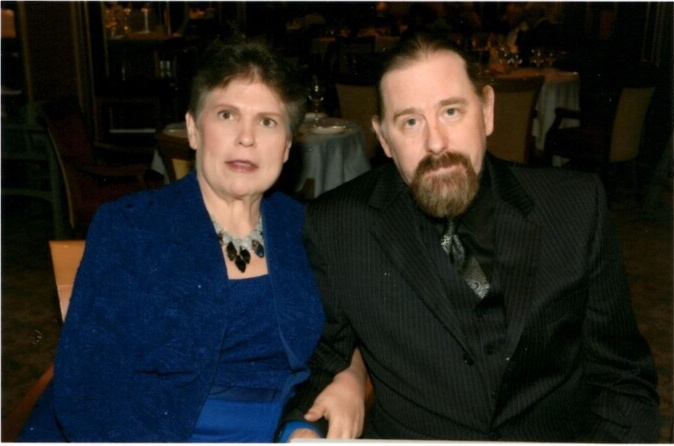
Michael and me on our 30th anniversary cruise, October 2019
1 Corinthians, Bible Studies, Spiritual Healing

A Covering of Light

Reflections on 1 Corinthians 11:5

A white calla lily glowing against dark green leaves

“But every woman who prays or prophesies with her head uncovered dishonors her head—it is the same as having her head shaved.” (1 Corinthians 11:5, NIV)

In my last post I wrote about the man’s covering in verse 4. I came to see it as a veil over the mind, the lies about God that keep a man from knowing the One who is his head. Remove that veil, and he can speak of Christ without bringing Him shame.

Today Paul turns to the woman, and the picture flips. The man is to be uncovered; the woman is to be covered. If the man’s covering is a veil of lies between his mind and Christ, the woman’s covering cannot mean the same thing. So what is it?

I’ll be honest: I came away from this verse with more questions than answers. But I think the questions are worth sharing, and a few things did come clear.

What the Translations Say

Nearly every translation ties the uncovered woman to a shaved head. Knox and Moffatt say she is “no better than” a shaven woman. The TCNT says she makes herself “like one of the shameless women who shave their heads.” The Remedy explains it as breaking the circle of God’s Love, making it appear that she is selfishly seeking to sever herself from her husband and take his place in God’s plan.

The Living Bible, as with verse 4, gives the most concrete reading: her covering is “a sign of her subjection to him.” But I keep coming back to what I said about verse 4. Christ is not petty. There is no merit in a piece of cloth. The covering is a symbol, and the question is what it symbolizes.

What Is She Veiling Her Mind Against?

The man was to remove the veil so he could see truth. Is the woman then to veil her mind against something, against lies? Why would a woman with an unveiled mind be such a disgrace to herself and to her husband? What exactly is the veil, and what is she to cover herself with?

So I looked at how the Bible clothes its pure women. In Revelation the woman is “clothed with the sun, and the moon under her feet” (Revelation 12:1). The bride of the Lamb is arrayed in fine linen, “the righteousness of saints” (Revelation 19:8). The pure woman’s covering in Scripture is light and righteousness, never cloth.

Eve’s Covering of Light

In the garden before the fall, Eve was covered with the light of God’s presence shining through her. It was her clothing. Ellen White describes the sinless pair as clothed “with a covering of light and glory.”

Here is what caught my attention. There is no mention that Eve lost that light when she ate. When she brought Adam the fruit, he did not see that she was naked. It was only after Adam ate that “the eyes of them both were opened, and they knew that they were naked” (Genesis 3:7).

What does that say about Eve’s deception? Being deceived is not the same as choosing, with full knowledge, to distrust God. Paul himself says that “Adam was not deceived” (1 Timothy 2:14). It was not until Adam deliberately chose to break the trust and agreement he had with his Creator that the connection was severed for both of them.

She Does Not Need a “Head” to Be Saved

This much I am sure of. A woman’s head is her husband, but a woman can have a close relationship with Christ on her own. The verse itself takes for granted that she will pray and prophesy in public, just as the men do. Her covering in no way shields her from Christ or keeps her connection with her Saviour from forming and growing strong on its own.

Her husband does not take the place of Christ in her life. If he did, an unmarried woman could not be saved. Peter calls husband and wife “heirs together of the grace of life” (1 Peter 3:7). A woman does not need a “head” to be saved.

Then What Is the Head For?

So what is the husband’s purpose in Christ’s plan for a married couple? How does he cover her? We are told the two shall become one. He is to share in her life, support her plans and goals, and be her protector and wise best friend.

Paul gives the pattern in Ephesians 5: the husband is head “even as Christ is the head of the church,” and he is to love his wife “as Christ also loved the church, and gave himself for it” (Ephesians 5:23, 25). Christ’s headship is self-giving, not ruling. A husband who would be his wife’s head must be someone she can respect and whose counsel she can trust. If they do not grow together, there will be strife and upset at home.

It seems the covering lets a woman say without words that she welcomes her husband’s counsel. A woman who will not allow herself to be reasoned with by her husband shames him. But I am still not sure what it fully means that he is her head.

Does It Go Back to the Fall?

I suspect it does. After the fall God told Eve, “thy desire shall be to thy husband, and he shall rule over thee” (Genesis 3:16). Ellen White puts it this way: “In the creation God had made her the equal of Adam. Had they remained obedient to God… they would ever have been in harmony with each other; but sin had brought discord, and now their union could be maintained and their harmony preserved only by submission on the part of the one or the other.”

If that is right, then the headship Paul describes isn’t God’s original design. It is God’s provision for keeping a home happy in a fallen world.

Only in Public?

One more thing troubles me. Paul speaks only of the woman’s public spiritual life, how she is seen when she prays or prophesies. Is the covering only for appearances? That is not the Christ I know. He would not have us put on airs, pretending to be something we are not for others to see.

In Corinth, a married woman uncovered in public sent a message about her marriage, so the covering said something true to everyone watching. But the same rule holds for the woman as for the man: the outward sign honors no one unless it is true in the heart.

Questions I’m Still Carrying

This is a first look, and I have more questions than answers:

  • What exactly does the woman’s covering symbolize, if it is not a barrier between her and Christ?
  • Paul says man is “the image and glory of God: but the woman is the glory of the man” (1 Corinthians 11:7). Is her covering meant to hide the glory of man in worship, so that only God’s Glory is seen?
  • What does Paul mean when he says she ought to have “power” on her head “because of the angels” (verse 10)?
  • Is the husband’s headship a part of creation, or God’s remedy for what sin did to the home?

As Graham Maxwell used to say, when confused, read on. Paul doesn’t finish this thought in verse 5; he keeps building it through verse 15. I’ll keep going one verse at a time and trust that the picture will clear. What I can say today is this: whatever the woman’s covering means, it does not stand between her and her Saviour. Like Eve before the fall, she was made to be clothed in His light.

1 Corinthians, Bible Studies, Spiritual Healing

The Veil Between Us

Reflections on 1 Corinthians 11:4

A full moon glowing through dark tree branches

“Every man who prays or prophesies with his head covered dishonors his head.” (1 Corinthians 11:4, NIV)

I had never really looked at this verse before this morning. Lining the translations up side by side, most say much the same thing: a man who prays or speaks for God with his head covered brings shame, disgrace, or dishonor on his head. Then I came to the Living Bible, which turns it into a rule about hats: if a man refuses to remove his hat while praying or preaching, he dishonors Christ.

That is a very concrete reading, and I believe it misses what Paul is saying. Christ is not petty. There is no merit in the outward action of removing a hat. The covering of the head is a symbol of something, and the question is, of what?

Two Heads

Paul has just told us in verse 3 that the head of every man is Christ. So when he says a covered man dishonors “his head,” he is speaking of two heads at once: the one on his shoulders and the One he answers to. The Remedy catches this, describing the covered head as a man symbolically hiding himself from God, as though he were going his own way instead of following the loving leadership of Christ.

What Truly Dishonors Someone?

The translators reach for strong words: dishonor, shame, disgrace, disrespect. So I asked myself, what act truly meets those descriptions? What can we do that shames and disgraces another person?

We refuse to tell the truth about them. We publicly lie about them, saying they have done something horrible, something despicable that they would never even think of doing. That is what dishonors a person.

Christ is our head. When we pray, or talk about Him to others, with a veil between ourselves and the knowledge of Him, a barrier between our mind and Christ, and we choose to keep that barrier in place, we are acting dishonorably toward Him. He has done everything possible to make Himself known to us. Yet we can refuse to know Him personally while publicly telling others that we do know Him and this is who He is.

The Lie Behind the Veil

By calling ourselves Christians we accept the Christ who came to earth and lived a life to overcome and heal the damage caused by Adam’s breach of trust with God. Adam broke faith with his Creator and chose to believe the lies told by a talking snake over the truth spoken by the loving Creator who came daily to spend time with them.

A man keeps his head covered when he refuses to know the One who is his head by creation and redemption, when he believes the lies about Christ and God that Satan has been spewing since before the world was created: that God does not have your best interest at heart, that He would withhold something good from you, that He is vindictive. It is the picture the devil has painted of God all along, a god who needs the appeasement of a blood sacrifice to turn his anger away from the fallen, sinful humans he created.

This is Satan’s lie. If we believe that God requires the torture and brutal murder of His sinless, faithful Son to appease His anger, we are holding a veil between ourselves and the truth Christ came to reveal about Himself and the Father. That veil, that head covering, must be removed before we can speak of Christ publicly, pray, or preach about Him without bringing Him dishonor or shame.

Paul’s Own Veil

I was encouraged to find that Paul himself uses the veil this way. In 2 Corinthians 3:13–18 he writes of a veil that lies over the minds of those who read Moses, a veil that is taken away when a person turns to the Lord. Then, he says, “we all, with open face beholding as in a glass the glory of the Lord, are changed into the same image” (2 Corinthians 3:18, KJV). And just a few verses on in our chapter, Paul says a man ought not to cover his head because he is the image and glory of God (1 Corinthians 11:7). A covering hides glory. A false picture of God hides His Glory.

In Paul’s day the covered head was a real practice. Roman men drew their togas up over their heads when offering sacrifices to their gods, so a covered head in Christian worship could look like pagan worship. Paul was speaking to that. But behind the outward custom is the symbol, and the symbol is what speaks to us today.

Adam’s Choice

Thinking about the veil took me back to Eden. Scripture tells us Adam was not deceived; it was the woman who was deceived (1 Timothy 2:14). I believe Adam knew Eve had fallen. He did not eat because he believed the serpent. He ate so he would not lose her. He broke faith with Christ by not trusting Him with his own life and the life of his wife, not trusting that Christ could and would fix the damage done to Eve. His fear was focused on himself and on losing her, so he chose to let what had happened to her happen to him too.

Then look at what sin did to him by that same evening. When God came to speak with them in the garden, Adam threw Eve under the bus: the woman You gave me, she gave me the fruit (Genesis 3:12). Before he fell, he was nobly willing to share her ruin. After he broke faith, he was willing to let her take all the blame to save himself, and he blamed God for giving her to him besides. That is what believing the lie does to us. Once we believe God is not for us, we start protecting ourselves at everyone else’s expense. And Adam hid from God among the trees. The veil was already in place.

Questions I’m Still Working Through

This is a first look. I have not yet worked through the translations of verses 5 and 6, where Paul says the woman should be covered. If the man’s covering is the veil of lies between his mind and Christ, the symbol must mean something different for the woman, and I don’t want to force an answer before I’ve lived with the text. Here are the questions I’m carrying forward:

  • Is the woman’s relationship to man different from her relationship to Christ, and how does that shape what her covering means?
  • Does the man’s place over the woman come from the fall, “he shall rule over thee” (Genesis 3:16), describing what sin does to the relationship rather than God’s design? If so, how does that fit with Paul’s appeal to creation in verses 8 and 9?
  • If a woman’s life gives her husband a false picture of Christ, as Eve’s choice did for Adam, does she in some way dishonor her head? And is the other side of that her power to win him by the life she lives (1 Peter 3:1)?
  • Why does Paul so quickly add, in verses 11 and 12, that neither man nor woman is independent of the other?

When confused, read on, as Graham Maxwell used to say. But I stand behind what I have seen so far: what dishonors Christ is not a hat. It is the lie we keep between ourselves and Him. Remove that veil, and we can speak of Him with honor.

A stained-glass dome seen from below, every panel radiating out from a single center
1 Corinthians, Bible Studies, Spiritual Healing

Who Is My Head?

Reflections on 1 Corinthians 11:3

A stained-glass dome seen from below, every panel radiating out from a single center

“But I want you to realize that the head of every man is Christ, and the head of the woman is man, and the head of Christ is God.” (1 Corinthians 11:3, NIV)

A verse I had a problem with

This morning I came to 1 Corinthians 11:3, and it was a tough one. Paul lays out three pairs: Christ is the head of every man, man is the head of woman, and God is the head of Christ.

As always, I wrote the verse out in several translations side by side. Most simply say “head.” But the TEV says the husband is supreme over his wife. The Living Bible says a wife is responsible to her husband. I have a problem with that. It doesn’t fit anything else I know about the God of the Bible.

The Remedy gave the most reasonable rendering. It speaks of every man following the loving leadership of Christ, the wife following the loving leadership of her husband, just as Christ follows the loving leadership of His Father. So I set out to understand what Paul actually meant by “head.”

What does “head” mean?

The Greek word is kephalē. Scholars have argued over its meaning for a long time, and there are three main views:

  • Authority over. The traditional reading, and the one behind “supreme over.”
  • Source or origin, like the head of a river, where it begins.
  • The prominent or honored part, the head as the part that carries the body’s honor.

I was drawn right away to the second. When the Greek translators of the Old Testament met the Hebrew word for head meaning “ruler,” they usually chose another Greek word. Kephalē didn’t naturally mean “boss.”

And Paul tells us what he means a few verses later. Woman came from man, yet every man since has come through a woman, “but all things of God” (vv. 11–12). He is talking about where we came from, and how we need each other.

Why it can’t mean “supreme over”

Paul is not writing about domination. Both men and women, husbands and wives, can build and keep a close, loving relationship with Christ. As a woman, I want Christ to be my head too. He is the one I follow and the one I lean on.

So think it through. If “head” means who rules over whom, then a woman who never marries has no head. Of course that isn’t so. That kind of thinking doesn’t hold up against any other part of the Bible.

Then there is the last pair: God is the head of Christ. If head means “supreme over,” Christ becomes less than God. But Jesus said, “I and my Father are one” (John 10:30).

The order of the verse matters too. Paul doesn’t give a top-down list from God to Christ to man to woman. He gives Christ and man, then man and woman, then God and Christ. Whatever he is describing, it isn’t a ladder of rank.

Three beginnings

Look at the facts. Man was created first, and he is the first one given a head in this verse. Woman came from man, and he is given as her head. Then Christ came forth from God to be man. Each pair names a beginning, an origin:

  1. Man from Christ. Christ is the Creator: “All things were made by him” (John 1:3).
  2. Woman from man. Paul roots this in Genesis 2 (vv. 8–9).
  3. Christ from God. “I came forth from the Father, and am come into the world” (John 16:28).

That third one is a little tricky, because Christ is God. But He came from God to become man. This isn’t about His eternal nature. It’s about Christ as He stepped onto the stage of this world.

And He came because of sin. If man had never fallen, Christ would never have come as a man, and God would never have been His head in this way. So the verse begins in creation and ends in redemption. Paul says in this same letter that Christ is “the last Adam” (1 Corinthians 15:45). He made the first Adam, and as the last Adam He re-creates humanity through the power of God. Even though He is God, in Christ He was human.

We are His twice over, by creation and by redemption. This isn’t order forced on us. It is how life came about, and how it is restored.

The last pair is the key

Why does Paul save “God is the head of Christ” for last? Because it shows us what headship looks like. Christ and the Father are equal. Yet Christ freely chose to come, to honor His Father, and to “do always those things that please him” (John 8:29).

That is headship between equals, entered freely and carried out in Love. If that is the model, it tells us what “head” means in the other two pairs.

Within a marriage, a man by his nature and the way he is put together is to cover, protect and cherish his wife, and give of himself for her and his family. She in return responds and gives him a loving home, a place to come to when the work day is over. Men and women are not the same; we are equal but different. And Christ is the head the man is to follow in his decisions, while the woman has her say and a right to her own mind.

This is exactly what the Remedy says: the wife follows the loving leadership of her husband, just as Christ follows the loving leadership of His Father.

Surrounded by God

Tall trees rising on every side with a canopy of green branches overhead

Look at the shape of the verse once more. Christ as man’s head comes first. Man as woman’s head is in the middle. God as Christ’s head comes last. Man in his fallen state is surrounded by God on all sides. It is a bit like being in the middle of a God sandwich.

Scripture says the same thing. “Thou hast beset me behind and before, and laid thine hand upon me” (Psalm 139:5). The Lord goes before us and is our rearguard behind (Isaiah 52:12). And “underneath are the everlasting arms” (Deuteronomy 33:27).

Looking at this through the eyes of Love, what do we see? Christ at the head of fallen man, saying, “Follow Me, I will show you the way home. I am here for you always; you can depend on Me.” In the middle, how we are to relate to each other: a man treating his wife and family with the same love and respect, the same value, that Christ put on him. And God, our foundation, ready to give all the power of the universe through the life of Christ for the healing and salvation of humanity.

That is what it means to have a head. Not someone supreme over us, but Someone before us, behind us, and underneath us, from whom we came and to whom we are being brought home.

Still reading on

I want to be honest with you: this is not a finished understanding of this verse. It is one verse standing alone, and I am sharing the struggle as much as the answer.

Graham Maxwell used to say that when you come to a place of confusion, read on, and it will make sense at some point. It always has for me. Paul’s own explanation is still ahead, in the verses that follow, and I expect this picture to fill in as I work through them.

So take this as a first look, not the last word. I’m trusting the Lord to make it clear in His time, and I’ll share what He shows me as I go.

1 Corinthians, Bible Studies, Spiritual Healing

Follow Me as I Follow Christ

Reflections on 1 Corinthians 11:1

A man walking ahead on a leaf-covered woodland path

“Follow my example, as I follow the example of Christ.” (1 Corinthians 11:1, NIV)

At first it sounds bold, maybe even a little proud. Who would tell a whole church to copy him? But read it again. Paul is not calling for followers of his own. He is saying, as long as I am following Christ and you can see Christ in me, let me be your example, just as Christ is my example. The condition is built right into the sentence. Phillips puts it plainly: copy me, as I copy Christ himself.

The Remedy adds what that example looks like — following Paul in reaching others in love. That fits the verses just before it, where Paul says he seeks not his own good but the good of many, so that they may be saved (1 Corinthians 10:33). The chapter break was added much later; this verse is really the closing line of Paul’s thought in chapter 10.

We Cannot Imitate Someone We Do Not Know

We cannot imitate or follow someone we do not know. When a person first comes to Christ, they don’t yet know Him well. So the one who pointed them to Christ becomes the example they follow, until they meet Him and develop their own relationship with Him. That is a sobering place to stand.

It is our duty, through daily time spent with Christ, to allow His character, His mind, His Glory and His Love to envelop us, fill us and saturate us, until we have the mind of Christ (1 Corinthians 2:16). By beholding we become changed (2 Corinthians 3:18).

It Is Not Us

Each morning I need to remember that it is not me, my talents, or anything in me that draws these lost and hungry souls. No, it is the mind and heart of Christ we have become. The mind and heart of Christ in us will draw those seeking truth.

Then we are a useful tool in the hand of Christ — no longer a raw recruit, but a soldier He can place anywhere in His ranks and count on to carry out His orders as He would (2 Timothy 2:3–4), a worker in His field (Matthew 9:38), His light on a hill (Matthew 5:14). And to us He continues to be a lamp unto our feet and a light to our path (Psalm 119:105), the Good Shepherd (John 10:11), a friend that sticks closer than a brother (Proverbs 18:24) — our closest and dearest friend, our Lord and Saviour Jesus Christ.

We Do Not Stand Alone

Because Christ is our example, we can say with Paul to those newly come to Him: you may follow my example, because I am following the example of Christ. And as soon as their own relationship with Christ is strong, they will begin to bloom, the Love of Christ flowing from them as they show His Love to their world. Then they become the example for someone else, and the chain goes on — each link pointing past itself to Him.

1 Corinthians, Bible Studies, Spiritual Healing

Until It Is No Longer New

Reflections on 1 Corinthians 11:2

A long brick walkway under a pergola, its white pillars wrapped with old vines

“I praise you for remembering me in everything and for holding to the traditions just as I passed them on to you.” (1 Corinthians 11:2, NIV)

The Remedy says it warmly: Paul is so pleased with them for remembering all he taught them and holding firmly to the truth he shared. The word “traditions” here is the Greek paradoseis — things handed over. Paul received the gospel from Christ and handed it on (1 Corinthians 11:23; 15:3), and these believers were holding on to what had been handed to them.

The Hard Part Is Keeping It

Paul recognized the effort it took to stick with the changes they had taken on while he was with them. He understood how hard it is to accept something new, to learn it, and then to keep doing it until it is no longer a new thing. The science of the brain wasn’t available then, but observation and wisdom could see how the mind works.

Think about who these people were. The society they came from was different in every way from the truths they had embraced into their hearts and minds. It was an entirely new way of living — and they learned it and kept living it without leaving the city and community they lived in. They changed their gods. They took a new foundation to build their lives on, right in the middle of the same society. That is truly huge.

A Perfect Storm

A change like that could not have happened if society had been at rest, with nothing stirring the heart to go looking for somewhere to rest. The Roman world was that storm. People were weary of the drama — of leaders, of politicians, of a military that could turn on itself at any moment. The more affluent Roman culture became, the more corrupt its leaders grew, and the decay was already in public view when Christ was born. A single ruler could give an order and every boy in a town would be killed, as Herod, Rome’s appointed king, did in Bethlehem (Matthew 2:16).

Brain science shows the mind holds hard to its old foundational ways of thinking until something strong enough — a crisis, an epiphany, a force — pushes it to look for something new. Into that weary world, Christ brought something new.

The Imprint That Remains

Two thousand years later the whole world carries the imprint of what Paul and the disciples of Christ left behind. Slavery, once ordinary everywhere, has been abolished by law nearly everywhere. The life of Christ is known in every corner of the earth — not accepted by every culture, but known well enough that some fight against it. It began with ordinary people like those Corinthians, holding fast to what was handed to them.

So Paul’s praise is for us too. What Christ hands us is new at first, and it is hard. But we keep at it, day by day, until it is no longer new — until it is simply who we are. And then we hand it on.