Bible Studies, Spiritual Healing, Two Directions, One Truth

The Lord’s School of Training

Two Directions, One Truth: an opening to the series
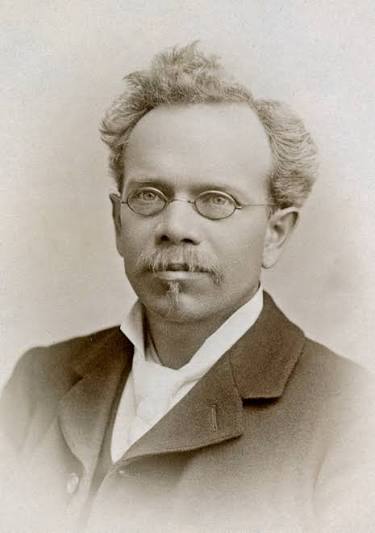
A. T. Jones
A. T. Jones
1850–1923
Ellen G. White
Ellen G. White
1827–1915
E. J. Waggoner
E. J. Waggoner
1855–1916
Graham Maxwell
Graham Maxwell
1921–2010
Dr. Tim Jennings
Dr. Tim Jennings

As I set the faces of this series side by side, Ellen White between Elders Jones and Waggoner, then Graham Maxwell and Dr. Tim Jennings, I was struck by where the Lord found each of them. Jones was an Army man who taught himself from the history books he read at his post. Waggoner was a physician who laid down his practice to edit a paper. Graham was a scholar of the Bible’s own languages. Tim is a psychiatrist who served as an Army division psychiatrist before the Lord set him to teaching His Word.

None of it was wasted. The Lord has always run a school, and He has always chosen His own classrooms.

Moses: The General Who Became a Shepherd

Stephen tells us Moses “was learned in all the wisdom of the Egyptians, and was mighty in words and in deeds” (Acts 7:22). Ellen White adds that “at the court of Pharaoh, Moses received the highest civil and military training.” He was a soldier, a general of Egypt’s armies.

But that was only the first school. Then came forty years in Midian, keeping another man’s sheep. She writes that forty years more were needed “to soften the heart of the general of the armies of Egypt, that he might be qualified to be shepherd of the flocks of the Lord.” That was where, “in a special sense, God undertook his training.”

The Lord did not throw away what Egypt had taught him. He took the force out of it. The general came out of the desert “very meek, above all the men which were upon the face of the earth” (Numbers 12:3), and God spoke with him “face to face, as a man speaketh unto his friend” (Exodus 33:11).

Joseph: The Favorite Son

Joseph started out as his father’s favorite, in the coat of many colors, telling his brothers his dreams. I suspect he was a bit spoiled. He needed some serious toughening up, and the Lord’s school gave it to him: the pit, the slave market, Potiphar’s house, a false accusation, and years in prison.

He took his schooling well. In every place he was faithful, and in every place he ended up trusted with everything. And when at last he stood before his brothers with all the power of Egypt in his hand, he wept. “Ye thought evil against me; but God meant it unto good” (Genesis 50:20). The spoiled boy had learned to treat his brothers the way God treats us.

David: Failures, but Never Distrust

David’s schooling began in the sheepfold and went on through years of running for his life from Saul. And David failed, terribly. Graham once asked his Loma Linda audience to imagine David as a member of their church: “We’d have had to censure him and disfellowship him periodically.”

Yet years later God said to Solomon, “walk before Me, as David thy father walked, in integrity of heart, and in uprightness” (1 Kings 9:4). How could God say that of David? Because through every failure David never stopped trusting Him. He ran to God, not away from Him: “Create in me a clean heart, O God; and renew a right spirit within me” (Psalm 51:10). Graham put it this way: God not only forgives; “He even treats us as if we had always been His loyal children.”

Peter and Judas: The Same School, the Same Face

Peter had the best classroom any man ever had: three and a half years walking beside the Teacher Himself. And still he needed the courtyard and the rooster. Jesus told him ahead of time: “Satan hath desired to have you… But I have prayed for thee, that thy faith fail not: and when thou art converted, strengthen thy brethren” (Luke 22:31–32). Peter went through the valley of the shadow of death, and he came out the other side. Years later he could write of faith “tried with fire” (1 Peter 1:7), and he knew what he was talking about.

Judas sat in the same school, under the same Teacher, and had the same feet washed. He did not make it. Graham said it simply: both men looked into the same face, and “our Lord is not two-faced. The difference is in us.” And he imagined the ending that could have been: “What a wonderful ending it would have been if Judas had been touched by that look on Jesus’ face, just as Peter had been, and he had run out of the court and found where Peter was weeping, and the two of them together had become new men.”

The school is offered to every one of us. It only works on those who let it.

The Line Goes On

That is what I see in the faces at the top of this series. A soldier and a physician brought the 1888 message of Christ and His righteousness, “a most precious message,” as Ellen White called it. A scholar spent his life asking of every book of the Bible, What does this tell us about God? And a physician of the mind, who served as a soldier, now shows us what that truth does to heal the heart. Like Moses, each was schooled before he was sent. Like Paul the theologian and Luke the beloved physician, they have walked the same road and seen the same Christ.

As Dr. Jennings begins his study through all 66 books, I will be setting his teaching beside Graham’s, week by week. I expect to find the same God in both. And I expect to be schooled a little myself along the way.

The Lord’s school is never easy, but nothing learned there is wasted. It’s all good.

Bible Studies, Spiritual Healing, Two Directions, One Truth

Two Directions, One Truth

How Dr. Tim Jennings’ work grew out of Graham Maxwell’s

This fall I finished something I never expected to finish: a cleaned, readable copy of every Bible study Graham Maxwell recorded going through all 66 books, both his church class series and the private group series he taught for close friends about ten years later, plus his twenty Friday evenings of Conversations About God at Loma Linda in 1984. I wanted to wait until it was all done before writing this, so that what I said would be fair to both men.

Now Dr. Tim Jennings is about to begin his own study through all 66 books. Many of us who sit in his class know Graham’s name, and some of us have wondered how the two fit together. Having spent these weeks with Graham’s words, I can say it plainly: they are saying the same thing. They come at it from two directions, not two positions. Graham laid the foundation from the Scriptures. Tim has built on it from what truth and sin actually do in the mind and heart. And the foundation itself goes back further than either of them.

Graham Maxwell
Graham Maxwell (1921–2010)
Dr. Tim Jennings
Dr. Tim Jennings

Where It Began: 1888

In 1888 the General Conference met in Minneapolis, and the church came close to coming apart over the law in Galatians. Two years before, the General Conference president, Elder G. I. Butler, had written that the “schoolmaster” law of Galatians 3 was the ceremonial law. A young physician, Dr. E. J. Waggoner, answered him with a book he called not The Law but The Gospel in the Book of Galatians. He and Elder A. T. Jones brought what Ellen White later called “a most precious message,” and she wrote, “The Lord in His great mercy sent a most precious message to His people through Elders Waggoner and Jones.” Its heart was Christ Himself, and righteousness that comes by faith in Him.

Graham told this story to his class in 1982, holding the two old books, which he had copied and bound together. What struck me is what he said the argument was really about. The fear at Minneapolis, he said, was that “this would do away with God’s authority, if it was suggested that we do what’s right because it is right and not just because we’re told to.” And he summed up what the brethren had opposed as “this marvelous idea that all God’s laws were designed to lead us to serve Him because we trust, love, and admire Him and agree with Him.”

That is the seed. Jones and Waggoner lifted up Christ and faith. Ellen White carried it to the character of the One the law describes: “God is not the executioner of the sentence against sin.” Graham spent his life asking, of every book and every hard story, What does this tell us about God? Tim has carried that same question into how God made us to work.

What Graham Laid Down

Graham’s whole message can be heard in the statement he printed on the back of the invitation to the 1984 Conversations:

“The good news is: God is not the kind of person His enemies have made Him out to be, arbitrary, unforgiving, and severe. Jesus said, ‘If you have seen Me, you have seen the Father.’ God is just as loving and trustworthy as His Son, just as willing to forgive and heal.”

From there he built, evening after evening, out of the Bible itself:

  • Sin is not mainly the breaking of rules. It is “a violation of mutual trust,” a state of mind; John’s word in 1 John 3:4 is anomia, lawlessness.
  • All God asks is trust. “There is no substitute for trust.”
  • God’s wrath is “simply His turning away, in loving disappointment, from those who do not want Him anyway, thus leaving them to the inevitable and awful consequences of their own rebellious choice.”
  • Fear does damage. He said it again and again: “the obedience that springs from fear produces the character of a rebel.”
  • God “values nothing higher than the freedom, the dignity, and the individuality of His intelligent creatures.”

Graham’s way of proving these was to take the Bible as a whole, all 66 books, and let the stories show what God is like. He was a scholar of the languages, and he stayed close to the text.

What Tim Has Built

Tim comes to the same God from the other side. As a psychiatrist, he looks at what sin and truth actually do to a person: to the brain, the mind, the character. He teaches the difference between imposed law (rules someone makes up and enforces with punishment) and design law (the laws life itself is built on, like the laws of health or the law of love), and he says sin is deviation from that design. God’s remedy is to heal us back into harmony with the way He made us to live. In his own class notes he puts it this way: Christ came “not to pay a legal penalty but to put humankind back in harmony with God’s law.”

Tim himself has said where this connects. In a 2024 article he recommended Graham’s book Servants or Friends?, wrote that it had made a profound impact on his understanding of God, and observed that although Graham never used the words imposed law and design law, he “did contrast the same two laws” when he spoke of servants and friends. Tim quotes Graham’s line: “Servants are governed by the law on the wall. Friends are governed by the law in their hearts and in their minds.”

That is a student naming his foundation, which is exactly how I see it.

The Same Truth, Two Directions

Going back through Graham’s Conversations with Tim’s teaching in mind, I kept finding Graham standing at the very door Tim later walked through.

On law. Graham, through his friend Dr. Louis Venden, agreed that “the commandments are a statement of the way God made things to work.” He told the Loma Linda congregation the Ten Commandments are “no more arbitrary, really, than breathing and eating.” Tim calls this design law, and shows what it looks like in the body and mind.

On salvation as healing. Graham’s rat-poison illustration could be taught in Tim’s class tomorrow. A boy has swallowed poison; does he need his father’s forgiveness? “The boy doesn’t need forgiveness. He needs an antidote.” Then: “Sin is really a poison,” and “That’s the healing model, not the legalistic model.” The next week he said it again, as plainly as anyone has: “Doctors don’t kill their dying patients, and God does not kill His dying children.” Tim has spent years showing how that healing actually happens.

On fear. Graham warned that fear turns God’s children into rebels. Near the end of the series he even gave it a medical name: “If we’re making patients ill with theophobia, we’d better bring the good news that there is no need to be afraid of God.” Tim, a physician of the mind, has shown what that fear does to the brain, and why it has to be removed before healing can begin.

On becoming like what we worship. Graham: “it is a law in this orderly universe, as God has designed it, that we will inevitably become like the person we worship and admire.” A law of this orderly universe, as God has designed it. That is design law in Graham’s own words, years before Tim gave it a name.

On friendship. Graham’s favorite picture was Jesus’ word in John 15:15, “I have called you friends.” Tim’s article on servants and friends begins exactly there.

Foundation and Building

None of this takes anything from either man. A building does not correct its foundation; it stands on it, and the foundation is what lets it rise. Graham built on Jones and Waggoner and on Ellen White. Tim builds on Graham. Each did the work God gave him from the place God put him: one from the Bible’s own record of what God is like, the other from what that truth does in the human heart and mind.

They knew each other, and they were friends. When Graham died in 2010, Tim opened the new year by sharing Graham’s writing with his own readers, so that we might “move forward in taking the truth about God to the world.”

As Tim begins his study through the 66, I will be reading Graham alongside him, book by book, and I expect to hear the same God in both. Graham said the highest compliment anyone could covet was God’s word about Job: “You have said of Me what is right.” I believe God could say that of both of them.

Sources: Graham Maxwell, Conversations About God (Loma Linda University Church, 1984), and his class session on Galatians (1982), from my own cleaned transcripts; Ellen G. White, Testimonies to Ministers, p. 91; Dr. Tim Jennings, “Servants AND Friends of God” (comeandreason.com, July 11, 2024), “Wisdom From Graham Maxwell” (comeandreason.com, December 31, 2010), and his class notes, 2017 Q3 Lesson 6.