Photo: James Collington / Pexels
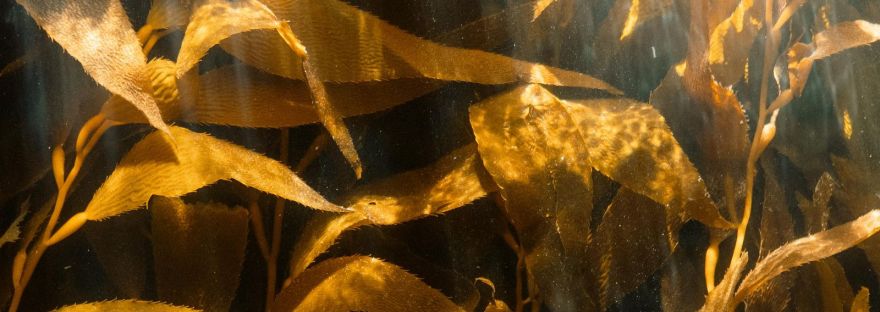
Kelp brought my own thyroid back to normal at twenty-five, after years on a pill I was told I would need for life. The whole story is in My Thyroid Story. Here is why kelp works, how to use it, and why the iodine in kelp is so different from the iodine sold in a bottle.
Why Kelp Works
Our bodies need only the tiniest amounts of the trace minerals, such as iodine, copper, manganese, boron and zinc, yet without them we cannot live. Kelp is one of the richest sources of these, and above all of iodine.
The thyroid needs iodine to make its hormone. Without enough, it has to work overtime and can swell into a goiter. And the thyroid touches nearly everything: it regulates metabolism and body fat, steadies the heart, brightens the mind, keeps the bowels moving, and works with the pancreas, the adrenals, the ovaries and testes, and the pituitary. Kelp is a far better source of iodine than iodized salt, and used as a seasoning it easily supplies what the body needs.
More Than the Thyroid
- Weight: Kelp has long been used as a slow, steady aid to weight loss. It acts more as a normalizer than a fat burner; thin people can put on weight while taking it.
- The liver: Kelp has an affinity for the liver, supplying the salts it needs and helping clear congestion. A sluggish liver brings low moods, and a bright, vital person has an active liver.
- Blood vessels: It tones the walls of the blood vessels and helps normalize both high and low blood pressure.
- Minerals: It is one of the highest sources of potassium among foods and herbs, and a good source of vitamin B12 for those who eat no animal foods.
A Good Kelp Blend
Kelp works even better alongside its sea cousins. A good kelp blend might combine three sea plants, powdered and put into capsules:
- Atlantic Kelp, 2 parts.
- Irish Moss, 1 part.
- Dulse, 1 part.
Each brings its own mix of ocean minerals, so together they cover more ground than kelp alone.
How Much and How Often
- Dr. Christopher’s suggestion: 5 capsules of the kelp blend three times a day.
- What I do: 10 capsules in the morning, and another 5 later in the day when I remember.
Kelp is a food, so it can also be used freely as a seasoning, sprinkled on your meals in place of salt.
Organic Iodine and Inorganic Iodine
Dr. Edward E. Shook, in his Advanced Treatise in Herbology, explains the difference between the iodine in sea plants and the iodine made in a factory.
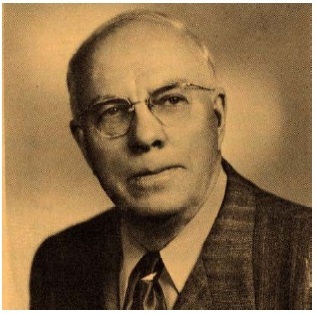
Positively hundreds of instances could be cited to prove the deleterious effects of the application of inorganic matter and the positive curative effects of the intelligent application of nature’s great store of organic remedies– Herbs– in the treatment of pathological conditions of the human organism. —Advanced Treatise in Herbology, by Dr. Edward E. Shook, pg. 16
Inorganic Iodine
We will take a cursory glance at one more important item of evidence showing the incalculable injury that can be done to the human organism by the administration of inorganic substances, more especially, those elements which have been artificially made or separated from organic matter by the action of violent acids, alkalies, or reduction to ashes by burning.
This universally-used and insidious poison is commonly called iodine. This element is found naturally combined with sodium, potassium, calcium, and manganese, in seawater, mineral springs, and marine plants and animals, but in exceedingly minute quantities. There are only 37 parts of iodine in 100,000 parts of cod liver oil.
The commonly used iodine is obtained from the ashes of burnt kelp, dissolved in water; the solution is then evaporated. The iodine is liberated by the action of chlorine aided by heat, and then condensed.
Taken internally, this form of iodine acts both as a local irritant and as a true poison. It slowly decomposes water, stealing hydrogen to form hydrogen iodide. This in turn gives off white fumes on contact with air and has a powerful acid reaction. Mixed with oxygen, it decomposes in the dark forming water, and liberating iodine, which again carries on its devastating effects upon the gastric organs and fluids producing a long chain of disasters.
The gas previously mentioned under sulfur; namely, sulfur anhydride, is decomposed by iodine, once more forming hydrogen iodide, and freeing sulfur; and we have seen what sulfur does.
This inorganic iodine is a most insidious and injurious substance that upsets and disorganizes all the digestive fluids producing various forms of dyspepsia, severe gastric pain, indigestion, foul gaseous eructation, and inability to assimilate food. This so-called specific disease is named Iodism. It by no means confines its disruptive action to the gastric organs, nor does it have to be taken internally to poison the body; for if it be painted on the throat or any other part of the body, it can be traced in the urine in from 30 to 40 minutes.
Organic Iodine
Now to the difference manifested in the action of organic iodine; and what a vast difference there is.
Every saline aquatic plant contains iodine in combination with sodium, potassium, calcium, and manganese; also phosphates, sulfates, chlorides, bromides, etc.
They are all nonpoisonous, nutrient foods, antiscorbutics and vulnerary plants of the highest order.
Here are two in particular that for thousands of years have been used successfully in the treatment and cure of chronic disease.
Bladderwrack (Fucus vesiculosis). It is an alterative of great virtue, especially in obesity, reducing fatty acids, and tending to rid the system of useless waste matter.
Irish Moss (Chondrus crispus), a remarkable demulcent, nutrient, and dietetic providing the organism with what are loosely called vitamins, in the form of chlorides, iodides, bromides, phosphates, and sulfates of sodium, potassium, calcium, and magnesium. All of them are positive organic salts, absolutely necessary to the healthy metabolism of the human body. This whole family of herbs is fully described, together with their therapeutic application. —Advanced Treatise in Herbology, by Dr. Edward E. Shook, pg. 15-16
Read more on the subject of Iodine from the first chapter of Dr. Shook’s text book.
More on the Thyroid
- Thyroid Ailments (the full picture: causes, supports and a healing plan)
- My Thyroid Story
This is shared for educational purposes, from my own study and experience. It is not medical advice.


