
A study of 1 Corinthians 9:26–27
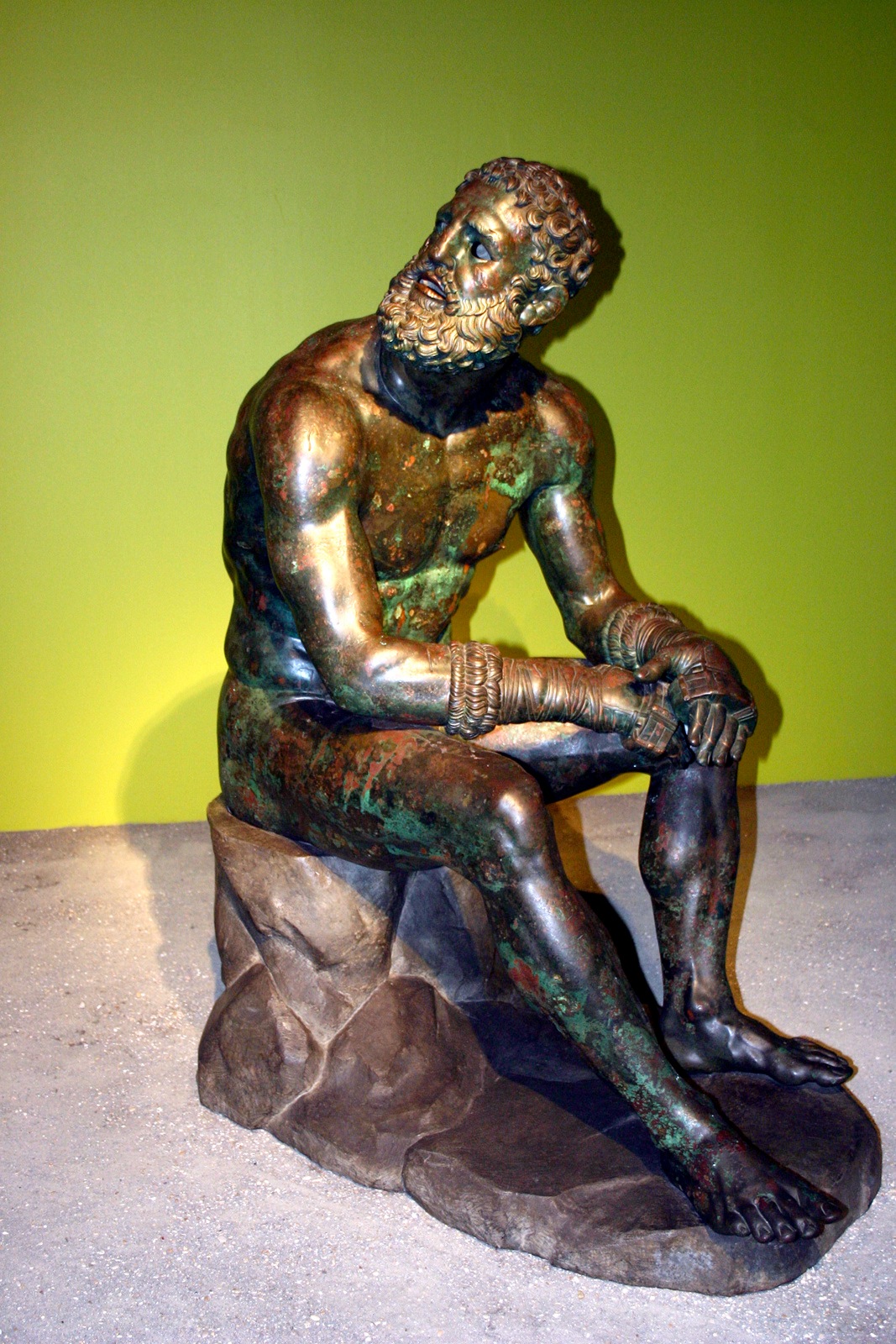
“I do not run like someone running aimlessly; I do not fight like a boxer beating the air. No, I strike a blow to my body and make it my slave so that after I have preached to others, I myself will not be disqualified for the prize.” — 1 Corinthians 9:26-27
It’s easy to read this as an athlete’s throwaway metaphor for discipline — Paul the ex-jock, talking tough. But the image holds up under real scrutiny, down to the mechanics of what a punch actually does to the person who throws it. Followed all the way through, it says something specific about the cost of working on yourself, and about what has to be true underneath you for that work not to break you.
Not Shadowboxing
Paul’s contrast is precise: he does not fight like a boxer beating the air. Beating the air is shadowboxing — form without contact, all the motion of a fight and none of the consequence. You can throw a thousand punches at nothing and walk away exactly as you arrived, because nothing hit back.
What Paul describes instead is a real blow landed on a real, resistant target: his own body, in verse 27. That distinction matters more than it first appears. A punch that connects with something solid doesn’t just do something to the target — it does something back to the one who threw it. That’s not a flaw in the analogy; it’s the whole point of choosing it. Paul isn’t claiming his self-discipline is graceful. He’s claiming it’s dangerous, in the way any real collision is dangerous, because he’s not swinging at air.
What a Real Punch Does to the One Who Throws It
Newton’s third law doesn’t make exceptions for good intentions. When a fist meets something solid enough to resist it, the force doesn’t stop at the point of contact — it travels backward through the puncher, in full: through the knuckles, up the wrist, through the forearm, jamming into the elbow, loading the shoulder, and finally reaching the spine and the ground.
A boxer whose stance is planted — feet grounded, core locked, joints aligned — lets that force pass all the way through and dissipate harmlessly into the floor. A boxer who is loose, misaligned, or standing on nothing absorbs the shock in the wrong places: a wrist that bends instead of holding, a shoulder that takes the load a hip should have taken. The pain isn’t optional either way. What’s optional is whether it ends in a bruise or a fracture.
That’s the physical fact underneath the verse. Confronting something solid in yourself — a habit, an old wound, a pattern you’ve protected for years — produces a real return of force. It was never going to be free.
Two Kinds of Ground
Follow the analogy to its foundation and it points to Christ as “the Rock” — Paul’s own image a chapter later, in 1 Corinthians 10:4. But it’s worth separating two things that word is doing, because they’re not the same mechanism.
The first is Christ as stance — the alignment that keeps a joint from buckling under load. This is about posture: standing covered in Christ’s righteousness, so that when the shock arrives, it travels through a structure built to hold it rather than through pride or self-reliance, which give way exactly where a bent wrist does. This is the discipline side of the image — the daily work of staying planted.
The second is Christ as absorber — the ground itself, the place the force actually goes. This is the cross: the claim that the ultimate shockwave of human brokenness has already been taken, once, fully, so that what you feel when you strike a blow against your own flesh isn’t force you’re generating and now have to survive alone. It’s force passing through you into something that has already proven it can take it.
The two aren’t in tension, but they answer different questions. Stance is about how you stand so the blow doesn’t injure you. Ground is about where the force goes so it doesn’t stay trapped in you. Self-discipline needs both — a person can have excellent form and no floor under them, or a floor under them and no form, and either way, something breaks.
The Third Layer: A Frame That Grows Sound
Stance and ground both describe what happens during one strike — how you’re aligned, and where the force ends up. But there’s a third thing happening that neither one accounts for: the boxer who trains for years doesn’t just survive blows better because he’s braced better. His wrist itself gets stronger. Tendons that used to strain now hold. What used to require careful technique to survive without injury eventually requires less, because the structure itself has changed.
That’s a different claim than stance or absorption, and it may be the one this analogy was reaching for all along. The healing Christ does isn’t only a floor to fall back on or a posture to hold — it’s formation. Each grounded confrontation with your own flesh doesn’t just pass harmlessly through you and end there; it leaves you measurably less breakable than you were before it. And as that healing accumulates, something else grows with it: the very capacity to see clearly and choose well. Discernment isn’t a separate reward handed out for having survived enough fights. It’s what a healed frame produces almost as a side effect — clearer sight and firmer resolve growing in direct proportion to the healing itself, the way a joint’s tolerance for load grows in proportion to the training it’s been through.
That reframes the question this whole analogy raises. It isn’t only why fight, if the outcome is already secured in Christ? It’s also why does the fight itself matter, and not just its outcome? Because the fighting, rightly grounded, is how the healing happens — and the healing is what makes the next fight, and the next choice, and the next moment of clarity, genuinely easier than the last.
The Jolt Isn’t the Injury
Here’s the place this analogy is easiest to misread: even a perfectly grounded boxer feels the shock of a heavy strike. The vibration still travels up the arm, still rattles the joints, still registers as real impact. Good grounding doesn’t mean the punch stops hurting — it means the force has somewhere to go instead of somewhere to break.
Carried into the inner fight, that matters. When you finally confront a habit you’ve protected for years, or let yourself feel a wound you’ve been managing instead of healing, the flare of guilt, doubt, or old temptation that follows isn’t proof you’re doing it wrong. It’s just what contact feels like. Mistaking the jolt for a verdict — concluding I must not really be forgiven, or this wouldn’t still hurt — is exactly the kind of reasoning that turns ordinary impact into injury.
What marks bad grounding isn’t the ache. It’s what happens next: despair that curls inward instead of passing through, self-condemnation that lodges in you rather than dissipating, a resolve that shatters instead of merely ringing. Paul beat his own body — that was never described as painless. The promise underneath the mat isn’t a numb fight. It’s a survivable one.
An Opponent Who Shares Your Body
One more detail in the text is easy to slide past: Paul isn’t disciplining someone else. Verse 27 says he strikes a blow to his own body and makes it his slave — not an external enemy standing across the ring, but flesh he has to keep living in no matter how the round goes.
That’s a stranger fight than a standard bout. A boxer can lose a match and walk away from the opponent afterward. You can’t walk away from yourself. Which is exactly why the grounding question isn’t optional or theoretical — if the force of that inner collision has nowhere safe to go, there’s no corner to retreat to between rounds. The damage doesn’t stay in the ring; it goes home with you, because you and the ring are the same place. That’s the weight behind wanting solid ground under this particular fight more than any other.
Fighting From Victory, Not For It
The practical difference this makes is less about technique and more about posture going in. Fighting for victory means every jolt is a threat — evidence you might lose, might not be enough, might be found out. Fighting from victory means the outcome is already settled before the bell rings, so the shock that comes with a real hit can be felt without being feared.
That’s the shift worth sitting with: the next time confronting some old pattern in yourself produces its familiar ache, the ache isn’t the sign of failure it’s always felt like. It’s just contact. The question worth asking isn’t why does this still hurt — it’s where is this force going. If it’s going somewhere that already proved, on a cross, that it can take a full blow and not give way, then the hit that would have broken a wrist standing on nothing instead passes clean through, into ground that was never going to move.


