When bone, connective tissue or skin has been injured, strained or broken down, the body needs more than time to knit itself back together. It needs concentrated nutrition for the rebuilding work. That’s what this combination provides. It is one of Dr. Christopher’s classic formulas, built around two lead herbs, White Oak Bark and Comfrey Root, with seven helpers that each bring something of their own.
It can be used two ways: taken by mouth as an extract, to nourish rebuilding from within, and made into a salve for cuts, bruises, burns and other surface injuries. The two are often used together, one from the inside and one from the outside.
What a Good Tissue-Rebuilding Formula Contains
Here is the combination I trust, with the proportions:
- White Oak Bark, 6 parts. A co-lead herb and a strong traditional astringent, valued for toning and tightening tissue, from varicose veins to bleeding gums.
- Comfrey Root, 6 parts. The other co-lead herb, the classic tissue-rebuilding herb. Traditionally it is the single most important herb for knitting bone, flesh and cartilage back together.
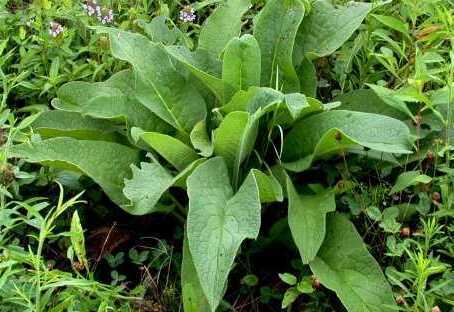
- Mullein, 3 parts. A soothing, mucilaginous herb, traditionally paired with tissue-healing blends for its gentling, calming action on inflamed tissue.
- Marshmallow Root, 3 parts. Another soothing, mucilaginous herb. It works alongside Mullein to protect the tissue while White Oak Bark and Comfrey do the rebuilding.
- Black Walnut Hulls, 3 parts. Astringent, and long included in skin-healing blends for cuts, bruises and infection.
- Gravel Root, 3 parts. Traditionally used to support healthy fluid balance and to help move deposits along, which is why this formula has been used for calcium spurs.
- Wormwood, 2 parts. A traditional bitter herb, in a modest supporting amount.
- Skullcap, 1 part. A traditional nervine, in a small amount to support the body through pain or tremor.
- Lobelia, 1 part. A relaxant and circulatory herb, in the very small supporting role it plays in many of Dr. Christopher’s combinations.
“Parts” can be any measure you like, as long as you use the same one for every herb. By weight, 6 ounces each of White Oak Bark and Comfrey Root go with 3 ounces each of Mullein, Marshmallow Root, Black Walnut Hulls and Gravel Root, 2 ounces of Wormwood, and 1 ounce each of Skullcap and Lobelia.
How It Works
White Oak Bark’s astringency tones and tightens tissue, while Comfrey Root supplies the nutrients traditionally credited with rebuilding bone, flesh and cartilage. Gravel Root helps move deposits along, Mullein and Marshmallow Root soothe and protect the tissue while the rebuilding happens, Black Walnut Hulls support the skin, and Wormwood, Skullcap and Lobelia round out the blend in small amounts.
Over the years this combination has traditionally been used for sprains, pulled muscles, varicose veins and calcium deposits, as well as for cuts, bruises and burns on the surface.
Putting It Together
As an extract: Put the dry herbs in a glass jar and pour in 80-proof vodka. Once the herbs have settled, you want about 60% herb sediment on the bottom and 40% liquid on top. Shake the jar every day. The traditional timing follows the moon, from the new moon to the full moon, about two weeks. I prefer to let my extracts sit a full three months, which makes them good and strong. Then strain and bottle the liquid.
As a salve: The same herbs are fully extracted in extra virgin olive oil. They go into a 150-degree oven for three hours, then the spent herbs are swapped out for fresh ones, three times through in all. The finished oil is thickened with beeswax.
How Much and How Often
For the extract, a common amount is 2 to 4 dropperfuls (½ to 1 teaspoon) three to five times a day. For something fresh and acute, like a new injury, it can be taken as often as every hour, then dropped back down once it’s healing well.
The salve is applied directly to the area as needed. For deeper injuries, use it alongside the extract, for support from both directions.
What I’ve Seen
Long before I ever made my first batch of the salve, a friend of mine, a piano teacher up in Michigan, was already after me to make one. She was thrilled when it finally existed, and her routine was to rub the salve into her hands at night and sleep in mittens. Years later, her boyfriend talked her into marrying him, and for a wedding present he gave her a dog. One afternoon she was coming inside and the dog caught her arm badly enough to leave a real injury. She called me the next day and opened with, “It’s like it never happened.” That was the first I’d even heard anything had happened at all. The salve had done its work overnight.
For an overview of how I use herbal salves as topical applications, here is my video:
This is shared for educational purposes, from my own study and experience. It is not medical advice.


