
Memory, mental clarity, and healthy hearing and eyesight all depend on one thing the brain can’t do without: good circulation. Brain cells need a steady supply of blood, oxygen and nourishment, and the waste they produce has to be carried away. When circulation is poor, the cells go hungry and the waste builds up. The result is congestion and a brain that simply can’t work the way it was made to.
So when I think about herbs for the brain, I think about circulation first. Dr. Christopher taught this principle for years, and I’ve seen it play out again and again in my own practice.
What a Good Brain Formula Contains
A good brain formula is built around one herb, Ginkgo, with a few helpers that each bring something of their own. Here is a combination I trust, with the proportions:
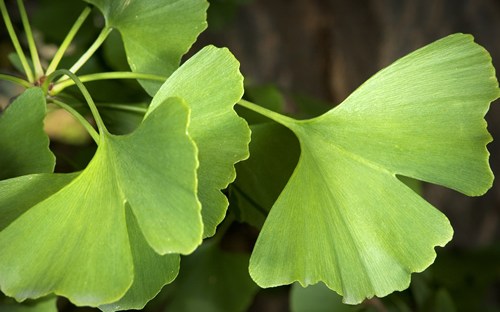
- Ginkgo Leaf, 16 parts. The heart of the formula, and by far the largest part of it. Ginkgo is one of the most widely used herbs in the world for brain circulation. It helps open the small blood vessels so nourishment can reach the brain cells and waste can be cleared away.
- Rosemary Leaf, 1 part. A traditional herb for memory and focus that also gets the blood moving.
- Cayenne (African Bird Pepper), 1 part. The great circulation stimulant. Dr. Christopher used it throughout his formulas to carry the other herbs where they are needed.
- Gotu Kola Herb, 1 part. A traditional herb for mental clarity, often paired with Ginkgo.
- Calamus Root, 1 part. Traditionally used for digestion and mental alertness.
- Kola Nut, 1 part. A small amount of natural caffeine for alertness. Caffeine narrows the blood vessels, so it may seem an odd choice for a circulation formula, but in this combination it plays an important supporting role. I don’t make the formula without it.
“Parts” can be any measure you like, as long as you use the same one for every herb. By weight, 16 ounces of Ginkgo would go with 1 ounce of each of the other five herbs.
Rosemary is one herb you can easily grow yourself. A rosemary bush practically raises itself. I planted one in spite of my black thumb, and it’s still going strong after more than ten years. When I need some, I cut a few branches and let them air-dry for a week or so, then run my fingers down the branches and the green spikes fall right off.
Putting It Together
The herbs can be taken as a tea, or made into a tincture (an alcohol extract), which is how I prefer them. To make a tincture, put the dry herbs in a glass jar and pour in 80-proof vodka. Once the herbs have settled, you want about 60% herb sediment on the bottom and 40% liquid on top. That proportion gives a nice, strong extract, and it’s a good rule to follow when setting any herb or herb mix. Shake the jar every day. The traditional timing follows the moon: start the tincture at the new moon and strain it at the full moon, about two weeks later, a rhythm herbalists have used from the very beginning. I prefer to let my extracts sit a full three months, which makes them good and strong. When it’s ready, strain and bottle the liquid.
Taken as a tincture, a common amount is 2 dropperfuls three times a day, and up to double that. As a tea, use one teaspoon of the herbs to a cup of hot water, up to six cups a day.
What I’ve Seen
A worried son-in-law once called me about his wife’s mother, who had lost touch with reality: memory loss, confusion, the kind of decline that frightens a whole family. I sent over a brain formula along these lines, and within a week she had turned around enough that the family could hardly believe it. This isn’t a miracle or a magic formula. I believe her turnaround came so quickly because the decline had only just begun, and there was still a lot to work with.
There is a lighter, everyday side too. Many people take a combination like this with nothing wrong at all, simply for the boost in focus and mental energy. I take it every day for that myself.
I also know this formula from my own life. Over the years I’ve had three concussions and one case of whiplash, and vertigo is not unusual for someone with a history like mine. When it comes on, the whole world turns upside down. A brain formula like this one is a vasodilator: it opens the blood vessels and gets the circulation moving, and it quickly ends that upside-down feeling along with everything that comes with it. Over long-term use, my symptoms have improved.
I learned this during one bad episode, when the paramedics came out to the house. One of them was truly sent from God. He walked in, saw the Cayenne on my side table and said, “Cayenne not working?” That told me right away that he understood herbs. He mentioned that if he took me in, they would give me a vasodilator, and asked whether I knew of an herb that could do that. Yes, I did: Ginkgo. I took a generous dose of my brain formula, and in less than five minutes I was back to myself.
A Note on Ginkgo
Ginkgo has mild blood-thinning properties, so anyone on blood-thinning medication, with a bleeding disorder, or scheduled for surgery should take that into account.
This is shared for educational purposes, from my own study and experience. It is not medical advice.


