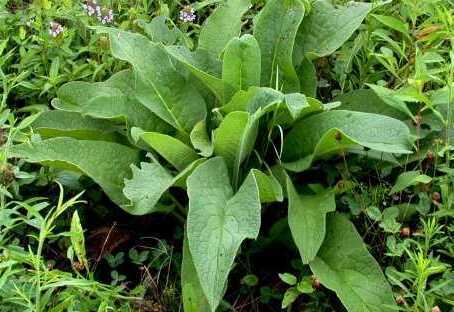
Comfrey plant with its large green leaves
Herbal Healing, Herbs & How to Use Them, Pain, Joints & Injuries, Skin, Wounds & First Aid

Knitting Bone, Flesh and Cartilage Back Together

When bone, connective tissue or skin has been injured, strained or broken down, the body needs more than time to knit itself back together. It needs concentrated nutrition for the rebuilding work. That’s what this combination provides. It is one of Dr. Christopher’s classic formulas, built around two lead herbs, White Oak Bark and Comfrey Root, with seven helpers that each bring something of their own.

It can be used two ways: taken by mouth as an extract, to nourish rebuilding from within, and made into a salve for cuts, bruises, burns and other surface injuries. The two are often used together, one from the inside and one from the outside.

What a Good Tissue-Rebuilding Formula Contains

Here is the combination I trust, with the proportions:

  • White Oak Bark, 6 parts. A co-lead herb and a strong traditional astringent, valued for toning and tightening tissue, from varicose veins to bleeding gums.
  • Comfrey Root, 6 parts. The other co-lead herb, the classic tissue-rebuilding herb. Traditionally it is the single most important herb for knitting bone, flesh and cartilage back together.
  • Mullein, 3 parts. A soothing, mucilaginous herb, traditionally paired with tissue-healing blends for its gentling, calming action on inflamed tissue.
  • Marshmallow Root, 3 parts. Another soothing, mucilaginous herb. It works alongside Mullein to protect the tissue while White Oak Bark and Comfrey do the rebuilding.
  • Black Walnut Hulls, 3 parts. Astringent, and long included in skin-healing blends for cuts, bruises and infection.
  • Gravel Root, 3 parts. Traditionally used to support healthy fluid balance and to help move deposits along, which is why this formula has been used for calcium spurs.
  • Wormwood, 2 parts. A traditional bitter herb, in a modest supporting amount.
  • Skullcap, 1 part. A traditional nervine, in a small amount to support the body through pain or tremor.
  • Lobelia, 1 part. A relaxant and circulatory herb, in the very small supporting role it plays in many of Dr. Christopher’s combinations.

“Parts” can be any measure you like, as long as you use the same one for every herb. By weight, 6 ounces each of White Oak Bark and Comfrey Root go with 3 ounces each of Mullein, Marshmallow Root, Black Walnut Hulls and Gravel Root, 2 ounces of Wormwood, and 1 ounce each of Skullcap and Lobelia.

How It Works

White Oak Bark’s astringency tones and tightens tissue, while Comfrey Root supplies the nutrients traditionally credited with rebuilding bone, flesh and cartilage. Gravel Root helps move deposits along, Mullein and Marshmallow Root soothe and protect the tissue while the rebuilding happens, Black Walnut Hulls support the skin, and Wormwood, Skullcap and Lobelia round out the blend in small amounts.

Over the years this combination has traditionally been used for sprains, pulled muscles, varicose veins and calcium deposits, as well as for cuts, bruises and burns on the surface.

Putting It Together

As an extract: Put the dry herbs in a glass jar and pour in 80-proof vodka. Once the herbs have settled, you want about 60% herb sediment on the bottom and 40% liquid on top. Shake the jar every day. The traditional timing follows the moon, from the new moon to the full moon, about two weeks. I prefer to let my extracts sit a full three months, which makes them good and strong. Then strain and bottle the liquid.

As a salve: The same herbs are fully extracted in extra virgin olive oil. They go into a 150-degree oven for three hours, then the spent herbs are swapped out for fresh ones, three times through in all. The finished oil is thickened with beeswax.

How Much and How Often

For the extract, a common amount is 2 to 4 dropperfuls (½ to 1 teaspoon) three to five times a day. For something fresh and acute, like a new injury, it can be taken as often as every hour, then dropped back down once it’s healing well.

The salve is applied directly to the area as needed. For deeper injuries, use it alongside the extract, for support from both directions.

What I’ve Seen

Long before I ever made my first batch of the salve, a friend of mine, a piano teacher up in Michigan, was already after me to make one. She was thrilled when it finally existed, and her routine was to rub the salve into her hands at night and sleep in mittens. Years later, her boyfriend talked her into marrying him, and for a wedding present he gave her a dog. One afternoon she was coming inside and the dog caught her arm badly enough to leave a real injury. She called me the next day and opened with, “It’s like it never happened.” That was the first I’d even heard anything had happened at all. The salve had done its work overnight.

For an overview of how I use herbal salves as topical applications, here is my video:

This is shared for educational purposes, from my own study and experience. It is not medical advice.

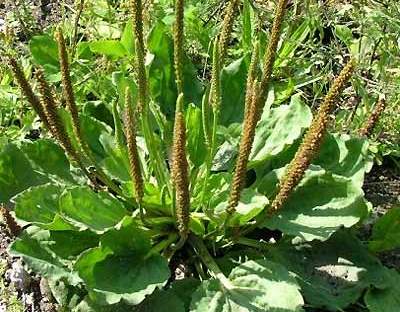
Plantain plant with seed spikes
Herbal Healing, Herbs & How to Use Them, Infection, Colds & Flu

Getting the Herbs to Where the Infection Lives

When the body is fighting an infection, the question I always ask is: how do we get the herbs to where the infection is living? The answer is the blood and the lymph. The lymph and blood feed every area of the body, including the place where an infection has settled. Support the blood and lymph, and you carry the herbs right to where they’re needed.

There are two kinds of infection formulas I keep on hand, and they work very differently. One is built around garlic and is warming and circulating; it’s the one to reach for at the first sign of a cold or flu. The other, which this post is about, is built around Plantain and works through the blood and the lymph system. I didn’t fully appreciate what that difference meant until my husband showed me.

What a Good Blood and Lymph Formula Contains

Plantain is a classic alterative: it gradually cleanses and purifies the blood while toning the organs that aren’t eliminating properly. Build a formula around it, and add herbs that each bring their own strength. Here is a combination I trust, with the proportions:

  • Plantain, 4 parts. The heart of the formula. It cleanses the blood, is a natural germ fighter, and is famous for drawing out toxins.
  • Black Walnut, 4 parts. A powerful cleanser, especially the green hull. It is rich in natural organic iodine and has a long tradition with skin troubles, wounds, and the teeth and gums.
  • Goldenseal Root, 4 parts. One of the most valued herbs in the herbal kingdom. It supports the mucous membranes throughout the body and helps clear thick, stubborn secretions.
  • Bugle Weed, 2 parts. Long valued by early American doctors. It calms irritation and the nerves, and steadies and strengthens the heart while the body is under the strain of fighting.
  • Marshmallow Root, 1 part. Soothing to inflamed tissues of the respiratory, digestive, and urinary tracts, and it balances the drier herbs in the blend.
  • Lobelia, 1 part. Dr. Christopher’s great “thinking herb.” It opens obstructions and congestion, especially in the blood vessels, and helps carry the formula wherever it’s needed.

“Parts” can be any measure you like, as long as you use the same one for every herb. By weight, 4 ounces each of Plantain, Black Walnut and Goldenseal would go with 2 ounces of Bugle Weed and 1 ounce each of Marshmallow Root and Lobelia.

These same six herbs also make a wonderful salve, so the two can work together inside and out. For a salve, the herbs are fully extracted in extra virgin olive oil: they go into a 150-degree oven for three hours, then the spent herbs are swapped out for fresh ones, three times through in all. The finished oil is thickened with beeswax.

Putting It Together

These herbs make a good tincture (an alcohol extract). Put the dry herbs in a glass jar and pour in 80-proof vodka. Once the herbs have settled, you want about 60% herb sediment on the bottom and 40% liquid on top. That proportion gives a nice, strong extract. Shake the jar every day. The traditional timing follows the moon: start at the new moon and strain at the full moon, about two weeks later. I prefer to let my extracts sit a full three months, which makes them good and strong. When it’s ready, strain and bottle the liquid.

How Much and How Often

One dose for a 150-lb adult is 1 teaspoon. Children and pets are dosed by weight, so a 75-lb child or dog gets half a dose. Formulas are never given directly to a baby; a nursing mother takes the full adult dose herself, and the baby receives what it needs through her milk. I usually take it in a little almond milk; honey is rarely needed with this one. Pick the level that best fits the situation:

  • Long-term blood cleansing: 1 teaspoon two or three times a day, continued over many months, to gradually cleanse the blood and tone the organs.
  • Preventive: 1 teaspoon two or three times a day when illness is going around or after an exposure.
  • Basic: 1 teaspoon every 3 waking hours, about 5 times a day, with Echinacea.
  • Moderate: 1 teaspoon every 2 waking hours, alternating with a garlic formula, with Echinacea.
  • Intense: 1 teaspoon every waking hour, switching between this formula and a garlic formula, with Echinacea.
  • Intensive: both formulas, 1 teaspoon each, ten minutes apart, every hour.

Which One When?

Reach for the garlic formula at the first sign of a cold or flu, when the throat, sinuses, and chest need warming support. Reach for the Plantain formula for stubborn or localized trouble: the skin, the teeth and gums, and anytime the blood needs deep cleansing. For more serious infections, the two are alternated.

The Real Answer for Teeth and Gums

My husband had tooth infections and got tired of the burn from the garlic formula, so he decided to try the Plantain formula instead. We had never thought about the lymph system feeding the infected area, but within a day the infection was nearly cleared. It’s so important to get the herbs to where the infection is living, and for the teeth and gums, this formula is the real answer.

I learned another lesson of my own after a broken tooth was removed. I had a very stubborn infection in my gum that nothing seemed to clear, even though I was using all my other infection supports. For a bit of comfort, I put a Charcoal and Flax poultice over both ears. It sounds strange, I know, but I was shocked to see the infection pimple on my gum gone after one application. The body just needed a bit of topical support too.

For Our Pets

This is the formula we reach for when our pets need infection help. It’s easy to dose by weight, and it has been very effective for them. We don’t give them the garlic formula, because it has the cayenne bite. A little creature doesn’t understand the heat and thinks it has done something wrong and is being punished. The exception is the pet that has picked up its family’s taste for hot food; it’s amazing how some of them do!

This is shared for educational purposes, from my own study and experience. It is not medical advice.

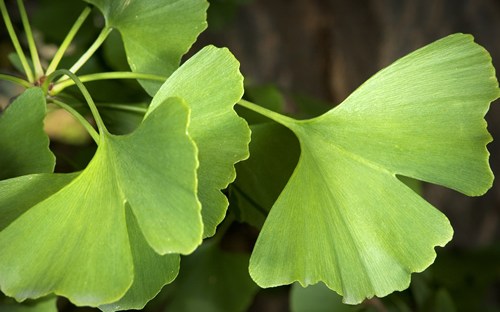
Green ginkgo leaves
Brain, Nerves & Sleep, Herbal Healing, Herbs & How to Use Them

Circulation Is Everything for a Clear Mind

Memory, mental clarity, and healthy hearing and eyesight all depend on one thing the brain can’t do without: good circulation. Brain cells need a steady supply of blood, oxygen and nourishment, and the waste they produce has to be carried away. When circulation is poor, the cells go hungry and the waste builds up. The result is congestion and a brain that simply can’t work the way it was made to.

So when I think about herbs for the brain, I think about circulation first. Dr. Christopher taught this principle for years, and I’ve seen it play out again and again in my own practice.

What a Good Brain Formula Contains

A good brain formula is built around one herb, Ginkgo, with a few helpers that each bring something of their own. Here is a combination I trust, with the proportions:

  • Ginkgo Leaf, 16 parts. The heart of the formula, and by far the largest part of it. Ginkgo is one of the most widely used herbs in the world for brain circulation. It helps open the small blood vessels so nourishment can reach the brain cells and waste can be cleared away.
  • Rosemary Leaf, 1 part. A traditional herb for memory and focus that also gets the blood moving.
  • Cayenne (African Bird Pepper), 1 part. The great circulation stimulant. Dr. Christopher used it throughout his formulas to carry the other herbs where they are needed.
  • Gotu Kola Herb, 1 part. A traditional herb for mental clarity, often paired with Ginkgo.
  • Calamus Root, 1 part. Traditionally used for digestion and mental alertness.
  • Kola Nut, 1 part. A small amount of natural caffeine for alertness. Caffeine narrows the blood vessels, so it may seem an odd choice for a circulation formula, but in this combination it plays an important supporting role. I don’t make the formula without it.

“Parts” can be any measure you like, as long as you use the same one for every herb. By weight, 16 ounces of Ginkgo would go with 1 ounce of each of the other five herbs.

Rosemary is one herb you can easily grow yourself. A rosemary bush practically raises itself. I planted one in spite of my black thumb, and it’s still going strong after more than ten years. When I need some, I cut a few branches and let them air-dry for a week or so, then run my fingers down the branches and the green spikes fall right off.

Putting It Together

The herbs can be taken as a tea, or made into a tincture (an alcohol extract), which is how I prefer them. To make a tincture, put the dry herbs in a glass jar and pour in 80-proof vodka. Once the herbs have settled, you want about 60% herb sediment on the bottom and 40% liquid on top. That proportion gives a nice, strong extract, and it’s a good rule to follow when setting any herb or herb mix. Shake the jar every day. The traditional timing follows the moon: start the tincture at the new moon and strain it at the full moon, about two weeks later, a rhythm herbalists have used from the very beginning. I prefer to let my extracts sit a full three months, which makes them good and strong. When it’s ready, strain and bottle the liquid.

Taken as a tincture, a common amount is 2 dropperfuls three times a day, and up to double that. As a tea, use one teaspoon of the herbs to a cup of hot water, up to six cups a day.

What I’ve Seen

A worried son-in-law once called me about his wife’s mother, who had lost touch with reality: memory loss, confusion, the kind of decline that frightens a whole family. I sent over a brain formula along these lines, and within a week she had turned around enough that the family could hardly believe it. This isn’t a miracle or a magic formula. I believe her turnaround came so quickly because the decline had only just begun, and there was still a lot to work with.

There is a lighter, everyday side too. Many people take a combination like this with nothing wrong at all, simply for the boost in focus and mental energy. I take it every day for that myself.

I also know this formula from my own life. Over the years I’ve had three concussions and one case of whiplash, and vertigo is not unusual for someone with a history like mine. When it comes on, the whole world turns upside down. A brain formula like this one is a vasodilator: it opens the blood vessels and gets the circulation moving, and it quickly ends that upside-down feeling along with everything that comes with it. Over long-term use, my symptoms have improved.

I learned this during one bad episode, when the paramedics came out to the house. One of them was truly sent from God. He walked in, saw the Cayenne on my side table and said, “Cayenne not working?” That told me right away that he understood herbs. He mentioned that if he took me in, they would give me a vasodilator, and asked whether I knew of an herb that could do that. Yes, I did: Ginkgo. I took a generous dose of my brain formula, and in less than five minutes I was back to myself.

A Note on Ginkgo

Ginkgo has mild blood-thinning properties, so anyone on blood-thinning medication, with a bleeding disorder, or scheduled for surgery should take that into account.

This is shared for educational purposes, from my own study and experience. It is not medical advice.

1 Corinthians, Bible Studies

One Cup, One Loaf, One Body

Reflections on 1 Corinthians 10:16–17

Two symbols, one Christ

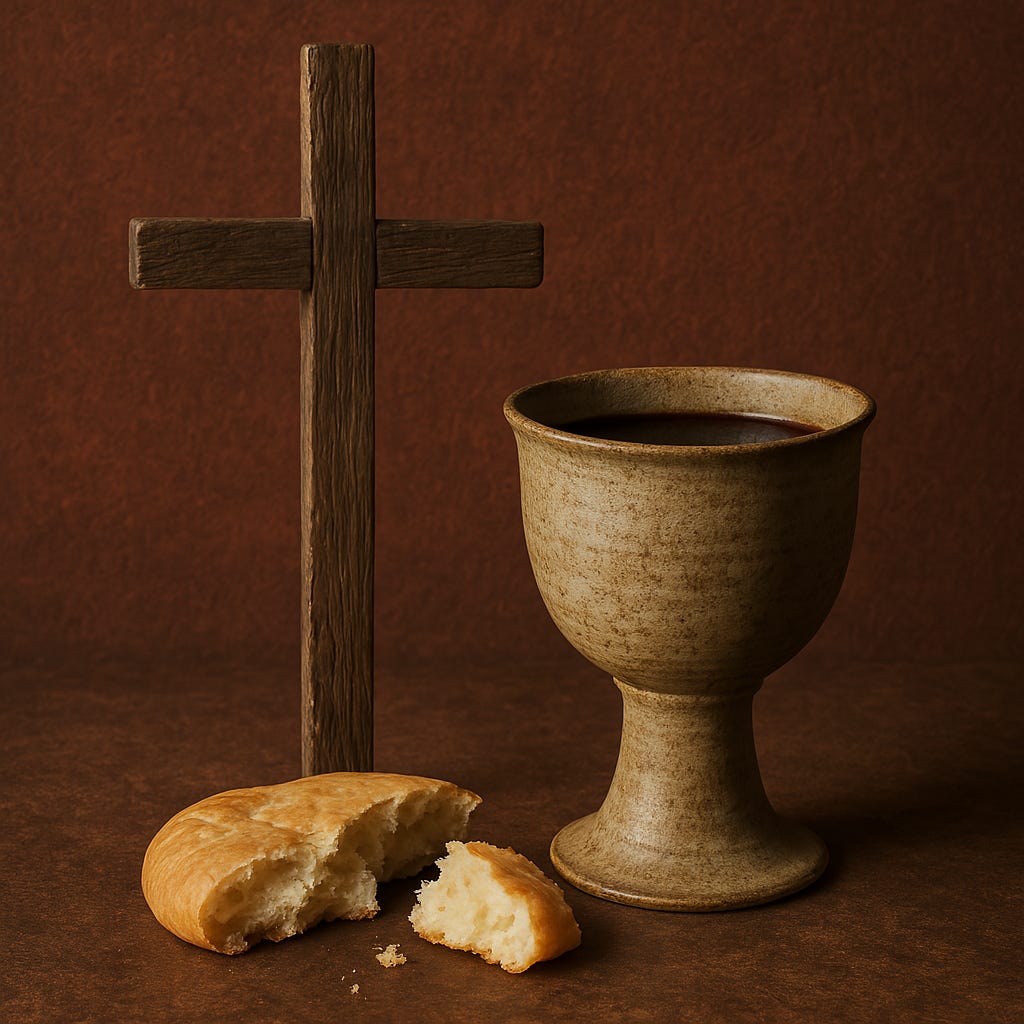
The cup of blessing which we bless, is it not the communion of the blood of Christ? The bread which we break, is it not the communion of the body of Christ? For we being many are one bread, and one body: for we are all partakers of that one bread. (1 Corinthians 10:16–17, KJV)

In one breath Paul gives us two symbols of Christ: the cup and the bread. Both point to him, yet they are not saying the same thing. The blood is his life poured out for us. The bread is his overcoming life given to us, and it is also the body we become when we eat it together.

The Remedy draws the line clearly. It calls the cup a symbolic ingestion of the life of Christ, and the bread a symbolic internalization of his character, methods and principles. Those two ideas carry this whole study.

The cup: Love poured out

Scripture tells us that “the life of the flesh is in the blood” (Leviticus 17:11). Blood poured out means a life given up. So the cup speaks first of Christ surrendering his life, and of the new covenant sealed in it (1 Corinthians 11:25).

Why did he pour it out? Love. “Greater love hath no man than this, that a man lay down his life for his friends” (John 15:13). God commends his love toward us in that Christ died for us while we were still sinners (Romans 5:8). The blood is his life, and Love is what moved him to pour it out. That is why I have always read the blood as the Love of Christ poured out freely for the benefit of fallen humanity.

When we drink the cup, we celebrate a staggering truth. Think of the God who created this entire universe, the vastness of all he is and all he has. Then look at our existence, no more lasting than a blade of grass that springs up for a moment, thrives a few hours in the sun, and gives way to the next. How could the God of eternity find this sinful, lost, hopelessly deluded little dot in the Milky Way worth his attention, much less his amazing Love?

Yet he knew our brokenness. He knew that many of this fallen race would choose eternal nonexistence over the Love-filled existence he offers. None of it discouraged his Love in the slightest. He remains constant, drawing us into his healing Love as quickly as our hearts can accept the truth about him. His Love was poured out so we could be made right and healed of our terminal, sin-sick condition.

The bread: the life that overcame

The bread is the body of Christ, and it points to the life he now has to give us. That is the life he lived and perfected in our humanity, carried all the way through Calvary.

This matters because the fix humanity needed was not complete until the cross. Adam broke faith with God when he believed a lie: that God did not have his best interest at heart. When you believe a lie about someone, your heart toward them changes, even if they are completely innocent. The circle of love and trust is broken. The serpent’s lie in Eden did exactly that, and Adam’s first response was fear and hiding (Genesis 3:10).

Christ came to heal that break. Every day he trusted his Father under pressure was part of building the remedy. At the cross he held onto that trust even while feeling forsaken, the very opposite of Adam’s choice. His earthly life was not wasted; it was unfinished until Calvary. We are reconciled by his death and saved by his life (Romans 5:10). And the bread is explicitly “broken for you” (1 Corinthians 11:24). It is the life that came through the cross.

Perfection is maturity

Hebrews says Christ was made “perfect through sufferings” (2:10) and, being made perfect, became the author of eternal salvation (5:8–9). The Greek word, teleios, means complete, mature, full-grown. Paul uses it for the mature as opposed to babes (1 Corinthians 2:6, 14:20).

For us, biblical perfection is maturity: knowing ourselves well enough to see a wrong turn, repent, and head the other way. Christ never took a wrong turn. His direction ran straight to the cross, and there he cried “It is finished” (John 19:30). That word, tetelestai, comes from the same root as teleios. His perfection and his finished mission are one idea: the work brought to its intended end.

So sharing in his body is sharing in his victory over the disease of sin. It is the only cure for our terminal sin condition, the only answer to our lost state of body, mind and spirit.

Communion means participation

The word Paul uses for “communion” is koinonia: sharing, fellowship, participation. The translations bring this out. NIV and Knox say “a participation in” the blood and body. NCV says “a sharing in.” Berkeley says “a fellowship in.” Goodspeed says that in drinking and eating “we share in” Christ. The Supper is not only remembering him; it is taking part in him.

That makes the Lord’s table all about community. It is a place and time to come together in our agreement to honor the faith we hold in what the Love of Christ secured for us. And it carries a responsibility: to keep showing this love to each other and to the larger society we affect.

When we love as Christ did, the cost of claiming another soul for him will never be beyond what we are willing to give of ourselves. That is our work: convincing a person, in the deepest part of their heart and mind, that this is truth and that this truth matters. This is not knowledge you can lightly handle. It will change the way you view your entire existence.

One loaf, many individuals

Verse 17 is Paul’s own application of the bread: because there is one loaf, we who are many are one body. The Remedy puts it this way: when we partake of Christ, we partake of the only genuine Bread that gives life, and so become united into one body, because we all assimilate the same character of Love.

Notice the order in verse 16. Paul names the cup first and the bread second, the reverse of the Supper itself. It seems deliberate, because it lets him move straight from the bread into the one body.

We who have accepted the gift of salvation all ingest the same life. But each of us, being an individual, will be affected differently. Christians are not cookie-cutter people, all thinking the same thoughts, doing the same things, wearing the same clothes. If you are part of a group that appears identical in every way, you are not looking at the body of Christ.

Christ encourages our individuality and our personal development into who we can be. Each one in the vast family of God will be a unique, one-of-a-kind person. Why? Because Christ will take you down paths where you will grow and become more. You will stretch your mind, spirit and physical body past all the limits of your past life. The truth of Christ is the truth of you as an individual, the truth that will expand you beyond the limits you have put on yourself.

So yes, eat!

So yes! Partake of the one loaf. It carries all the power flowing from the throne of the universe, the Fires of Truth and Love, the nutrients from the fruit of the tree of life. His body flows with every nutrient for our physical, emotional and spiritual being. So eat up; each day eat your fill. This is the food that truly nourishes and heals.

The healing for humanity was accomplished at Calvary. Christ overcame every last selfish, me-first tendency when he surrendered his life to his own created beings. He demonstrated as no other intelligence could that God is Love. He had created humanity free, able to choose what they would be. At the cross he overcame, healed humanity, and showed us who our God truly is, all at the same time.

Every question was answered there. Satan’s lies about God no longer hold any credibility; he was proven a liar, and Christ showed who God truly is. The universe has its answers. Only here do the questions remain, and only here are intelligent beings still deluded.

Through the valley

To take in that life, we must die to the old one: the selfish, self-serving habits and protections we learned over a lifetime of sinful living. This is the valley of the shadow of death, where Christ leads us down the path he had to walk alone. It is where you let go of all that is false and grab hold of the true with both hands.

It will take both hands to hold onto Christ as he draws us through the valley and up the steep, rugged path. At the peaks the view is beautiful, the air is pure, and we can see forever. Let it all go. Discover the true joy of reaching beyond the wildest dreams you ever had. You are more, and it is truly you, because you have surrendered the lies and are living the life of Christ within you.

The reward is worth any and every sacrifice.

Sep 30, 2026 · @Dara Dietz

Herbal Healing, Infection, Colds & Flu

Getting Ready for Flu Season

A cup of tea with a cinnamon stick among autumn leaves

The cool mornings are here, and with them comes flu season. The best time to build up your defenses is now, before illness arrives rather than after.

Why We Have a Flu Season

Why does a flu season come around every year? As the weather cools, we bundle up, close the windows and drapes, and stop going outside into the fresh, cleansing air. Our homes become closed boxes, and our bodies slowly become clogged with waste. Germs, viruses, and bacteria love a closed-up, stagnant system.

Then the holidays arrive. The sweet, rich treats clog our systems further, and the emotional drama of the season weakens us even more. Add tightly closed homes and very little sunshine, and you have the perfect recipe for sickness every fall and winter.

The good news is that each of these causes has a simple answer.

Open Up Your Home and Your Body

Prevention starts with keeping both your home and your body open, clean, and moving.

  • Air out your home. On the warmer days, open the windows for a few minutes and let fresh air circulate. In very cold weather this isn’t always easy, but even a few minutes helps.
  • Let the sunshine in. Open the curtains. Sunlight purifies your rooms, and a morning walk in the sun does the same for you.
  • Keep clean. Take a daily bath, and change your bed sheets on a regular weekly schedule.
  • Go easy on the sweets. Sugar clogs up the immune system just when we need it most. Enjoy the holidays, but keep the treats in their place.
  • Stay warm. Keep your feet and neck warm so your circulation stays strong.
  • Rest. The shorter days are nature’s cue to slow down. Early nights give the body time to repair and rebuild.

My Fall and Winter Herbal Routine

Through the fall and winter months, I suggest adding these to your daily routine:

  • Vitamin C: 3,000 mg time-release, at least once a day.
  • Echinacea: 1 oz a day, 4 days each week. Echinacea strengthens the immune system and helps the body clear out what doesn’t belong.
  • Garlic: When everyone around you is starting to get sick, add the Super Tonic or Herbal Aid 1 to your day. Both of these formulas are all about garlic, one of our strongest infection fighters. Use garlic and onions freely in your cooking too.

When You Think You’ve Been Exposed

If you’ve been around someone who is sick, or you feel something coming on, rest comes first. Your body needs its strength to fight off the incoming invaders. Then step up your program right away:

  • Echinacea: 1 oz each day, 4 to 6 days each week
  • Super Tonic: 1 tablespoon, 3 times a day
  • Vitamin C: 3,000 mg, twice a day
  • Lobelia: 1 dropperful a couple of times a day

Lobelia as a Preventive

Dr. Christopher called Lobelia one of the greatest herbs in the world. It is a relaxant and an anti-infection herb, and its greatest gift is that it removes obstructions and congestion in the body.

That is why it works so well as a preventive. Between the time a virus is contracted and the time symptoms appear, the virus is busy blocking up the system so it can take hold. Keeping the body open, so normal waste is properly removed, keeps that blockage from getting established.

Dr. Christopher told of an elderly student who worked at a nursery where mononucleosis swept through the staff. She kept a bottle of Lobelia tincture at work and took small, regular doses in a little water through the day. She was the only employee who did not come down with it.

Lobelia is a powerful herb and deserves respect. It is not for everyday minor complaints, and larger doses can cause vomiting. If you haven’t used Lobelia before, call me first and we’ll work out the right amount for you.

If You Do Get Sick

Rest right away rather than pushing through, drink plenty of warm fluids, and reach out to me. Please get medical care promptly for a high or lasting fever, trouble breathing, or symptoms that keep getting worse.

I’m here to help you put together a fall wellness plan that fits you. Wishing you a healthy season!

Read More

Sun rays breaking through
1 Corinthians, Bible Studies, Spiritual Healing

Flee from False God-Concepts

A study of 1 Corinthians 10:14–15

Paul has spent the whole chapter laying out his case about idolatry. He has walked the Corinthians back through Israel’s history in the wilderness, given his reasons, and let the Scriptures speak for themselves. Now, in two short verses, he does two things. He gives a warning, and then he hands the decision back to his readers.

Flee

The translators reach for strong words here. The NIV has Paul telling them to flee, and the NCV says run away. Knox says keep far away, the Jerusalem Bible says keep clear, and Moffatt and the Twentieth Century New Testament say shun it. Phillips puts it most urgently of all: avoid it at all costs. This is not a gentle suggestion. Paul is telling them to put real distance between themselves and anything that takes the place of the true God.

The Living Bible widens the warning to idol worship of every kind, and The Remedy carries that thought all the way home: flee from false gods and all false God-concepts. That takes us past the carved images of Corinth to something far closer to us. An idol does not have to be made of wood or stone. It can be a picture of God that we carry in our minds. A person can be in the right church, keep the right day, and read the right books, and still be bowing before a false God-concept.

Judge for Yourselves

Then Paul says something remarkable. He speaks to them as sensible people, men of good sense, intelligent people, men of discernment, and he tells them to weigh his words and decide for themselves. He has laid out the facts and given his reasons. Now he is saying, in effect, “You need to apply your God-given intelligence to what I have shared, and decide for yourself whether you find it to be the truth.”

We each must decide this for ourselves. No one else can believe for you, not the pastor, not the books you study. All of these contain facts or opinions, and you must apply your own mind to understanding them. Yet we cannot even understand truth without the aid of the Holy Spirit. Our study must be approached with a mind open and ready to follow the Truth wherever it leads. A heart filled with the Fires of Truth and Love will be eager to know and follow the Truth.

Can Facts Lead You Away from God?

So the question is, how do you know the truth? It is possible to follow a line of facts that leads you away from God. Yes, it is. You have to know by personal relationship, by your time spent in communion with Christ, who this Being is and who God is in your life.

A Testimony

My own study of the Shepherd’s Rod movement, founded by Victor Houteff, is the story of being completely convinced that a lie was truth. The God presented in that movement is a vengeful God who is going to destroy those who refuse to accept the truth as given in the writings of the Shepherd’s Rod. I studied each and every lesson, followed every line of thought, and could not find any error. All the Bible texts appeared to say exactly what Victor Houteff said they said. I read every word the man wrote. My Spirit of Prophecy books were read cover to cover, and I could find no error in the way the material was used.

But there was a problem. The people in the movement were cold and vindictive. There was a serious lack of true brotherly love among all the different factions of the movement. There was the need to lord the truth over the women, telling them what they could wear, applying a dress code to women beyond what the men followed. Little things I noticed.

At the same time I was introduced to the writings of the Shepherd’s Rod, I was also made aware of the 1888 material from Jones and Waggoner, and I read everything I could find on this truth that Ellen White supported completely. The more I read, the more I became aware of a different God. This one had a love for fallen humanity. The need to do all the rules perfectly was replaced with a relationship with a personal Christ who had always been my friend.

I moved through the Rod movement still unable to find flaws in the line of truth. Then, somewhere along my journey, I discovered Graham Maxwell’s Conversations About God video series, and that was the truth that began to shift my understanding of the character of God. Still, I did not see clearly enough that the Law lens I was trying to view God through was wrong. Then I came across the Through the 66 series with Graham Maxwell, taking every book of the Bible and asking the question, “What does this tell us about God?”

I could finally see a God who was Love. I understood the missing link: our choices either refine or destroy us. God does not have to destroy us; we do it to ourselves. It was as if all the years of reading the Spirit of Prophecy, the 1888 writings of Jones and Waggoner, and the beautiful way Maxwell presented Christ and the Father finally made sense. My spiritual vision became clearer.

Looking back at the Rod studies, it was now easy to see the lens Houteff had viewed God through. The facts were all there, but the spirit of the God being presented was a lie. Satan’s hand was in that message, putting out the same lies about Christ and the Father that he had been spreading in heaven among the angels.

Later, around 2014, my brother discovered Dr. Tim Jennings and shared his find with me. The message Dr. Jennings brings out in his Bible study classes has given me the tools to go back through all my years of study and refocus on the truth of God: seeing Him as my Healer, the One who is truly for me, never against me.

God Can Be Trusted

The Truth is that God is Love. God can be trusted, and He has poured out every resource heaven has to give for the salvation of humanity. The one thing He cannot do is make up our minds for us. That is exactly why Paul says, “Judge for yourselves.” God will not force belief, and Paul will not either. They set out the evidence and trust us to weigh it.

For me, I discovered that the Bible is truth, and “the truth will set you free” (John 8:32). So flee, not only from idols of wood and stone, but from every false picture of God. Examine the evidence, draw your own conclusion, and do it in communion with Christ. Ask of every book and every teaching the same question: what does this tell us about God?

Mountain path through the peaks
1 Corinthians, Bible Studies, Spiritual Healing

A Way to Escape: Stronger with Each Victory

A Promise for Every Temptation

“There hath no temptation taken you but such as is common to man: but God is faithful, who will not suffer you to be tempted above that ye are able; but will with the temptation also make a way to escape, that ye may be able to bear it” (1 Corinthians 10:13).

Paul has just walked the Corinthians through Israel’s failures in the wilderness and warned, “Let him that thinketh he standeth take heed lest he fall” (10:12). Then, in the very next breath, he gives one of the most encouraging promises in all of Scripture. No temptation that comes to us is unique. God is faithful. He will not let us be tempted beyond what we can bear. And with every temptation, He provides a way out.

Words Mean Things

Most translations carry this promise clearly. Goodspeed says God “can be depended on, not to let you be tried beyond your strength.” Beck and the NCV both say simply, “you can trust God.” Phillips puts it beautifully: “He will see to it that every temptation has its way out, so that it will be possible for you to bear it.”

But not every translation gets it right. Knox renders the verse, “Not that God would play you false; He will not allow you to be tempted beyond your powers. With the temptation itself, he will ordain the issue of it, and enable you to hold your own.”

When I first read Knox, I knew something was wrong but couldn’t put my finger on it. Once it settled with me, I began to understand what was so off. Words mean things, and the words he chose cast a very bad light on the character of God. “Not that God would play you false” raises the idea that God could deceive us, even while denying it. “He will ordain the issue of it” makes God the one arranging how the temptation turns out. Both are convoluted and off the mark. The text is showing us a faithful God who provides a way out.

How we picture God matters. A God who might play us false, or who ordains the outcome of our temptations, is not a God we can trust. The God Paul presents is dependable and faithful, always on our side.

Resources, Options, and Supports

The Remedy draws out just how much God provides: “God is reliable and trustworthy; he will not allow temptation beyond your ability to resist, but when you are tempted, he will always provide resources, options, opportunities, supports, and alternate ways out so that you can stand your ground and overcome the temptation, thereby growing stronger with each victory.”

Notice what the text does not say. It does not say we overcome in the strength of God. It says God will provide a way for us to escape, to endure, to overcome the temptation. He supplies the way; we choose to walk in it. And with each victory, each time we grasp the hand of the Lord and follow His leading, we are stronger to do it again the next time.

Why We Look for the Easy Way

We talk ourselves into many wrong actions by allowing our minds to look for an easy way around the duty we know we should be doing. Change is never easy, but the truth is that every change for the better increases the quality of our lives.

The time of change can be uncomfortable: learning something new, accepting that I have been wrong in my understanding or my actions. That is always a hit to the pride. But knowing the new way of thinking or acting is going to increase the joy in my life is encouragement enough to accept the humbling of admitting my wrong, and the learning curve (which I am so tired of) becomes endurable. The outcome, the changes in myself, makes it all worthwhile.

Never Alone in the Climb

We are never alone in our struggles with ourselves. Anyone who is not working on doing better is just drifting through this life, wasting the years here, ensuring that this sad, sorry life is all they will ever have.

Life is an uphill climb; the joy comes as we develop the spiritual and emotional muscles to make the climb. Exercising our talents, becoming more than we ever thought we could be: this is the glorious, victorious life, the beginning of heaven here on earth. To be an overcomer now. To walk each day breathing the air of heaven. To go to bed each night knowing you have broken faith with no one, that all your good intentions were kept and all the good you were able to do that day was done. This is living the victorious life. This is truly living.

The promise is here: no temptation will be too strong for you. You can do this. Why? Because Christ, your big brother, has gone this way before you. He has prepared a way out of every trial and temptation. These times are for growing, for becoming more.

The Cost of the Easy Thing

Don’t waste these times with fear, regret, or failure. When temptation comes, embrace the opportunity to grow that you are holding in your hands.

You can do the easy thing, give in and lose this opportunity for growth, but look at the cost: breaking faith with yourself, with God, and with everyone your influence touches. The outflow of a bad choice will continue to affect lives far beyond our small minds’ ability to comprehend. Nothing we do is without effect.

The effect on ourselves is devastating enough, but knowing that our selfish actions have brought pain or heartache to another soul can be the strongest deterrent of all. The more we understand about how love works, who God is, and the truth in our own hearts, the easier it becomes to accept our personal responsibility and stand in the place God has created for us to fill. We are each a perfect fit for the work and ministry the Lord has put in our hearts to do.

Stronger Every Time

God is faithful. He will not let you be tempted beyond what you can bear, and He has already prepared the way out. The next time temptation comes, look for the way He has provided. Take His hand and follow His leading. Each victory makes you stronger for the next, until walking in His way becomes the natural rhythm of a life lived in the air of heaven.

Morning sun through the trees
1 Corinthians, Bible Studies, Spiritual Healing

Standing Strong: Feeding and Cleansing the Whole Person

Starting point: 1 Corinthians 10:12

“Wherefore let him that thinketh he standeth take heed lest he fall.”

We have no strength to stand on our own. Taking care not to fall means continuing on in our first love of Truth, open each day to learn the new thing the Lord brings to us.

We can get so busy with all the good things we are doing that we think we are grounded and doing well. Then it sneaks up on us: we have starved our spiritual and emotional life to death by not taking the time to feed them.

Busier Than Israel?

Looking back at the Jewish nation, it is easy to think how poorly they treated God and themselves. They continually broke faith with Him and with themselves, with no understanding of the damage they were doing. But consider their lives. Every day was toil for their very existence. If they did not do the work to put food on the table, there was no other option but to go to bed hungry. There were no restaurants to grab a meal at. Their life was to work all day to keep their family fed, clothed, and under a roof. Leisure time was unheard of.

Still today, with all our society’s conveniences, we can stay so busy that our time with Christ each morning is missed, or forgotten.

Busyness crowding out the inner life

  • Luke 10:38–42 — Martha was “cumbered about much serving.” Her work was good, but Mary chose the one needful thing.

  • Revelation 2:2–4 — Ephesus is praised for works, labor and patience, yet has left its first love.

  • Song of Solomon 1:6 — “They made me the keeper of the vineyards; but mine own vineyard have I not kept.”

  • Exodus 18:17–18 — Jethro warns Moses that his good work will wear him away.

Jesus modeling rest

  • Mark 6:31 — “Come ye yourselves apart… and rest a while,” for they had no leisure so much as to eat.

  • Luke 5:15–16 — As the crowds grew, “he withdrew himself into the wilderness, and prayed.”

  • Matthew 11:28–30 — “Come unto me… and I will give you rest.”

When depletion has already set in

  • 1 Kings 19 — Right after Carmel, Elijah collapses. God’s first answer is sleep and food, then the still small voice.

No Stable Source Within

We are only strong as we return each morning to our source of strength and draw more from Him. There is no stable supply flowing in us. We do not produce our own emotional or spiritual strength from within ourselves, any more than we can keep our physical strength if we fail to eat good food and drink pure, fresh water. Food and water are required for life to continue, along with breathing in and out all day long.

How can we expect to grow spiritually or emotionally if we never feed or water those parts of our soul?

Quietness and confidence: Isaiah 30:15

“In returning and rest shall ye be saved; in quietness and in confidence shall be your strength: and ye would not.”

If we don’t take time to be quiet with ourselves, to see where we are actually standing and check the motives of our heart, we cannot be confident that we are still in the Lord’s work. Quiet time is essential to keep going forward and not lose our first love.

Verse 16 shows what Israel chose instead: “No; for we will flee upon horses.” Their answer to pressure was more motion, when God offered stillness and return. Motion feels like strength, but the strength is in the quiet.

Searching the heart

  • Psalm 139:23–24 — “Search me, O God, and know my heart… see if there be any wicked way in me.”

  • 2 Corinthians 13:5 — “Examine yourselves, whether ye be in the faith.”

  • Lamentations 3:40 — “Let us search and try our ways, and turn again to the Lord.”

  • Psalm 46:10 — “Be still, and know that I am God.”

Ephesus did not lose its first love by doing wrong things. It lost it by never pausing long enough to notice it slipping. Quiet time is where we notice.

Feeding the spirit and the emotions

Quiet time is like feeding and watering our spiritual and emotional life. It must be guarded with the same diligence we guard mealtimes. If we don’t feed the body, it stops working and we have no strength to move forward. The same is true emotionally and spiritually.

Guard the times of spiritual and emotional feeding with the same attention you give your mealtimes. They are as important to your continuing to stand in your place, as God’s friend and worker, as breathing in and out all day long.

Spiritual food is our time with the Lord and the study of what He is saying to us: getting to know Him through His Word, what He has done, and how He has led in the past.

  • Job 23:12 — “I have esteemed the words of his mouth more than my necessary food.”

  • Jeremiah 15:16 — “Thy words were found, and I did eat them.”

  • Matthew 4:4 / Deuteronomy 8:3 — Man shall not live by bread alone.

  • John 15:4–5 — Abide in me; fruit comes from staying connected.

  • Proverbs 4:23 — “Keep thy heart with all diligence; for out of it are the issues of life.”

Emotional food is time spent truly enjoying family and intimate friends, those who feel our hearts and minds and refresh us. Not the ones who only take from us and to whom we minister, but the ones inside our guard, who affect our hearts and minds the most.

This is the part most easily lost. When we become so busy with all the good projects that we lose our time alone with the Lord, we usually neglect the special time alone with husband and family as well, because there always seems to be a more pressing issue to deal with. Our emotional life is left to starve.

  • 1 Corinthians 16:18 — Stephanas and his companions “refreshed my spirit.”

  • 2 Timothy 1:16 — Onesiphorus “oft refreshed me, and was not ashamed of my chain.”

  • Philemon 7 — The hearts of the saints were refreshed by Philemon.

  • John 11:5, 12:1–3 — Jesus had an inner circle and a home at Bethany where He was simply loved.

  • 1 Samuel 23:16 — Jonathan went to David and “strengthened his hand in God.”

We are three parts

There are three parts to each of us, and each part needs daily nourishment. To fail to care for any part is to lose the ability to function in that area of our life. Finding balance is as important to the health of our body and soul, to our whole wellbeing, as remembering to eat our daily food.

Without balance, with all three parts fed and supported, we may think we are standing strong, but we will fall. A starving body cannot keep standing. We are triad (tripartite) beings: physical, spiritual and emotional. All three must be fed the food they require, or we fail to be who we are.

  • 1 Thessalonians 5:23 — “I pray God your whole spirit and soul and body be preserved blameless.”

  • 3 John 2 — “That thou mayest prosper and be in health, even as thy soul prospereth.”

  • Luke 2:52 — Jesus “increased in wisdom and stature, and in favour with God and man.”

  • Proverbs 17:22 — “A merry heart doeth good like a medicine: but a broken spirit drieth the bones.”

Cleansing before rebuilding

As an herbalist, the biggest job is not only feeding the body but removing the toxicity that poor living and poor nutrition have allowed to build up. The same is true in the emotional and spiritual bodies. Mind, heart and body cannot be restored, however good the food, while they are full of toxicity. The toxins must come out before the brokenness can be rebuilt.

  • 2 Corinthians 7:1 — “Let us cleanse ourselves from all filthiness of the flesh and spirit.”

  • Ephesians 4:31 — “Let all bitterness, and wrath, and anger, and clamour, and evil speaking, be put away from you.”

  • Hebrews 12:15 — A “root of bitterness springing up” troubles and defiles many.

  • Hebrews 12:1 — “Lay aside every weight.”

  • Psalm 51:7, 10 — “Purge me with hyssop, and I shall be clean… Create in me a clean heart, O God.” David reaches for an herb, and the order is purge first, then renew.

  • Jeremiah 1:10 — “To root out, and to pull down… to build, and to plant.” Clearing comes before building.

  • Matthew 12:43–45 — A house swept clean but left empty is reclaimed by worse. Cleansing must be followed by filling.

Busy Is Not a Badge of Honor

Being busy is not a badge of honor. Too busy is a red flag, warning you that your life is out of balance.

Take your dreams and plans to the Lord each day. Spend the time with Him to hear what He has to tell you for that day, and any thoughts on the issues ahead. He is always ready, waiting for you each morning while you are fresh, the day is new, and it is full of choices and opportunities to do the good within your sphere of influence.

Then take time for yourself. Get your morning walk in. Work outside while the day is cool, the air is fresh, the world is quiet, and your only company is the songs of the birds. It is so refreshing to the soul.

Summary

Clear out the toxicity, then feed all three parts faithfully: body, spirit and emotions. Return each morning to the Source of your strength, and guard that time as carefully as you guard your meals. In the quiet we see what needs to go and what needs to come in. That is how we keep standing, and how we keep our first love.

Open book in natural light
1 Corinthians, Bible Studies, Spiritual Healing

Written for Our Admonition: What Love Does

A Record of What Love Does

“Now all these things happened unto them for ensamples: and they are written for our admonition, upon whom the ends of the world are come” (1 Corinthians 10:11). Paul tells us plainly that Israel’s story was recorded so we would not repeat their mistakes.

But the record is more than a list of failures to avoid. We have the history of God’s dealings with Israel as a way of understanding God Himself. His faithfulness to them is only one part of that history. The deeper truth it reveals is that God is Love. Not merely loving, but Love itself.

Every act He did, all His interactions with the world, came from the heart and mind of One acting in the deepest Love, doing only the very best for the world, the nation, the society, the family, and the person in His focus. The record shows us what love truly is, because it shows us what Love does.

When Love acts, it heals. And God’s Love is never meant to stop with the one person it touches.

Love That Radiates Outward

God’s Love begins with the individual, but it is designed to move outward. It reaches the person, then the family, then the society, then the nation, and finally the whole world.

This was God’s stated plan from the beginning. To Abraham He said, “in thee shall all families of the earth be blessed” (Genesis 12:3). At Sinai He called Israel “a kingdom of priests, and an holy nation” (Exodus 19:6), a people who would stand between God and the nations.

Moses told them the surrounding peoples would look at their way of life and say, “Surely this great nation is a wise and understanding people” (Deuteronomy 4:6). Every act of God toward Israel was an act of Love. But if we see only the isolated person being helped, we miss the big picture of what God was doing in the wilderness.

Our Choices Radiate Too

The same pattern holds for us. We do not live in a vacuum, to ourselves. Every act we do and every choice we make works first upon our own heart and mind. From there its effects widen into our family circle, and through our family’s reactions out into the community we live in. For good or evil, the waves of a single choice keep moving, through our society and on into the larger world around us.

When we grasp our personal responsibility to represent, to live out, the Love God has shown us, to our family, our society, and everyone we have direct contact with, knowing that our influence is carried far past the small world we occupy, we begin to understand God’s dealings with Israel. He was not only healing individuals. He was preparing a people whose healing would ripple out to the whole earth.

The Wilderness: A Place of Healing

Israel came out of Egypt emotionally broken. Generations of slavery had shaped how they thought, felt, and related to God and to one another. They were not ready for the next step in His plan to save the world.

There was no anger in God’s dealings with them. He did not expect Israel to be something they were not, and could not yet be. He did the most loving thing He could for them and for the rest of His creation. He gave them opportunities to grow, and trials they could tolerate, with the way out plainly in view, just as Paul promises in the very next verses (1 Corinthians 10:13). All of this was to help them know themselves better, and to learn to trust Him and His loving care of them.

So God gave them something like a protective bubble. For nearly forty years they had food and water every day with no effort except preparing their meals. Their clothes did not wear out, and their feet did not swell (Deuteronomy 8:4).

Moses explained the purpose: God was humbling them, proving them, and chastening them “as a man chasteneth his son” (Deuteronomy 8:2, 5). This was formation, not punishment. A slave people was being re-parented before they could carry God’s Love to the world.

The wilderness was not entirely free of conflict. Amalek attacked at Rephidim soon after the Exodus (Exodus 17), and near the end Israel faced Arad, Sihon, Og, and the seduction of Midian at Baal-peor (Numbers 21, 25). Yet the long middle years are nearly silent about outside threats. God held back outside pressure through that long stretch, and the encounters that came fell at the threshold moments of leaving Egypt and approaching Canaan.

Learning to Receive Love

Israel was a newborn child in the care of God. And we do not know what love is, or how love acts, until we have seen it and felt it done to us by someone else. A person who has never been treated with love, kindness, and other-focused attention has no idea what it is, and no ability to give it to someone else.

Healthy love and care given to a soul who has never felt or lived with it will feel uncomfortable at first. They will not know how to respond or what is expected of them. Living in a world with no caring or selfless attention creates its own kind of comfort, because that is what feels normal to that mind. It takes time to take in the new thing (love, care, selfless attention) and to learn how it makes us respond.

The Love God poured into His relationship with each individual in Israel was also benefiting their society at large, and as they matured in His grace it would have blessed the entire world. Look at their history and you can see His Love flowing in waves over and through the camp. The problem was that they personally refused to let His Love change them. They were unwilling to accept the changes that maturity and growth always bring. Again and again they turned from Christ back toward the slavery that felt comfortable to them. Right up to the edge of Canaan they said they wanted to go home to Egypt. That was where their hearts were.

They chose the selfish, self-centered path every time, refusing each opportunity to grow up. This was no surprise to God. The record of their actions, and of Christ’s response to them, was kept to give us a true understanding of Love.

The Test at the Border

God brought them to the border of Canaan so they could show the healing and restoration He had worked in them. At the beginning, at Kadesh, the test revealed how broken they still were. They refused to go in (Numbers 14).

Forty years later the healing should have been far more evident. Yet the old weakness was still there. In Numbers 32, the tribes of Reuben and Gad asked to settle east of the Jordan because the land suited their cattle.

Moses rebuked them sharply, saying they were acting just as their fathers had at Kadesh. They were putting their own comfort ahead of standing in their place among their brothers. What remained unhealed was not a lack of rule-keeping. It was self-interest.

Self-Focused Religion or Other-Focused Love

This is the truth most lacking in the religious world today. Organized religion has become largely about rules: keeping them, making sure I am right with God, securing my own standing. At its root that is selfish and self-centered.

Paul’s own chapter points the other way. After his warning from Israel’s history, he writes, “Let no man seek his own, but every man another’s wealth” (1 Corinthians 10:24). He describes his own life as “not seeking mine own profit, but the profit of many” (10:33).

Then, just three chapters later, he defines love as the thing that “seeketh not her own” (1 Corinthians 13:5). True religion is other-focused. It is allowing the Love of God to flow through us to the people around us.

The Victorious Life, Now

God’s whole purpose in saving His people is to give us a victorious life here and now. Israel never reached that goal as a nation. There were bright seasons: Israel served the Lord all the days of Joshua and the elders who outlived him (Joshua 24:31; Judges 2:7), and revivals came under David, Jehoshaphat, Hezekiah, and Josiah.

But those seasons were brief, and none became the lasting character of the nation. Even David and Solomon fell badly. Israel tasted what God intended but never sustained it. That victorious living is still ahead, waiting for a people who will choose it.

Paul shows the better road right after his warning. “Let him that thinketh he standeth take heed lest he fall” (1 Corinthians 10:12). Victory is not confidence in our own standing. Then comes the promise: God “will with the temptation also make a way to escape” (10:13).

The victory is given, not produced: “thanks be to God, which giveth us the victory through our Lord Jesus Christ” (1 Corinthians 15:57). And what does it look like? Galatians 5:22–23 describes it as love, joy, peace, longsuffering, gentleness, goodness, faith, meekness, and temperance. Nearly every one of these is about how we treat other people.

The Generation That Knew Not the Lord

Over and over, one generation chose to serve the Lord, and He blessed them. They saw the fruit and beauty of that life. Then their children failed to follow. “There arose another generation after them, which knew not the LORD” (Judges 2:10).

God foresaw this danger. He told parents to talk of His words when they sat in the house, walked by the way, lay down, and rose up (Deuteronomy 6:6–9). Faith was meant to pass from parent to child through daily life together, not through ritual alone.

Something in that bond was seriously broken. Hezekiah was one of Judah’s best kings, yet his son Manasseh made his own son “pass through the fire” (2 Kings 21:6). One generation opens its heart to God as leader; the next offers the fruit of its own union to Molech or Baal to appease him. That is not natural parental love.

Child sacrifice comes from a picture of God as someone who must be appeased. God rejects that picture outright: it was something He never commanded, “neither came it into my heart” (Jeremiah 7:31). A distorted view of God’s character produced distorted love in the home.

A few in Israel did understand. Hosea shows God teaching Ephraim to walk and drawing them “with bands of love” (Hosea 11:3–4). But the nation as a whole never grasped what love truly is. Fittingly, the Old Testament closes with the promise to “turn the heart of the fathers to the children, and the heart of the children to their fathers” (Malachi 4:6).

God Does Not Need to Be Appeased

We have the record. There is no excuse for us to keep thinking of God as someone we must appease. That picture comes from a selfish, self-centered place. It is transactional: I give God something so He will give me what I want, or leave me alone.

This thinking has not stayed in pagan temples. It lives on in much of Christian teaching about the cross. In that view, sin created a debt to God’s justice that had to be paid, and Christ’s death satisfied the Father so He could forgive. Many sincere believers hold this view and point to texts on sacrifice, propitiation, and wrath to support it.

But taken to its end, this view places the problem in God rather than in us. It pictures a Son persuading or placating a Father who could not otherwise forgive. Jesus Himself ruled that out: “I say not unto you, that I will pray the Father for you: For the Father himself loveth you” (John 16:26–27).

Jesus came to show us what God has always been like. “He that hath seen me hath seen the Father” (John 14:9). The cross does not change God’s heart toward us. It reveals His heart, and it heals the damage sin has done in us.

John makes the direction of love clear: “not that we loved God, but that he loved us, and sent his Son” (1 John 4:10). Love started with God, not with our efforts to win Him over. And “perfect love casteth out fear: because fear hath torment” (1 John 4:18). Appeasement is fear-based religion, and God’s Love casts it out.

Choosing the Better Road

This is why Paul says these things were written for our admonition. We are the people “upon whom the ends of the world are come.” We live in the days when all God has done in the past can be seen in the light of the Love He has for us all. Look again at the history of the Israelites and you will see that every act from Him was pure Love.

Israel’s worst failures, from Kadesh to the fires of Molech, grew from a false picture of God. We must not go down that road. We must choose the better one.

If we are like them, we will never enter the heavenly Canaan, and this world cannot end. Ellen White wrote that Christ is waiting with longing for His character to be perfectly reproduced in His people, and then He will come to claim them (Christ’s Object Lessons, p. 69).

What delays the end is not a shortage of rule-keepers. It is the lack of a people who understand God, Christ, and what love truly is and does. A people whose love flows through them to their families, their communities, their nation, and the world.
Desert sand under a wide blue sky
1 Corinthians, Bible Studies, Spiritual Healing

Look and Live: Two Generations at the Border of Canaan

A study of 1 Corinthians 10:9–10

“Neither let us tempt Christ, as some of them also tempted, and were destroyed of serpents. Neither murmur ye, as some of them also murmured, and were destroyed of the destroyer.” — 1 Corinthians 10:9–10

Why was it so devastating that so many died for what they were doing? In the incident of the fiery serpents, Israel was refusing God, yet He did not abandon them completely. They still had their food and water, and He gave them the serpent on a pole. All they had to do was look. So what exactly were they refusing, why did so many perish, and what does Paul want us to learn from it?

What They Were Refusing

Paul identifies who they were really testing: Christ Himself. In Numbers 21:5 the people called the manna “light bread” and said their soul loathed it. The Hebrew word (qeloqel) means contemptible or worthless. But the manna was the bread from heaven, the very symbol Jesus claims for Himself in John 6. They were not simply complaining about the menu. They were despising the Life-giver, preferring the memory of Egypt, the house of bondage, to the One who had carried them for forty years.

In Patriarchs and Prophets (ch. 38, “The Journey Around Edom”), Ellen White notes that God had been shielding His people from the serpents that filled that wilderness all along. When they wanted His presence gone, He stepped back and the protection lifted. Yet He immediately provided the remedy. She also observes that many died because they would not look; they thought it foolish that gazing at a brass image could heal, and they perished in their unbelief. The deaths were not God filling a quota. They were the fruit of refusing the only healing offered, the same healing Jesus points to in John 3:14–15.

Numbers 21:6 gives no count, only that “much people of Israel died.” Paul’s surrounding verses give figures for other incidents: 23,000 at Baal-peor in verse 8 (Numbers 25:9 records 24,000, likely the full total versus a single day), and 14,700 in the plague after Korah’s rebellion (Numbers 16:49), the likely event behind verse 10. Paul’s word “the destroyer” echoes the destroyer of the Passover (Exodus 12:23), the destroying power God holds back until His restraint is rejected.

Correcting the Timeline

It is easy to picture the serpents early in the wilderness story, but they come at its very close, in the fortieth year. Numbers 20 opens with Miriam’s death; Moses strikes the rock; Aaron dies at Mount Hor (dated by Numbers 33:38 to the fortieth year). Then comes the long detour around Edom, and there the serpents strike.

This means the people murmuring were mostly the children, a generation that had eaten manna every day of their lives and never known a day without God’s provision. They had watched their parents fall in the wilderness for this very spirit, and they repeated it almost word for word. Deuteronomy 2:14 says the old generation was wholly consumed by the time Israel crossed the brook Zered, and that crossing appears in Numbers 21:12, just a few verses after the serpents. Some of the last of the first generation may have died in that very incident, but the younger generation clearly joined the complaint. Those under twenty at Kadesh were not under their parents’ sentence; if they died, it was from their own refusal to look.

Baal-peor (Numbers 25) settles the matter for the second generation. It happened after the Zered, when the old generation was already gone, and 24,000 died. The children had absorbed their parents’ spirit and faced their own reckoning. Growing up surrounded by God’s provision did not automatically produce trust. Each generation had to choose for itself whether to look and live.

The Trigger: A Closed Door and a Long Way Around

Israel was finally ready to move toward Canaan. Moses asked Edom, their own kin through Esau, for passage on the King’s Highway, promising not to touch a field or drink from a well without paying. Edom refused and came out armed (Numbers 20:14–21). So instead of heading toward the Promised Land, Israel had to turn back south “by the way of the Red Sea” to go all the way around Edom (21:4), marching back toward where they had started, through some of the hottest and most barren country in the region.

The timing made it harder. They had just buried Aaron and mourned him thirty days, and they had just won a real victory over the king of Arad at Hormah (21:1–3). Then, right after that high point, came the long, hot, backward-feeling road. “The soul of the people was much discouraged because of the way” (21:4). The Hebrew literally says they grew short, impatient.

Their complaint contradicts itself: “Wherefore have ye brought us up out of Egypt to die in the wilderness? for there is no bread, neither is there any water; and our soul loatheth this light bread” (21:5). They said there was no bread, then complained about the bread they had. And they spoke “against God, and against Moses,” putting God first, which is why Paul says they tempted Christ. God often allows a crisis so we can see what is in our hearts. This crisis was a disappointment rather than a real lack: a delay, a closed door, a road that seemed to lead away from the promise. What it exposed was whether they would trust the One leading them when the route did not make sense.

Verse 10: The Parents’ Murmuring

Verse 10 does not name its incident, but the strongest candidate is the murmuring after Korah’s rebellion (Numbers 16:41–49). The day after the earth swallowed Korah, Dathan, and Abiram and fire consumed the 250 princes, the congregation gathered against Moses and Aaron: “Ye have killed the people of the LORD.” They sided with the rebels and blamed God’s servants for the judgment. A plague broke out, and 14,700 died. Then comes one of the most moving pictures in the Old Testament: Aaron runs into the midst of the people with his censer, and “he stood between the dead and the living; and the plague was stayed.” The destroying power was at work in the camp, and the intercession of the priest stopped it, a beautiful type of Christ.

Numbers does not date Korah’s rebellion, but Ellen White places it early in the thirty-eight years of wandering (Patriarchs and Prophets, ch. 35). The other candidate is Numbers 14, where the whole congregation murmured after the spies’ report and the ten spies died by plague (14:36–37). Paul may have both in mind; murmuring runs like a thread through the whole wilderness story.

The first generation’s trigger is spelled out, and it was fear of the future. At Kadesh the spies reported walled cities and giants: “we were in our own sight as grasshoppers.” The people wept all night and feared most for their families: “our wives and our children should be a prey” (14:3). The painful irony is that those very children were the ones God brought in. Then, after the sentence, they swung to the opposite error and attacked without God, and were routed (14:40–45). They would not go when He said go, and then went when He said stay.

Korah’s rebellion grew out of that disappointment. On the surface it was ambition over the priesthood, but Dathan and Abiram called Egypt “a land that floweth with milk and honey” and accused Moses of failing to bring them into Canaan (16:13–14). They blamed Moses for the sentence their own unbelief had caused.

Two Generations, the Same Words

Paul’s list in 1 Corinthians 10 spans both generations. The golden calf (v. 7) and the murmuring of verse 10 come from the parents; Baal-peor (v. 8) and the serpents (v. 9) come from their children forty years later. Both generations stood at the border of Canaan, and both said almost the same words:

“Would God that we had died in this wilderness! . . . were it not better for us to return into Egypt?” — the parents at Kadesh (Numbers 14:2–3)

“Wherefore have ye brought us up out of Egypt to die in the wilderness?” — their children, forty years later (Numbers 21:5)

Same doubt of God’s intentions, same longing for Egypt, same place on the map. That is the heart of Paul’s warning: “Now all these things happened unto them for ensamples: and they are written for our admonition . . . Wherefore let him that thinketh he standeth take heed lest he fall” (vv. 11–12). And verse 13 follows with the hope: God is faithful, and will with the temptation also make a way to escape. The brass serpent was exactly that way of escape.

Fear at the Threshold

For the second generation, the text names only the detour and the discouragement. But there may have been more beneath the surface. That final year was full of loss and transition. Miriam died. Aaron died, and his garments passed to Eleazar. Moses himself had just been told he would not enter the land (20:12). The familiar leaders who had carried them all their lives were being taken away. Edom met them with an army, and Arad attacked them; after decades of relative quiet, they were suddenly facing war. And Canaan meant the end of the only life they had ever known. Joshua 5:12 notes that the manna stopped the day after they ate the produce of the land. No more bread falling from heaven each morning; they would have to fight, plant, and harvest.

The wilderness had become home. It was hard, but it was known. Moving forward meant grief, uncertainty, and responsibility, and the detour gave that unease an outlet. Scripture does not state this motive outright, so it is an application rather than the text’s explicit words, but it fits the pattern of both generations. We do the same. We grow comfortable in the stages and places God brings us to for growth and healing, and when He knows we are ready for the next step, we balk and think we are perfectly fine where we are. The same God who was ready to move them forward was the One they accused of leading them to die, when He was actually leading them into the promise.

Timeline of the Wilderness Journey

The first generation’s failures fall in the first two years or so; the second generation’s are packed into the fortieth year, within about ten months. Between lie some thirty-eight mostly silent years.

When Event Scripture 1 Cor 10
Year 1, month 1 Exodus and Passover Exodus 12
Year 1, month 2 Manna begins Exodus 16 v. 3
Year 1 Golden calf; about 3,000 die Exodus 32 v. 7
Year 2 Quail and lusting; graves of craving Numbers 11 v. 6
Year 2 Spies at Kadesh; 40-year sentence Numbers 13–14 v. 10 (?)
Early wandering Korah’s rebellion; plague, 14,700 die Numbers 16 v. 10
~38 years Wandering, largely unrecorded; the old generation dies off Numbers 33
Year 40, month 1 Back at Kadesh; Miriam dies; water from the rock; Moses barred from Canaan Numbers 20 v. 4
Year 40 Edom refuses passage Numbers 20:14–21
Year 40, month 5 Aaron dies at Mount Hor Num. 20:22–29; 33:38
Year 40 Victory over Arad at Hormah Numbers 21:1–3
Year 40 Detour around Edom; fiery serpents and the brass serpent Numbers 21:4–9 v. 9
Year 40 Cross the Zered; old generation gone Num. 21:12; Deut. 2:14
Year 40 Sihon and Og defeated Numbers 21:21–35
Year 40 Balaam; Baal-peor, 24,000 die Numbers 22–25 v. 8
Year 40 Second census: only Caleb and Joshua remain Numbers 26:64–65
Year 40, month 11 Moses’ final addresses; Moses dies Deut. 1:3; 34
Year 41, month 1 Cross the Jordan; manna ceases Joshua 4:19; 5:12

The last column marks the verse in 1 Corinthians 10 that refers to the event. Verse 4 (“that Rock was Christ”) spans both generations, since water came from the rock at the start (Exodus 17) and again in the fortieth year.

The Human Side

We often forget the humanity of these people when we study them. The first generation were broken slaves, and their children were only one generation out of slavery, raised on their parents’ vivid memories of it. That is a great deal to rise above. God can do the healing if we will allow Him to, and the record shows how patient and understanding He was with them.

Scripture itself acknowledges their fragility. At the very start God led them the long way rather than through Philistine country, “lest peradventure the people repent when they see war, and they return to Egypt” (Exodus 13:17). Deuteronomy 8:2–4 describes the forty years as a time to humble them, to prove them, to know what was in their hearts, and to teach them that man does not live by bread alone, while their clothes did not wear out and their feet did not swell. In a real sense it was a forty-year rest from the troubles of life, a time to find their emotional feet and grow up before the final push into the land. Hosea 11:3–4 has God saying, “I taught Ephraim also to go, taking them by their arms . . . I drew them with cords of a man, with bands of love.” He was teaching them to walk.

Most of the second generation were born in the wilderness and never knew slavery firsthand, though they grew up absorbing their parents’ fear and grief. Yet they had the chance their parents lacked: a childhood fed by God’s hand every morning. And to their credit, they did cross the Jordan and take the land. Joshua 24:31 says Israel served the LORD all the days of Joshua and of the elders who outlived him. It was the generation after them that “knew not the LORD” (Judges 2:10). The healing took hold for a time, but it was not passed on, and as history shows, the nation as a whole never truly found its footing.

Look and Live

That may be the sharpest lesson of all. Healing and maturity are not inherited. Each generation, and each person, must come to know God for themselves. That is Paul’s point to the Corinthians, and it is why Jesus pointed back to the brass serpent: “And as Moses lifted up the serpent in the wilderness, even so must the Son of man be lifted up: that whosoever believeth in him should not perish, but have eternal life” (John 3:14–15).

God was completely patient with them, and He is with us. We have their example of what they did and how God stayed with them through it all. We must learn from them, or we are bound to repeat their mistakes. The remedy is still lifted up. All we have to do is look.