Light at a wooden door
1 Corinthians, Bible Studies, Spiritual Healing

Nothing Hidden: Lessons from Baal-Peor

Introduction

In 1 Corinthians 10, Paul warns the believers at Corinth by pointing back to Israel in the wilderness. Verse 8 reads: “Neither let us commit fornication, as some of them committed, and fell in one day three and twenty thousand.”

This verse points to the sin at Baal-Peor in Numbers 25. Following that thread leads to a larger lesson: God’s purging of a people called to represent Him, and the truth that nothing done in secret stays hidden.

Baal-Peor, Not the Golden Calf

While Israel camped at Shittim on the plains of Moab, the men committed sexual immorality with Moabite and Midianite women. These women drew them into sacrificing to Baal of Peor. God sent a plague, and it stopped only when Phinehas killed an Israelite man and the Midianite woman he had brought into the camp.

Numbers 25:9 gives the toll as 24,000, while Paul says 23,000 fell “in one day.” Common explanations:

  • “In one day” is the key. Paul counts the deaths of a single day; Numbers gives the plague’s total.

  • Numbers includes the leaders. The chiefs executed in Numbers 25:4–5 may account for the extra thousand.

  • Both are round numbers. The true figure fell between the two.

One might think of the golden calf instead, since Paul quotes that story in verse 7 (Exodus 32:6). But there the Levites killed about 3,000 men (Exodus 32:28). A plague followed (32:35), but no number is given. Baal-Peor fits better: its toll is close to Paul’s, and its defining sin was sexual immorality, while the golden calf was chiefly idolatry. Paul also seems to treat them as separate warnings, moving from the calf (v. 7) to Peor (v. 8), the serpents (v. 9), and the grumbling (v. 10).

One People, Not Two Generations

It can seem odd for Paul to reach from the generation that left Egypt to the one entering Canaan. Two details ease that tension.

First, Paul’s list is not chronological. The golden calf came in the first year. The fiery serpents (Numbers 21) came in the fortieth year, after Aaron’s death. The grumbling likely points back to Numbers 14 or Korah’s rebellion in Numbers 16. Paul groups the sins by type: craving, idolatry, immorality, testing God, and grumbling.

Second, the generations overlapped. Everyone under twenty at the Exodus was spared the sentence of Numbers 14:29, and by year forty they were in their forties and fifties. They too had walked through the sea. The census taken right after the Peor plague found none of the original adult generation left except Caleb and Joshua (Numbers 26:64–65).

Above all, Paul’s framing in verse 1 is “our fathers were all under the cloud.” He treats the whole wilderness period as one people’s story.

A Purging for a Purpose

These judgments removed those who had fully hardened their hearts and could not stand in the office God intended for Israel. He meant them to be a light to the world, a people other nations would look to as representatives of the God who had brought them out of Egypt. Each judgment was like cutting out a cancer before it could spread through the body.

Scripture ties the judgment to the mission. Right after the rebellion at Kadesh, God declares, “as truly as I live, all the earth shall be filled with the glory of the Lord” (Numbers 14:21). Moses describes the calling in Deuteronomy 4:6–8, where the nations say, “Surely this great nation is a wise and understanding people.” Exodus 19:6 calls Israel “a kingdom of priests.”

The cancer image echoes a phrase Deuteronomy repeats: “so shalt thou put the evil away from among you” (13:5, 17:7, 21:21). And Deuteronomy 8:2 says the wilderness years were meant “to know what was in thine heart.” The testing exposed what was already there.

The purging did not produce a pure people. The generation that entered Canaan drifted within a few decades (Judges 2:10–12). The removals made the calling possible without guaranteeing it, and each generation still had to choose.

Ellen White on Baal-Peor

Ellen White treats this story in Patriarchs and Prophets, chapter 41, “Apostasy at the Jordan” (pages 453–461). She describes Israel camped in the Vale of Shittim after the victory over Bashan, with only the Jordan between them and the Promised Land. The surroundings and idleness did their work first:

“Their minds became familiar with the vile thoughts constantly suggested; their life of ease and inaction produced its demoralizing effect; and almost unconsciously to themselves they were departing from God.”

Her imagery matches the picture of a cancer in the body:

“It was not long before the poison had spread, like a deadly infection, through the camp of Israel.”

She notes that the leaders fell first, and that “so many of the people were guilty that the apostasy became national.” And of Balaam’s failed curses:

“Their iniquitous practices did that for Israel which all the enchantments of Balaam could not do—they separated them from God.”

Most directly, she confirms that Peor completed the removal of the condemned generation:

“The judgments visited upon Israel for their sin at Shittim, destroyed the survivors of that vast company, who, nearly forty years before, had incurred the sentence, ‘They shall surely die in the wilderness.'”

She then applies it to the church through 1 Corinthians 10:11–12:

“As we approach the close of time, as the people of God stand upon the borders of the heavenly Canaan, Satan will, as of old, redouble his efforts to prevent them from entering the goodly land.”

The rest of the chapter calls believers to guard the mind, summed up in her well-known line, “By beholding we become changed.”

Nothing Is Hidden

The same principle reaches beyond Israel to God’s church today, and first of all to each heart. Nothing we think, do, or act in private is truly private. What we do in the closet lives on our face when we come out of it. It shows in how we act, what we say, and who we are.

Scripture states this plainly. “Be sure your sin will find you out” (Numbers 32:23). “There is nothing covered, that shall not be revealed” (Luke 12:2). “All things are naked and opened unto the eyes of him with whom we have to do” (Hebrews 4:13). Jesus gives the reason: “out of the abundance of the heart the mouth speaketh” (Matthew 12:34). Ellen White describes the hidden stage: “A long preparatory process, unknown to the world, goes on in the heart before the Christian commits open sin.”

The principle works in both directions. Moses came down from forty days alone with God, and his face shone without his knowing it (Exodus 34:29). As we behold the glory of the Lord, we “are changed into the same image” (2 Corinthians 3:18). The Father “which seeth in secret shall reward thee openly” (Matthew 6:6). The closet life of prayer shows on the face as surely as the closet life of sin.

The purging of the church remains God’s work, not ours. In the parable of the wheat and tares, the servants are told not to pull up the tares, “lest while ye gather up the tares, ye root up also the wheat” (Matthew 13:29–30). God alone reads hearts, and He has restored people who looked beyond recovery. The warning stays pointed where Paul points it: “let him that thinketh he standeth take heed lest he fall.”

Discernment, Not Judgment

Because the inner life shows, we can often know who someone is quickly, just by watching them carefully. The purpose is not to condemn but to know how to help, or whether we should. Knowing who we are with matters as much as knowing where we are. It lets us choose how close to be, or whether closeness is wise at all.

Jesus draws this line in Matthew 7. He opens with “Judge not,” yet a few verses later says, “Ye shall know them by their fruits” (7:16). Condemning someone’s standing before God is forbidden, but reading their fruit is expected. Ellen White counsels choosing close company “only when there is opportunity to do them good.” Proverbs 13:20 gives the stakes: “He that walketh with wise men shall be wise: but a companion of fools shall be destroyed.”

Sometimes the best help we can give is to let someone face their consequences. “A man of great wrath shall suffer punishment: for if thou deliver him, yet thou must do it again” (Proverbs 19:19). Hitting bottom can bring a person to look up and seek another way to live. The prodigal son’s father let him go, and in the pigpen “he came to himself” (Luke 15:17).

Yet the father never stopped watching the road. He saw his son “when he was yet a great way off” and ran to him (Luke 15:20). Let the consequences teach, while keeping the door open for when they are ready to look up.

Closing Reflection

Baal-Peor was Israel’s last great fall on the border of Canaan, and Paul holds it up to a church standing at its own threshold. God purged a nation so it could fulfill its calling, and He still searches the hearts of His people. What we cultivate in secret will show, for good or ill. So the call is to guard the heart, “for out of it are the issues of life” (Proverbs 4:23), and to pray with David, “Create in me a clean heart, O God; and renew a right spirit within me” (Psalm 51:10).

“Now all these things happened unto them for ensamples: and they are written for our admonition, upon whom the ends of the world are come” (1 Corinthians 10:11).

Sources

  • Scripture quotations from the King James Version.

  • Ellen G. White, Patriarchs and Prophets (1890), chapter 41, “Apostasy at the Jordan,” pages 453–461. Online text

Herbal Healing, Skin, Wounds & First Aid, Women's & Men's Health

Understanding Cellulite

What it is, how it forms, and natural ways to reduce it

What Cellulite Really Is

Cellulite is not a special kind of fat, and it is not a buildup of toxins. It is ordinary fat pressing up against the connective tissue that anchors the skin to the deeper layers of the body. The result is the familiar dimpled, “orange peel” texture most often seen on the thighs, hips, and buttocks.

Just beneath the skin lies a layer of fat divided into compartments by fibrous bands called septae. These bands run from the underside of the skin down to the muscle, much like the buttons on a tufted mattress. When the fat cells within these compartments enlarge, they bulge upward while the bands hold the skin down. The uneven surface we call cellulite is simply the visible outline of that structure.

How Cellulite Forms

Several factors work together to create cellulite, and understanding them helps explain why it is so common and why it responds best to a combination of approaches.

  • Structure: In women, the septae run vertically, so fat pushes straight up between them. In men, the bands crisscross in a mesh-like pattern that holds fat down more firmly. This is the main reason cellulite affects an estimated 80 to 90 percent of women after puberty, but relatively few men.
  • Hormones: Estrogen encourages fat storage in the thighs, hips, and buttocks and influences the tone of the small blood vessels in those areas. This is why cellulite typically first appears at puberty and may change with pregnancy and menopause.
  • Circulation and lymph flow: When microcirculation becomes sluggish and fluid is not cleared efficiently by the lymphatic system, the tissue becomes congested. Fluid retention makes the bulging more pronounced.
  • Aging skin: Over time, collagen production declines and the skin becomes thinner and less firm. The underlying irregularities then show through more easily.
  • Lifestyle and genetics: Family history, weight gain, inactivity, smoking, and a diet high in sugar (which damages collagen through a process called glycation) all contribute.

Natural Ways to Reduce Cellulite

It is important to be honest at the outset: no method, natural or medical, removes cellulite completely, because it is rooted in the basic architecture of the tissue. What can be done is to soften its appearance noticeably. Consistency matters more than any single remedy, and the best results come from addressing muscle tone, connective tissue, circulation, and fluid balance together.

Exercise and Weight

Strength training is likely the single most effective step. Building and toning the muscles of the legs and glutes firms the foundation beneath the fat, which makes the surface look smoother. Walking, cycling, and other movement also improve circulation and lymph flow in the lower body.

Maintaining a steady, healthy weight helps as well. Losing excess fat can reduce cellulite for many people, but rapid weight loss may leave the skin looser and actually make dimpling more visible. Slow and steady is the better path.

Supporting Collagen and Connective Tissue

  • Collagen peptides: In a controlled clinical trial, women who took bioactive collagen peptides daily (about 2.5 grams) for six months showed measurable improvement in cellulite and skin density compared with placebo.
  • Gotu kola (Centella asiatica): This is the most studied herb for cellulite. It supports connective tissue and collagen formation and improves microcirculation. It may be taken internally or used in topical preparations.
  • Diet: A diet low in sugar and rich in colorful, antioxidant-rich fruits and vegetables helps protect collagen from damage. Adequate protein supplies the building blocks for connective tissue repair.

Improving Circulation and Lymph Flow

  • Venous-toning herbs: Horse chestnut, butcher’s broom, and ginkgo strengthen the small blood vessels and help reduce fluid congestion in the tissues.
  • Lymphatic herbs: Cleavers and red root are traditional lymph movers that fit naturally into a cellulite-reduction program.
  • Dry brushing and massage: Brushing the skin toward the heart, along with massage, stimulates lymph flow and circulation. The effect is largely temporary but builds with regular use.
  • Contrast showers: Alternating warm and cool water over the legs encourages circulation and firms the tissue.
  • Hydration: Drinking plenty of water supports healthy tissue and helps the body clear fluid rather than retain it.

Topical Support

Creams containing caffeine or green tea can produce a mild, short-term tightening effect by temporarily drawing fluid from the tissue. Topical gotu kola preparations may offer additional connective-tissue support. These work best as a complement to the internal and lifestyle measures above rather than on their own.

Other Helpful Habits

Avoiding smoking is essential, since it constricts blood vessels and accelerates collagen breakdown. Getting up and moving regularly throughout the day, rather than sitting for long periods, helps keep circulation and lymph flowing in the legs.

Setting Realistic Expectations

A realistic goal is visible improvement over three to six months. The most effective approach combines strength training, collagen and connective-tissue support, circulatory and lymphatic herbs, and regular dry brushing or massage. Cellulite is a normal feature of the female body rather than a sign of poor health, and caring for the tissue from the inside out brings benefits that go well beyond appearance.

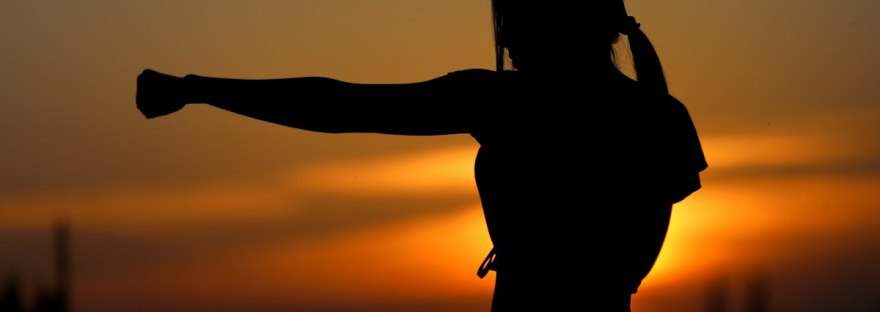
A boxer's punch in golden-hour light
1 Corinthians, Bible Studies, Spiritual Healing

The Boxer’s Backlash

A study of 1 Corinthians 9:26–27

“I do not run like someone running aimlessly; I do not fight like a boxer beating the air. No, I strike a blow to my body and make it my slave so that after I have preached to others, I myself will not be disqualified for the prize.” — 1 Corinthians 9:26-27

It’s easy to read this as an athlete’s throwaway metaphor for discipline — Paul the ex-jock, talking tough. But the image holds up under real scrutiny, down to the mechanics of what a punch actually does to the person who throws it. Followed all the way through, it says something specific about the cost of working on yourself, and about what has to be true underneath you for that work not to break you.

Not Shadowboxing

Paul’s contrast is precise: he does not fight like a boxer beating the air. Beating the air is shadowboxing — form without contact, all the motion of a fight and none of the consequence. You can throw a thousand punches at nothing and walk away exactly as you arrived, because nothing hit back.

What Paul describes instead is a real blow landed on a real, resistant target: his own body, in verse 27. That distinction matters more than it first appears. A punch that connects with something solid doesn’t just do something to the target — it does something back to the one who threw it. That’s not a flaw in the analogy; it’s the whole point of choosing it. Paul isn’t claiming his self-discipline is graceful. He’s claiming it’s dangerous, in the way any real collision is dangerous, because he’s not swinging at air.

What a Real Punch Does to the One Who Throws It

Newton’s third law doesn’t make exceptions for good intentions. When a fist meets something solid enough to resist it, the force doesn’t stop at the point of contact — it travels backward through the puncher, in full: through the knuckles, up the wrist, through the forearm, jamming into the elbow, loading the shoulder, and finally reaching the spine and the ground.

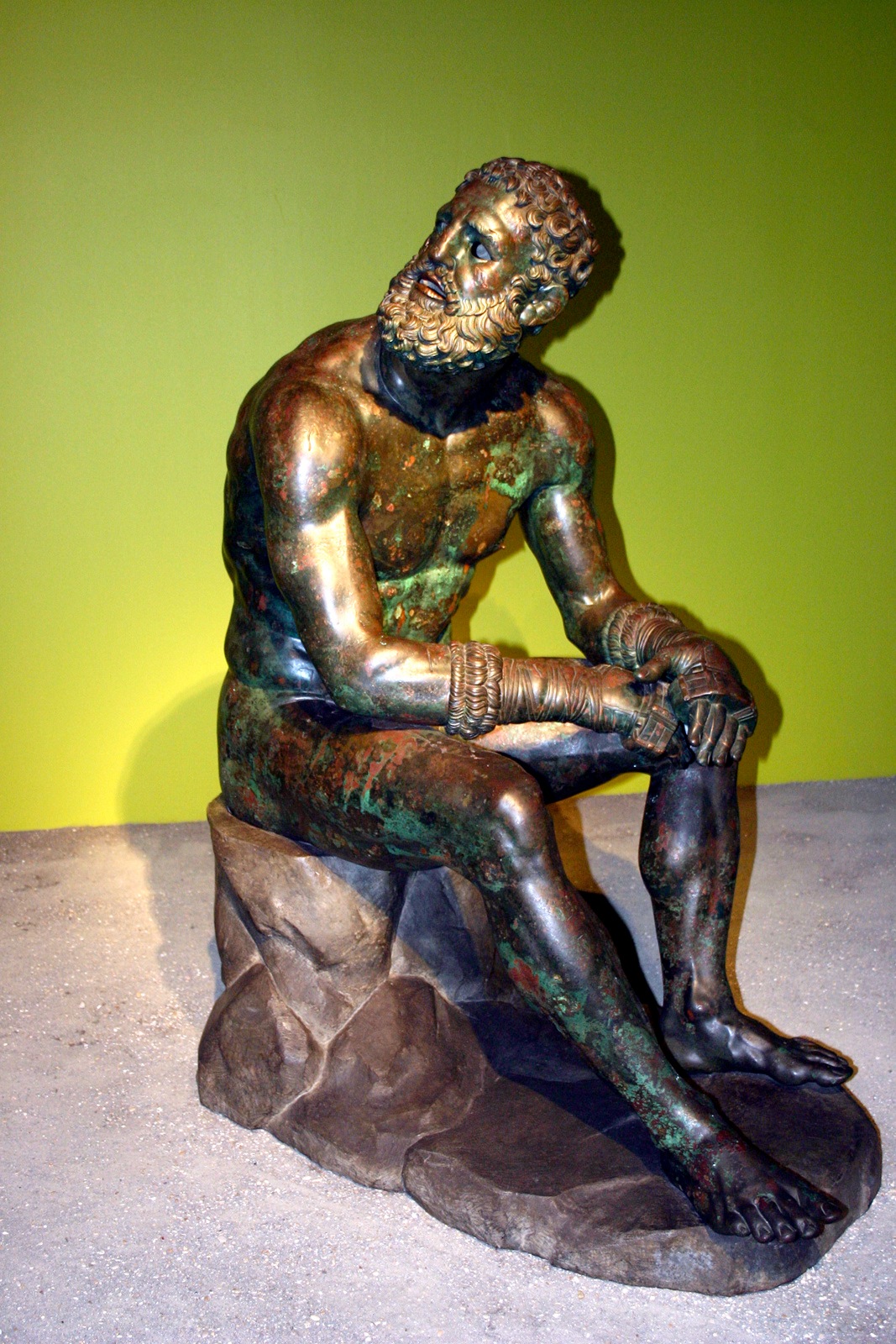
A boxer whose stance is planted — feet grounded, core locked, joints aligned — lets that force pass all the way through and dissipate harmlessly into the floor. A boxer who is loose, misaligned, or standing on nothing absorbs the shock in the wrong places: a wrist that bends instead of holding, a shoulder that takes the load a hip should have taken. The pain isn’t optional either way. What’s optional is whether it ends in a bruise or a fracture.

That’s the physical fact underneath the verse. Confronting something solid in yourself — a habit, an old wound, a pattern you’ve protected for years — produces a real return of force. It was never going to be free.

Two Kinds of Ground

Follow the analogy to its foundation and it points to Christ as “the Rock” — Paul’s own image a chapter later, in 1 Corinthians 10:4. But it’s worth separating two things that word is doing, because they’re not the same mechanism.

The first is Christ as stance — the alignment that keeps a joint from buckling under load. This is about posture: standing covered in Christ’s righteousness, so that when the shock arrives, it travels through a structure built to hold it rather than through pride or self-reliance, which give way exactly where a bent wrist does. This is the discipline side of the image — the daily work of staying planted.

The second is Christ as absorber — the ground itself, the place the force actually goes. This is the cross: the claim that the ultimate shockwave of human brokenness has already been taken, once, fully, so that what you feel when you strike a blow against your own flesh isn’t force you’re generating and now have to survive alone. It’s force passing through you into something that has already proven it can take it.

The two aren’t in tension, but they answer different questions. Stance is about how you stand so the blow doesn’t injure you. Ground is about where the force goes so it doesn’t stay trapped in you. Self-discipline needs both — a person can have excellent form and no floor under them, or a floor under them and no form, and either way, something breaks.

The Third Layer: A Frame That Grows Sound

Stance and ground both describe what happens during one strike — how you’re aligned, and where the force ends up. But there’s a third thing happening that neither one accounts for: the boxer who trains for years doesn’t just survive blows better because he’s braced better. His wrist itself gets stronger. Tendons that used to strain now hold. What used to require careful technique to survive without injury eventually requires less, because the structure itself has changed.

That’s a different claim than stance or absorption, and it may be the one this analogy was reaching for all along. The healing Christ does isn’t only a floor to fall back on or a posture to hold — it’s formation. Each grounded confrontation with your own flesh doesn’t just pass harmlessly through you and end there; it leaves you measurably less breakable than you were before it. And as that healing accumulates, something else grows with it: the very capacity to see clearly and choose well. Discernment isn’t a separate reward handed out for having survived enough fights. It’s what a healed frame produces almost as a side effect — clearer sight and firmer resolve growing in direct proportion to the healing itself, the way a joint’s tolerance for load grows in proportion to the training it’s been through.

That reframes the question this whole analogy raises. It isn’t only why fight, if the outcome is already secured in Christ? It’s also why does the fight itself matter, and not just its outcome? Because the fighting, rightly grounded, is how the healing happens — and the healing is what makes the next fight, and the next choice, and the next moment of clarity, genuinely easier than the last.

The Jolt Isn’t the Injury

Here’s the place this analogy is easiest to misread: even a perfectly grounded boxer feels the shock of a heavy strike. The vibration still travels up the arm, still rattles the joints, still registers as real impact. Good grounding doesn’t mean the punch stops hurting — it means the force has somewhere to go instead of somewhere to break.

Carried into the inner fight, that matters. When you finally confront a habit you’ve protected for years, or let yourself feel a wound you’ve been managing instead of healing, the flare of guilt, doubt, or old temptation that follows isn’t proof you’re doing it wrong. It’s just what contact feels like. Mistaking the jolt for a verdict — concluding I must not really be forgiven, or this wouldn’t still hurt — is exactly the kind of reasoning that turns ordinary impact into injury.

What marks bad grounding isn’t the ache. It’s what happens next: despair that curls inward instead of passing through, self-condemnation that lodges in you rather than dissipating, a resolve that shatters instead of merely ringing. Paul beat his own body — that was never described as painless. The promise underneath the mat isn’t a numb fight. It’s a survivable one.

An Opponent Who Shares Your Body

One more detail in the text is easy to slide past: Paul isn’t disciplining someone else. Verse 27 says he strikes a blow to his own body and makes it his slave — not an external enemy standing across the ring, but flesh he has to keep living in no matter how the round goes.

That’s a stranger fight than a standard bout. A boxer can lose a match and walk away from the opponent afterward. You can’t walk away from yourself. Which is exactly why the grounding question isn’t optional or theoretical — if the force of that inner collision has nowhere safe to go, there’s no corner to retreat to between rounds. The damage doesn’t stay in the ring; it goes home with you, because you and the ring are the same place. That’s the weight behind wanting solid ground under this particular fight more than any other.

Fighting From Victory, Not For It

The practical difference this makes is less about technique and more about posture going in. Fighting for victory means every jolt is a threat — evidence you might lose, might not be enough, might be found out. Fighting from victory means the outcome is already settled before the bell rings, so the shock that comes with a real hit can be felt without being feared.

That’s the shift worth sitting with: the next time confronting some old pattern in yourself produces its familiar ache, the ache isn’t the sign of failure it’s always felt like. It’s just contact. The question worth asking isn’t why does this still hurt — it’s where is this force going. If it’s going somewhere that already proved, on a cross, that it can take a full blow and not give way, then the hit that would have broken a wrist standing on nothing instead passes clean through, into ground that was never going to move.

Heart, Blood & Circulation, Herbal Healing

Understanding Lymphedema:

Clearing the Issue Naturally

Lymphedema: Why It’s So Hard to Clear, and What I Reach For

Lymphedema is one of the more stubborn issues I run into in this work. I want to put down here what I’ve learned reaching for it over the years, partly so I have it written out clearly, and partly so I can hand this along to anyone in HEAL who needs it.

Why It’s So Stubborn

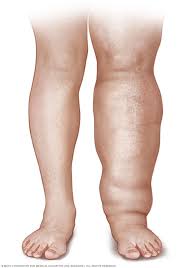
The root of lymphedema is a blockage somewhere in the lymphatic system, keeping fluid from draining properly out of an area. That alone makes it harder to clear than ordinary fluid retention. But here’s the part that makes it worse in practice: the lymphatic system doesn’t have a pump of its own the way the blood does with the heart. It depends on muscle movement to keep circulating. So when an area is swollen and uncomfortable, the natural response is to move it less — and that’s exactly the response that backs the problem up further. I’ve seen this cycle play out again and again. It’s one of the hardest issues to clear precisely because the body’s instinct to protect the area works against it.

This Isn’t the Same as Fluid Retention

I want to be really clear about this one, because it’s the mix-up I run into most with members: lymphedema is not the same thing as ordinary fluid retention — the kind tied to the kidneys, the heart, or a long day on your feet. With that kind of swelling, the fluid itself is thin and watery, and the plumbing that’s supposed to move it is basically fine — it’s just backed up, whether from a kidney that isn’t filtering as well as it should, a heart that isn’t pumping strongly enough, or veins that are struggling to send blood back up from the legs. That’s why elevation helps with that kind of swelling, and why a diuretic can bring it down — it’s working with kidneys that are still doing their job.

Lymphedema runs on a completely different mechanism. The fluid moving through the lymphatic system carries more protein in it than ordinary tissue fluid, and the problem isn’t that too much is being made or that the kidneys aren’t keeping up — it’s that the drain itself, the lymphatic vessels and nodes that are supposed to carry that fluid away, is blocked or damaged. A member’s kidneys can be working perfectly and it won’t make a bit of difference, because the fluid has nowhere to go. That’s the whole reason a diuretic is the wrong tool here, no matter how much the swelling looks like it should respond to one.

How It Progresses When It’s Left Unsupported

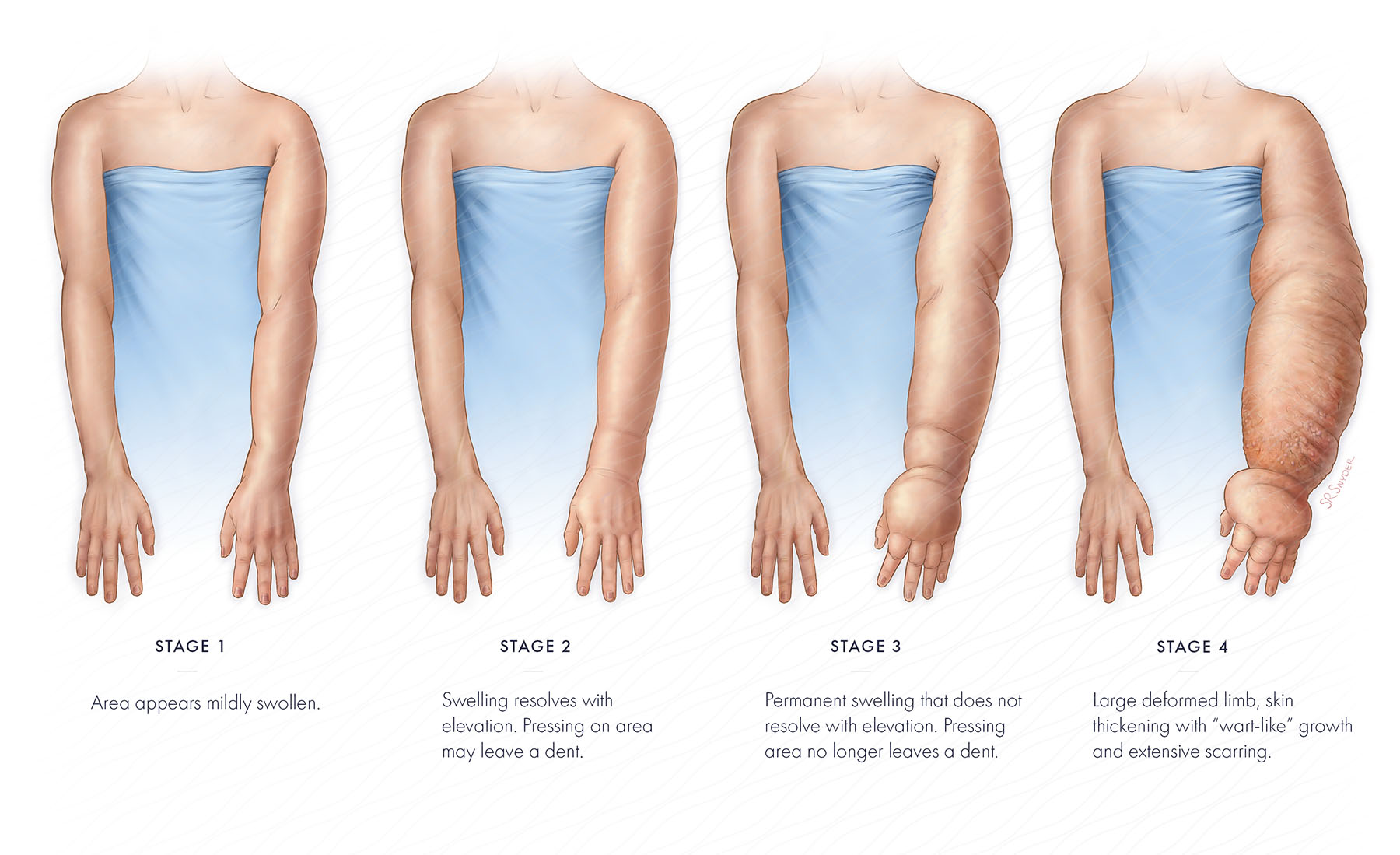
Early on, lymphedema is easy to write off. The swelling comes and goes — worse by the end of the day, better after a night’s rest or with the limb propped up. That back-and-forth is exactly what fools people into thinking it’s ordinary fluid retention.

Left alone, that pattern doesn’t hold. The swelling stops responding to rest and elevation and just stays. And here’s the part that matters most for how I approach it: because that trapped fluid is protein-rich, sitting in the tissue for months or years starts to change the tissue itself. It thickens. It hardens. The skin over it gets tougher and rougher instead of staying soft. In the more advanced cases I’ve seen, the whole limb can reshape around that buildup, and the skin becomes fragile enough that it’s prone to breaking down — which is a real risk, because that stagnant, protein-heavy fluid is exactly the kind of environment bacteria thrive in.

None of that is inevitable. It’s the reason I push so hard on catching this early and staying after it with the salve packs, Detox Formula, and movement — the earlier you’re working with the body’s drainage instead of letting fluid sit, the less of that hardening and tissue change there is to undo later.

What I Reach For

My go-to has been M&L Salve packs — Mullein and Lobelia made into a salve and applied directly over the blocked area — paired with Detox Formula taken internally. I get asked sometimes whether a diuretic formula would be a better fit, since lymphedema involves fluid buildup. It isn’t. Diuretics work on the kidneys, pulling fluid out through urine. Lymphedema is fluid trapped in the tissue because it isn’t draining through the lymphatic system in the first place — a different problem that calls for a different kind of support.

Detox Formula is the better internal match because it’s already built around Poke Root, along with Burdock Root, Burdock Seed, Red Clover, Chaparral, and Yellow Dock Root — traditional blood and lymph alteratives that support the whole system rather than just pulling fluid out of the blood. Paired with M&L Salve packs working locally right over the blocked area, you get both ends of it at once: systemic support and targeted local action.

Keep It Moving

If there’s one thing I’d want anyone dealing with this to hear, it’s to keep the area moving as much as they reasonably can, even gently. Since the lymphatic system relies on muscle movement rather than a pump, rest alone won’t clear a blockage — it tends to let it settle in further. The herbs and the salve do their part, but movement is doing real work here too, and it’s easy to underestimate how much it matters.

Brain, Nerves & Sleep, Herbal Healing, My Opinion

Managing Vertigo Naturally:

An Herbalist’s Approach

Background

As a 66-year-old herbalist with a history of three concussions and one case of whiplash, vertigo has become an unwelcome but not surprising companion. Rather than turning to conventional medicine, I’ve developed a natural protocol that manages my symptoms effectively — and in some cases stops an active episode within two to three minutes.

Understanding My Vertigo

What I experience is classic BPPV — Benign Paroxysmal Positional Vertigo — caused by displaced otoliths (tiny crystals) in the semicircular canals of the inner ear. My history of head trauma means these crystals dislodge easily and don’t always respond reliably to conventional repositioning maneuvers like the Epley Maneuver.

My Specific Triggers

Over time I’ve identified three distinct trigger categories:

  • Vibration triggers — eating crunchy foods like raw carrots, dental drilling
  • Movement triggers — turning my head quickly while walking
  • Pressure triggers — wind and barometric weather changes

Each of these disturbs the unstable crystals through a different mechanism, but the result is the same — that disorienting whooshing sensation and full vertigo episodes.

Practical Solutions I’ve Found

For Wind and Pressure

I wear small ear muffs that fit directly over my ears when outdoors in windy weather. They create a simple pressure barrier that prevents wind-driven air pressure changes from triggering symptoms. It’s a simple, inexpensive solution that makes outdoor activity much more manageable.

For Known Triggers Like Dental Work

When I know in advance that I’m going to experience vibration or trauma near my inner ear — like a dental appointment — I take my vertigo blend preventively beforehand. Going in with already-optimized cerebral circulation means my vestibular system handles the disturbance much better.

My Vertigo Blend

This isn’t one formula I distill myself — it’s three separate preparations I combine together in a cup of hot water: one teaspoon of my Brain Formula extract, one-quarter to one-half teaspoon of my Super Ginseng extract, and a teaspoon of dried ginger root steeped as a tea bag right alongside the extracts.

What Each Part Contributes

Brain Formula — Ginkgo-Led

Brain Formula is a Ginkgo-forward blend (Ginkgo Leaf, Gotu Kola, Calamus Root, Rosemary Flowers, Kola Nut, and Cayenne Pepper) that’s been used for generations specifically to support brain and inner-ear circulation. Ginkgo has long been recognized for increasing blood flow to the brain, and has traditionally been used for tinnitus, hearing and eyesight problems, memory, and vertigo itself — balance problems and dizziness are named directly in its traditional profile. Rosemary and Cayenne add their own circulatory support alongside it.

Super Ginseng — 50% American Ginseng, 50% Siberian Ginseng

  • American Ginseng contributes calm, sustained focus
  • Siberian Ginseng (Eleuthero) supports stress adaptation and stamina
  • Together they ease the brain fog and fatigue that often come with a vertigo flare — their role here is more supportive than direct, since they don’t act on inner-ear circulation the way Ginkgo does

Dried Ginger Root

Steeped as a tea alongside the extracts rather than blended into either one, ginger adds its own vasodilating effect and has a well-documented traditional history of use for vertigo and vestibular disturbances. It also helps carry the other herbs into the body more readily.

Why It Works So Fast

Because the Brain Formula and Super Ginseng are already alcohol-based extracts, and I take them in a cup of hot ginger tea rather than swallowing a capsule, they’re absorbed quickly through the stomach and mucous membranes — part of why an active episode can be stopped within two to three minutes, with severe episodes resolving in ten to fifteen minutes with a couple of doses.

The mechanism appears to be primarily vascular — Ginkgo (the dominant herb in Brain Formula) rapidly improves blood flow to the brain and inner ear, while the ginseng blend and ginger support overall circulation and ease brain fog. The displaced crystals may be the trigger, but insufficient circulation to the vestibular system is what turns a minor disturbance into a full episode.

The Broader Picture

What I’ve essentially built is a three-layer management system:

  1. Physical barrier — ear muffs blocking pressure-based triggers
  2. Preventive protocol — taking my vertigo blend before known triggers
  3. Acute intervention — using the same blend to stop active episodes quickly

None of this involves prescription medication. It’s the result of years of observation, experimentation, and deep familiarity with how these plants work in the body.


I am an herbalist sharing my personal experience and protocol. This is not medical advice. Individual results will vary based on your own health history and constitution.

Cleansing & Flushing, Herbal Healing

The Detox Bath

A Simple Soak to Help the Body Release Toxins

Toxins and chemicals are all around us — in drinking water, in health and beauty products, in the materials used to build and furnish our homes. They’re unavoidable, though eating organically and choosing natural cleaning and personal care products goes a long way toward cutting back on the load. When the body is feeling lethargic or sluggish, or there’s a fog settled over the mind that won’t lift, a detox bath is a simple, low-effort way to help the body along in clearing some of that burden.

Why a Bath Works

A hot soak opens the pores and brings circulation to the skin — the body’s largest organ of elimination. Each ingredient in this recipe adds its own support to that process:

  • Epsom salt (or sea salt) draws toxins out through the skin while easing aches and pains.
  • Apple cider vinegar soothes and softens dry, itchy skin while helping balance and neutralize the body’s pH.
  • Bentonite clay stimulates the lymphatic system, helping it deeply cleanse the skin from the inside out.
  • A few drops of a favorite essential oil — lavender, geranium, sandalwood, or ylang ylang are all known for their own detoxifying properties.

The Recipe

  • 2 cups Epsom salt (or sea salt)
  • 1 cup apple cider vinegar
  • ½ cup bentonite clay
  • 5–10 drops of a favorite essential oil

How to Do It

  • Run the bath water as hot as is comfortable.
  • Add the ingredients above and agitate the water to help them dissolve.
  • Soak for 20–40 minutes.
  • Drink a full glass of water when finished, to help the body carry along what’s just been loosened.
A Word of Caution This bath can be genuinely tiring — plan to do it right before bed rather than before anything that calls for energy. A bit of a wrung-out feeling afterward is normal; most people wake up the next morning feeling noticeably clearer and more refreshed.
Emotional Healing, Spiritual Healing, Weight Loss

Learning to Live in a Body That Fits: Part 5 of 5

The Weight Loss Series by Dara Dietz

Article 5:

I stopped losing weight at 235 pounds.

Not because the program stopped working. Not because I got tired or gave up. I stopped because I needed to let the emotional side of me catch up with what my body had done.

Nobody talks about this part.

The Aisle at Olive Garden

My husband and I went out to eat. The hostess was showing us to our table and the aisle was narrow, crowded on both sides with server trays.

I froze. I was certain I could not fit through. The embarrassment came over me so fast and so completely that I was ready to turn around, walk out, and wait in the car while my husband ate alone.

Michael noticed my confusion. He leaned over and whispered in my ear.

“You’ll fit.”

I did. With room to spare.

I had already released well over two hundred pounds. My body had changed beyond recognition. But something inside me had not been informed. She was still 475 pounds and she was still bracing for humiliation, and she had no idea that the world had gotten wider around her.

The Man in the Mall

The first time a man took a second look at me as he passed by in the mall, I wanted to run home and hide under my bed.

I need you to understand what that reaction was.

As a child, I could not make them leave me alone. Being noticed by a man was never once a compliment. It was the beginning of something being done to me. My body had learned, before I had language for it, that attention was danger.

So when the weight came off and men began to look, my nervous system did not read it as beauty. It read it as threat. Decades of protection dissolved in twenty-one months and left me standing exposed in a shopping mall with a seven year old’s terror in my chest.

But I am not a child any longer.

I had to become okay with the fact that God made me a beautiful woman, and that I need to stand up and be who I am. That was a time of growing — to look in the mirror and actually see this woman. Not the one I was used to seeing. The one who is truly there.

The Anger

I will be honest with you, because I said at the start of this series that I would be.

There is some anger.

Not at God. At the waste. All those years. The decades spent hiding inside a body I built for protection, the things I did not do, the places I did not go, the life I could have been living all along. Those men took more than a little child’s trust. They stole her life.

I do not carry that anger around with me. But I would be lying if I told you it never visits. Forgiveness does not mean the loss stops being a loss.

And still — the Lord has turned it all into a huge gift. One for me, and one for me to share with others. Both of those are true at the same time. I have stopped requiring my story to be simpler than it is.

What Food Is to Me Now

My relationship with food is completely different, and I do not think people would believe me if I told them how different.

I have no desire to eat bad food. None. Michael and I have been together over forty years and he still enjoys his sweets — not a lot, but he has his treats. They never speak to me. There is no wanting there to resist. That is not willpower. Willpower is what you need when part of you still wants the thing. This is something else. The wanting itself is simply gone.

I have not regained any of the weight.

I would still like to shed another forty pounds, and that will come in time. I am no longer in a hurry. Forty pounds is not the thing standing between me and my life anymore.

What I Want You to Take From This

If you are carrying weight you cannot shed, please hear this from someone who carried it for most of her life.

Ask what the weight is protecting you from. For me it was a child who had no other way to say no. Until she was heard, my body was never going to let it go — and no diet on earth was going to change that.

Treat the injury, not just the soul. The abuse damaged my brain, not only my heart. Feeding that tissue with real nutrients was the piece I had been missing for twenty years.

Understand the mechanism. Weight is hormonal. It is about insulin. Calorie counting kept me on the merry-go-round for decades.

Expect the feelings. They will come up as the fat comes off. That is not the program failing. That is the program reaching something deeper than fat.

Let your emotions catch up. When I stopped at 235 to let my inner self grow into my outer self, that was not quitting. That was wisdom. The body can move faster than the soul, and the soul is the one that has to live there.

Do not do it alone. Michael whispered four words in a restaurant aisle and gave me back an entire evening of my life. Find your person.

The Window

I want to leave you with the thing I say most often to the people who call me at H.E.A.L., frightened and stuck and certain there is no way forward.

When you find the door locked and barred, turn around and look for the window. You will find you now have wings to fly.

You may not be able to see them yet. I could not see mine at 475 pounds, sitting in an office in Hendersonville, helping other people heal while quietly believing I was a fraud. The wings were already there. They had been growing the whole time I thought I was only surviving.

Whatever you are in the middle of right now — say it with me, even if you cannot yet feel it.

For whatever good may come.

And mean it. Then watch what He does with it.


Dara D. Dietz is co-founder, with her husband, of H.E.A.L. Marketplace, a private natural healing association serving an international membership since 1998. She is the author of Whatever Good May Come (2009) and resides in Rutherfordton, North Carolina. She released 240 pounds between August 2017 and May 2019 and has maintained the loss.

Emotional Healing, Spiritual Healing, Weight Loss

It Was Never About Calories Part 4 of 5

The Weight Loss Series By Dara Dietz

I weighed over 475 pounds when I began. I say “over” because I had stopped looking. I did not get on the scale for a couple of days after I started my fasting program, so I will never know the real number. There is a point where the number becomes too painful to witness and you simply stop witnessing.

By May 2019 I had shed 240 pounds.

This is the practical article. Here is exactly what I did.

First, Read the Book

Before anything else, read The Obesity Code by Dr. Jason Fung.

This book was a real eye opener. So much of what we have been taught about losing weight is upside down and backward. What we have been doing is both right and wrong, and I think the bottom line is this: we have linked weight loss exclusively to decreasing calories and increasing exercise.

Yes, it matters that we move. But we have completely missed the real issue. Like every other activity in the body, weight is controlled by hormones.

Dr. Fung explains how to get off the diet merry-go-round by resetting what your body believes your set weight should be. Anyone working with people on weight, or trying to lose it themselves, really needs to take the time to get through this book. There are answers in it.

The Whole Thing in One Sentence

Weight is hormonally driven. It is all about keeping insulin as low as possible.

Insulin is the hormone that tells your body to store fat. Every time you eat, insulin rises. Every time you taste something sweet, insulin spikes — and when insulin spikes, whatever you have eaten goes to fat. If insulin is chronically high, your body simply will not release fat, no matter how few calories you eat or how much you exercise. You can starve yourself and stay fat. Most of us have proven that personally.

The only real solution is to stop spiking insulin and give it long enough periods of rest that your body remembers how to burn what it has stored.

That is what fasting does.

What I Actually Did

Low carb, savory only. I ate nothing sweet for nearly two years. Not one single sweet thing crossed my lips. I ate — I was not starving — but everything I ate was savory. Sweet taste spikes insulin, and once insulin spikes it all goes to fat. To this day I do not eat cheap carbs. You do not throw out all that work to put something cheap in your body.

Water fasting three to five days a week. I began the last week of August 2017 and kept that rhythm going. Many people feel this is quite dramatic. The results are very worth the effort. Before forming an opinion for or against it, read the book.

Liver flushing every other week. This is where it gets trickier, and it is the part most weight loss programs miss entirely.

Why the Liver Flush Matters

Liver flushing clears waste out of the liver so the liver can effectively process excess fat out of the body. Any weight loss program will benefit from regular liver flushing.

I used two different flushes, depending on what my body needed. The ELF — Emergency Liver Flush — can be repeated over several days to clear congestion in the liver whenever it’s needed. The Amazing Liver Flush is different. It is very effective and really clears out the waste, but because of the Epsom salts, which strongly flush the bowels, it can only be done once every six to eight weeks. It must be respected to protect your electrolytes, and it cannot be repeated until that time has passed.

What triggers a flush for me is a stall. If I water fast, I expect to drop some good weight the next day. When I struggle through a day of fasting, run to the bathroom all evening, and then lose only a half pound or nothing at all — that is the signal. The liver is congested and needs clearing.

An example from that first winter. After three days of water fasting I had lost only one pound. Friday night I did an ELF. Saturday I water fasted, as I felt a bit off from the flush. Sunday morning the scale showed a five pound drop. Sunday I went out to lunch with a friend, which likely cost me. Monday through Wednesday I water fasted and dropped another two and a half pounds. Total for the week: seven and a half pounds.

Anytime what you are doing stops working — or fails to work when it obviously should — it is time to flush the liver.

My own weakness is that I get so tired of all that oil that I put it off for days instead of getting right on it and clearing the issue quickly. I am telling you that so you do not think I did this perfectly.

Herbal Support During Fasting

Clear liquids with no calories are acceptable on a water fast, so I used my extracts as nutritional support through the fasting days:

  • Weight Loss formula — this contains kelp, which supports thyroid and glandular function. That has always been a weak spot in my body, and thyroid function is directly tied to metabolic set point.
  • BF&C formula
  • Calcium formula

For years my daily supplement has been superfood, but superfood is not available to you on a water fast. Dr. Fung suggests using a vitamin supplement when fasting a week or more. I do not care for pressed pills, and I was honestly a bit concerned that extracts alone would not support a longer fast well enough. That question is still open for me.

What to Expect in the First Weeks

The water dump. When your body begins burning ketones it releases a great deal of stored water. Dr. Fung explains why in the book. Expect to run for the bathroom every hour or so. It is not a bad experience, just an inconvenient one.

The headache, and the fix. When the headache started I added a bit of sea salt to my water, as Dr. Fung suggests in his book. The pain in my head ended nearly before I finished drinking the salted water.

Energy up. This surprises people. My energy went up. I felt so good after my first 24 hour water fast that I decided to do it again the next day. I had done a 40 day juice fast years earlier, and honestly the water fast was about as easy as a juice fast.

The numbers. Eighteen pounds in the first two weeks. One hundred twelve and a half pounds by the following summer. On January 23, 2018 the scale read 344 pounds — roughly 131 pounds gone in five months.

The Part No Book Warned Me About

Somewhere in the middle of it I wrote this down:

“The emotional work is also a part of this process. I have become emotional for no reason.”

That is not a footnote. That is the most important thing in this article.

Fat is not inert. It stores things. As the weight dissolved, the feelings it had been holding had nowhere left to hide, and they came up. I cried for no reason I could name. My sweet husband was a great support through it even while he scratched his head wondering what on earth was wrong with me.

Nothing was wrong with me. The Silent Watcher was finally being heard, and she had a great deal to say.

If you do this work, expect that. Do not panic when it comes. It is not the program failing. It is the program working deeper than you were prepared for.

Weight Loss Blog Part 5 of 5: Learning to Live in a Body that Fits


A word to the reader: I am an herbalist sharing my own protocol, not a physician giving you advice. Extended water fasting is not appropriate for everyone, particularly anyone on medication, anyone with kidney or blood sugar conditions, or anyone with a history of eating disorders. Read Dr. Fung’s book, know your own body, and take responsibility for your own choices.


Emotional Healing, Spiritual Healing, Weight Loss

The Brain Comes First Part 3 of 5

The Weight Loss Series by Dara Dietz

By late 2016 I had done decades of spiritual and emotional work. I had forgiven the men who abused me. I had forgiven my parents. I had gathered up the discarded child in the castle and taken her hand. I had written a book about all of it.

But I was also carrying well over 400 pounds.

If healing were purely a matter of the soul, the weight should have come off years earlier. It did not. Something was still holding on, and I could not reach it with prayer or journaling or counseling. What I did not yet understand was that the damage done to me as a child was not only emotional. It was biological. And biology requires a biological answer.

What Trauma Does to a Brain

Several weeks before my life changed, I stumbled across a seminar by Dr. Tim Jennings I had never viewed. His talk, the Modern Medicine Seminar, was given to a group of medical students and includes long discussions of drug therapy — not really my kind of material. But his earlier seminars on the brain had given me so many light bulb moments that I decided to wade through this one too.

What a gold mine.

Dr. Jennings explains how early abuse, neglect and emotional trauma physically reshape the brain. Not metaphorically but physically. Early trauma alters brain chemistry, damages neural pathways, and affects the way our genes express themselves. The child who learns to disconnect and hide inside herself is not making a choice. Her brain is rewiring itself to survive, and that wiring does not simply dissolve when the danger passes. It stays. It runs quietly underneath everything for the rest of her life unless something intervenes.

This explained something that had confused and shamed me for decades. Knowing what is right and doing what is right do not necessarily go hand in hand in a life that has experienced abuse or neglect during the formative years of childhood. I had lived that gap. I had stood in my kitchen at night knowing exactly what my body needed and eating something else anyway. I had called myself weak for it. I had called myself a fraud.

I was not weak. My brain had been injured, and I had never treated the injury.

The Nutritional Protocol

Toward the end of his talks Dr. Jennings offered several nutritional supports for brain health. He did not suggest dosages, so I played around a bit and came up with something that worked for me.

  • Pomegranate juice concentrate — 1 oz a day, added to superfood or water
  • Folate as l-methylfolate, 1000 mcg — one capsule three times a day
  • N-Acetyl Cysteine, 600 mg — two capsules three times a day
  • Vitamin C, 3,000 mg — three times a day
  • Vitamin B-12 — 1 capsule two times a day
  • Turmeric — two capsules three times a day

A word of caution from an herbalist. The best source for any vitamin or mineral is a live food source. Life has taught me that there are times when natural juices and food sources need to be carefully supplemented for the additional support necessary to heal a specific issue. But massive use of vitamin and mineral supplements adds a heavy load to the kidneys and liver. Find the best food source for the needed nutrients whenever possible, and do not stay on a heavy supplement protocol longer than the healing requires.

Because so much housecleaning happens on a regimen like this, do not neglect the foundational programs. Boosting with Echinacea. Bowel cleansing. Massive nutrition through superfood and juicing. And plan on liver flushing every few weeks. After my first two weeks on this protocol it was clearly time to flush my liver.

Joy Came Back First

Here is what I did not expect.

The regimen I began that autumn turned out to be one of the best choices I have made in a long time. Life started becoming fun again. Interest in my own life returned.

I have always loved my work and count it a privilege to know the members of H.E.A.L. But in the years leading up to this, I had quietly stopped enjoying the extra things that had always been a huge part of who I am. Photography. Cooking. Sewing. Writing. The creative side of my life had simply shut down, and I had not noticed it going. You do not notice the light dimming when it happens one degree at a time.

Within weeks of starting the protocol I was looking forward to those things again.

To understand what that means: before a single pound came off, before I had ever heard of Dr. Fung or read a word about insulin, the woman who had done all that healing work began to actually inhabit her own life again. The brain healed first. Joy came back first. The weight came later, and it came almost as a consequence.

Why This Matters for Anyone Trying to Lose Weight

If you have done the emotional work and the spiritual work and your body still will not cooperate, I want to offer you a possibility that no diet book will mention.

Your brain may still be injured.

Not broken. Not beyond repair. Injured — and injuries can be fed and supported and healed. The forgiveness was necessary. The counseling was necessary. The prayer was necessary. But learning to disconnect at seven years old left physical marks on the brain — the very organ that governs your appetite, your impulse control, your mood, and your motivation. That organ needs actual nutrients to rebuild.

I spent decades treating the soul and ignoring the tissue. When I finally treated both, everything moved.

Nine months later, in the last week of August 2017, I was ready to begin.

Weight Loss Blog Part 4 of 5: It Was Never About the Calories


Dara D. Dietz is co-founder, with her husband, of H.E.A.L. Marketplace, a private natural healing association serving an international membership since 1998. She is the author of Whatever Good May Come (2009) and resides in Rutherfordton, North Carolina.


Emotional Healing, Spiritual Healing, Weight Loss

Whatever Good May Come Part 2 of 5

The Weight Loss Series By Dara Dietz

“We can’t change the past, but we can gather up its lessons and move on, stronger and wiser. We can’t control the future, but we can send our dreams ahead of us to help prepare the way.”

People ask me how I lost 240 pounds. They want the practical answer — the fasting protocol, the food plan, and the herbal supports. Those answers are coming. But before we get there I need to tell you about the work that made all of it possible. Because the body does not release what the soul has not yet processed.

This is the story of how I found my freedom.

The Question I Could Not Answer

For years I wrestled with a question I could not resolve. Why does a God of love allow innocent children to be abused and hurt? Why doesn’t a Father who claims to love us step in and stop it?

I had lived that question from the inside. I was not asking it theoretically.

For a long time, I accepted what Paul the Apostle wrote — “For now we see through a glass, darkly; but then face to face: now I know in part; but then shall I know even as also I am known.” I filed the question under things I would understand later and kept walking.

Dara Dietz

But I kept walking and kept asking until one day, somewhere in the long middle of my healing journey, the answer began to take shape.

The Gift I Did Not Ask For

I believe the Father has given each of us free will. We can choose to be evil if we like. We can choose to hurt others. By allowing free choice He has permitted that evil, pain and suffering will exist in this world. But knowing this would have to be, our Father of love also designed that our trials would be our teachers. Our biggest hurts our biggest gifts.

That is not a comfortable theology. It did not come easily to me. It was not handed to me in a moment of inspiration. It was forged over decades of confusion and pain, years of being misunderstood by everyone including myself.

The men who came so selfishly into my young life, stealing my childhood while they ripped my young soul to shreds, will one day stand before the Judgment Bar of the Almighty and face what they have done. That is not my burden to carry. What I carry instead is this — their acts, when filtered through the love of my Father, have become a wonderful gift.

It has taken years to grow into and open this gift. The Father alone understood the path I was walking. He continued to enable me to go the way I had to go. Throughout the years of confusion and pain He was filling me with something I could not yet see or name. It was being delivered to my soul piece by piece, set up and waiting for the time I would be able to open it and become the woman God intended me to be.

Learning to Forgive

The altar of forgiveness is not a comfortable place to kneel. The stones are hard. The question unavoidable — Can I forgive?

Forgiveness must be a gift, freely given. It cannot be earned and is seldom deserved. It must come from a place of understanding and love. The one being forgiven need not ask for this gift. Forgiveness is first and foremost a gift to myself.

In my life I have needed to forgive myself the most.

I have learned to forgive the men who stole my innocence, to feel no anger or bitterness toward those who robbed a lifetime of possibilities from me. Not because they deserved it. Because I deserve it. I can allow them to be human beings with their own stories. I am not their judge or jury; I am simply the survivor of their choices.

I have forgiven my parents — a mother who valued her friendships with depraved souls more than her children’s safety, a father who should have flown to the stars but was held down by a past he could not rise above. They gave me all that they had to give. It left me broken, but I decided to heal.

Holding onto old injuries hurts no one but me. I could not forgive myself until I began to understand and love myself. Love is not based on an ideal of what a person should be, but on the truth of who they are right now.

The Castle on the Hill

During a weekend intensive on personal empowerment I participated in a guided meditation that has stayed with me ever since.

I watched myself walk up a grassy knoll toward a castle. Passing through a massive door standing ajar I entered a large dimly lit room. As my eyes adjusted I began to make my way toward what appeared to be piles of discarded things. A favorite childhood sweater. A small pink music box with a ballerina with a broken arm that still played its tune when I opened the lid. Memories stored safely in stone walls strong enough to hold them.

As I turned to leave, the fading light fell on one last pile just inside the archway. My arms reached out before my mind caught up. There, lying motionless and silent, was a baby girl. She had been tossed aside, discarded. I knew this child instinctively. I had seen those eyes before — wide open and full of fear.

As I gathered her safely into my arms we melted into one.

In a second meditation that same weekend she appeared again, this time about seven years old. She sat outside the house of the old man who had raped us. In the past when she visited my dreams I had felt contempt toward her. I had not cared for her and she had not trusted me.

This time was different. As I saw her sitting there all alone with no one to share her horrible secret with, my heart filled with compassion. I finally understood why she had gone back to his house — she craved love and attention. She was just a little girl. It was not her fault.

I reached out for her hand as I had many times before. For the first time she took it and walked away with me.

The Prayer That Changed Everything

Somewhere in the long middle of my journey, I learned a prayer that became the title of my life.

When you cannot yet see the blessing in what has happened to you — when the wound is too fresh or too deep to find gratitude — simply say: “For whatever good may come of them.” And mean it.

When you believe, you release a power into your life that is able to transform the most devastating experience into your greatest blessing. You will be able to say honestly that you would not choose to return and change these things. That because of the gifts they carry you would choose this road again.

I would choose this road again.

Not because the abuse was acceptable. It was not. Not because the losses were small. They were enormous. But because of who I have become by walking through it. Because of the thousands of people I have been able to sit beside in their own pain and say — I know. I have been there. And there is a way through.

Those men took more than a little child’s trust. They stole her life. The Lord has turned it all into a huge gift — one for me and one for me to share with others.

Personal Freedom

A good portion of my life was spent in victim mode, accepting responsibility for the wrong choices of others, reacting instead of living. Personal freedom came as I developed boundaries. I now understand where my responsibility ends.

Personal freedom is the ability to choose instead of react. It is getting up in the morning free to make good choices all day long. It is going to bed at night knowing I have broken no personal vows to myself.

This is real personal freedom. This is really living.

And it was this freedom — hard won over decades — that finally prepared the ground for what came next. The body had been waiting for the soul to catch up. By late 2016 I was close enough to ready that new life could finally take root.


Peace & Faith by Dara Dietz

We can’t change the past but we can gather up its lessons and move on, stronger and wiser.

We can’t control the future but we can send our dreams ahead of us to help prepare the way.

We can live each moment, heart and soul, and cherish this day’s greatest gift — the gift of now.

May peace with the past and faith in the future gently guide you through each precious moment of today.


Weight Loss Blog Part 3 of 5: The Brain comes First

Dara D. Dietz is co-founder, with her husband, of H.E.A.L. Marketplace, a private natural healing association serving an international membership since 1998. She is the author of Whatever Good May Come (2009) and resides in Rutherfordton, North Carolina.