Dara D Dietz is co-founder with her Husband of H.E.A.L. Marketplace, a private Natural Healing Association. As a teacher and counselor she has been supporting the members of H.E.A.L. with Natural Healing information and herbal supports since 1998. She continues to maintain strong ties to the Seventh-day Adventist Church. Since healing her own kidney ailments she has assisted thousands of people in discovering and using natural herbal remedies. Dara has written and compiled numerous articles on a wide variety of natural healing topics. Drawing from her own healing experiences and borrowing from the vast wisdom of natural healers long departed, she continues to provide H.E.A.L.’s international membership with down to earth natural healing wisdom in H.E.A.L.’s bi-weekly newsletters. Dara and her husband currently reside in Rutherfordton, North Carolina.
When the pollen flies, the head fills up: runny nose, itchy eyes, sneezing, a sinus full of pressure and a chest full of mucus. A good allergy formula works as a natural decongestant and antihistamine. It dries up the excess secretions and helps the body push the mucus out of the head and the bronchial tubes.
Allergies are rarely only about pollen, though. When the bowels aren’t moving often enough, or the liver is too full of waste to keep up, the body pushes that waste out wherever it can, and the sinuses are a favorite place. I wrote about that side of it in Spring Time Allergy Issues. Clearing the bowels and flushing the liver go a long way toward a quieter allergy season.
What a Good Allergy Formula Contains
A good formula for allergies and sinus trouble might contain these nine herbs:
Mormon Tea, 4 parts. Its tannins have a drying effect that cuts down on mucus and other secretions. It is a cousin of Brigham Tea, just a bit gentler.
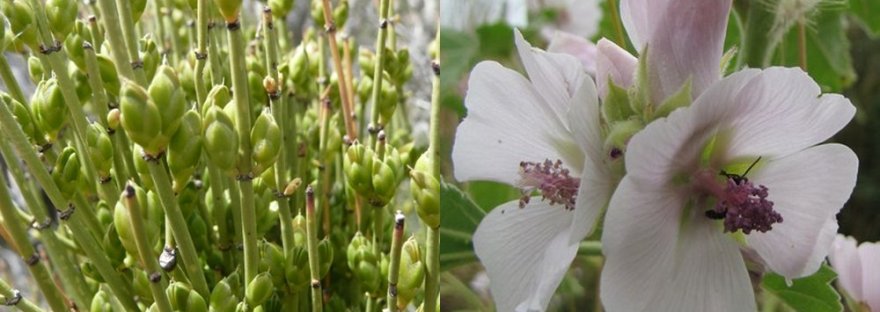
Marshmallow Root, 4 parts. Very soothing to inflamed tissue in the airways and all through the body.
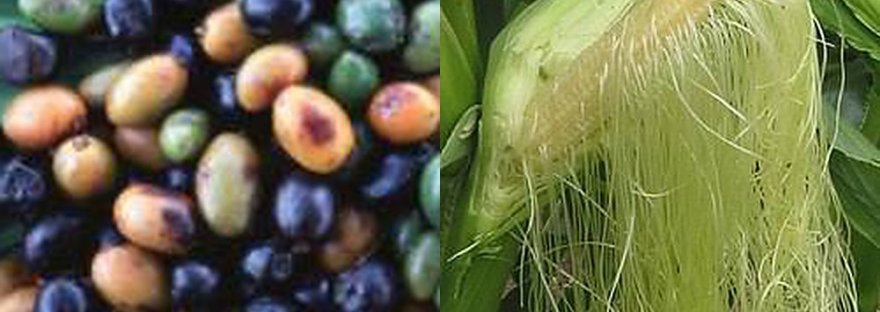
Juniper Berries, 4 parts. Clears waste from the whole system through the kidneys and helps stop runny mucus discharges.
Goldenseal Root, 4 parts. Has a strong action on the mucous membranes, clearing up heavy or unhealthy secretions, and it cleanses the liver.
Chaparral, 4 parts. A natural expectorant that keeps the airways clear of excess mucus.
Burdock Root, 4 parts. A blood cleanser for any trouble that comes from built-up toxins, from allergies to skin eruptions.
Parsley Root, 4 parts. Long used to expel watery poisons and excess mucus and to reduce swollen glands.
Lobelia, 4 parts. Goes wherever the body is struggling and helps the other herbs do their work there, while relaxing the airways.
African Bird’s Eye Pepper, 1 part. A strong circulation herb that moves mucus out and clears the bronchial tubes and sinuses.
“Parts” can be any measure you like, as long as you use the same one for every herb. By weight, that’s 4 ounces each of the first eight herbs and 1 ounce of the pepper.
Putting It Together
Put the dry herbs in a glass jar and pour in 80-proof vodka. Once the herbs have settled, you want about 60% herb sediment on the bottom and 40% liquid on top. Shake the jar every day. The traditional timing follows the moon, from the new moon to the full moon, about two weeks. I prefer to let my extracts sit a full three months, which makes them good and strong. Then strain and bottle the liquid.
How Much and How Often
½ to 1 teaspoon twice a day, added to a cup of hot distilled water.
This is shared for educational purposes, from my own study and experience. It is not medical advice.
Kelp brought my own thyroid back to normal at twenty-five, after years on a pill I was told I would need for life. The whole story is in My Thyroid Story. Here is why kelp works, how to use it, and why the iodine in kelp is so different from the iodine sold in a bottle.
Why Kelp Works
Our bodies need only the tiniest amounts of the trace minerals, such as iodine, copper, manganese, boron and zinc, yet without them we cannot live. Kelp is one of the richest sources of these, and above all of iodine.
The thyroid needs iodine to make its hormone. Without enough, it has to work overtime and can swell into a goiter. And the thyroid touches nearly everything: it regulates metabolism and body fat, steadies the heart, brightens the mind, keeps the bowels moving, and works with the pancreas, the adrenals, the ovaries and testes, and the pituitary. Kelp is a far better source of iodine than iodized salt, and used as a seasoning it easily supplies what the body needs.
More Than the Thyroid
Weight: Kelp has long been used as a slow, steady aid to weight loss. It acts more as a normalizer than a fat burner; thin people can put on weight while taking it.
The liver: Kelp has an affinity for the liver, supplying the salts it needs and helping clear congestion. A sluggish liver brings low moods, and a bright, vital person has an active liver.
Blood vessels: It tones the walls of the blood vessels and helps normalize both high and low blood pressure.
Minerals: It is one of the highest sources of potassium among foods and herbs, and a good source of vitamin B12 for those who eat no animal foods.
A Good Kelp Blend
Kelp works even better alongside its sea cousins. A good kelp blend might combine three sea plants, powdered and put into capsules:
Atlantic Kelp, 2 parts.
Irish Moss, 1 part.
Dulse, 1 part.
Each brings its own mix of ocean minerals, so together they cover more ground than kelp alone.
How Much and How Often
Dr. Christopher’s suggestion: 5 capsules of the kelp blend three times a day.
What I do: 10 capsules in the morning, and another 5 later in the day when I remember.
Kelp is a food, so it can also be used freely as a seasoning, sprinkled on your meals in place of salt.
Organic Iodine and Inorganic Iodine
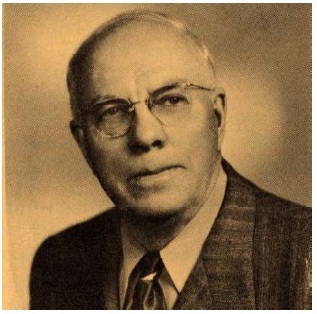
Dr. Edward E. Shook, in his Advanced Treatise in Herbology, explains the difference between the iodine in sea plants and the iodine made in a factory.
Dr. Edward E. Shook
Positively hundreds of instances could be cited to prove the deleterious effects of the application of inorganic matter and the positive curative effects of the intelligent application of nature’s great store of organic remedies– Herbs– in the treatment of pathological conditions of the human organism. —Advanced Treatise in Herbology, by Dr. Edward E. Shook, pg. 16
Inorganic Iodine
We will take a cursory glance at one more important item of evidence showing the incalculable injury that can be done to the human organism by the administration of inorganic substances, more especially, those elements which have been artificially made or separated from organic matter by the action of violent acids, alkalies, or reduction to ashes by burning.
This universally-used and insidious poison is commonly called iodine. This element is found naturally combined with sodium, potassium, calcium, and manganese, in seawater, mineral springs, and marine plants and animals, but in exceedingly minute quantities. There are only 37 parts of iodine in 100,000 parts of cod liver oil.
The commonly used iodine is obtained from the ashes of burnt kelp, dissolved in water; the solution is then evaporated. The iodine is liberated by the action of chlorine aided by heat, and then condensed.
Taken internally, this form of iodine acts both as a local irritant and as a true poison. It slowly decomposes water, stealing hydrogen to form hydrogen iodide. This in turn gives off white fumes on contact with air and has a powerful acid reaction. Mixed with oxygen, it decomposes in the dark forming water, and liberating iodine, which again carries on its devastating effects upon the gastric organs and fluids producing a long chain of disasters.
The gas previously mentioned under sulfur; namely, sulfur anhydride, is decomposed by iodine, once more forming hydrogen iodide, and freeing sulfur; and we have seen what sulfur does.
This inorganic iodine is a most insidious and injurious substance that upsets and disorganizes all the digestive fluids producing various forms of dyspepsia, severe gastric pain, indigestion, foul gaseous eructation, and inability to assimilate food. This so-called specific disease is named Iodism. It by no means confines its disruptive action to the gastric organs, nor does it have to be taken internally to poison the body; for if it be painted on the throat or any other part of the body, it can be traced in the urine in from 30 to 40 minutes.
Organic Iodine
Now to the difference manifested in the action of organic iodine; and what a vast difference there is.
Every saline aquatic plant contains iodine in combination with sodium, potassium, calcium, and manganese; also phosphates, sulfates, chlorides, bromides, etc.
They are all nonpoisonous, nutrient foods, antiscorbutics and vulnerary plants of the highest order.
Here are two in particular that for thousands of years have been used successfully in the treatment and cure of chronic disease.
Bladderwrack (Fucus vesiculosis). It is an alterative of great virtue, especially in obesity, reducing fatty acids, and tending to rid the system of useless waste matter.
Irish Moss (Chondrus crispus), a remarkable demulcent, nutrient, and dietetic providing the organism with what are loosely called vitamins, in the form of chlorides, iodides, bromides, phosphates, and sulfates of sodium, potassium, calcium, and magnesium. All of them are positive organic salts, absolutely necessary to the healthy metabolism of the human body. This whole family of herbs is fully described, together with their therapeutic application. —Advanced Treatise in Herbology, by Dr. Edward E. Shook, pg. 15-16
Read more on the subject of Iodine from the first chapter of Dr. Shook’s text book.
Low mood is rarely just in the mind. A brain that isn’t getting enough blood flow, a thyroid running low, a liver and bowel holding onto waste, a body worn out from a long stretch of stress: any one of these can leave a person flat, foggy and discouraged. A good mood formula works on all of them at once. It lifts the mood itself, eases the anxiety that often rides along with it, and feeds and clears the body that the mind lives in.
What a Good Mood Formula Contains
A good formula for a low mood might contain these six herbs:
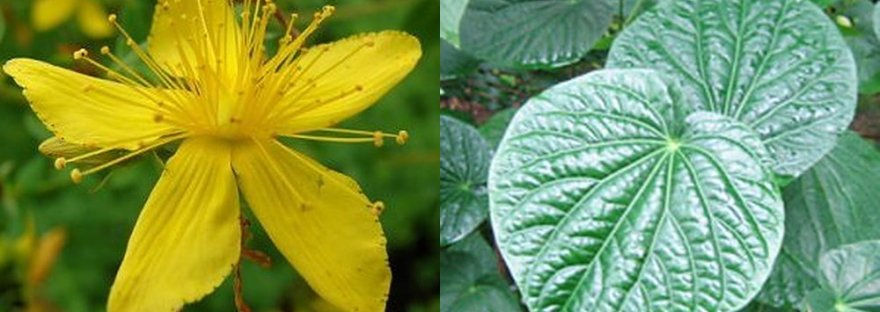
St. John’s Wort, 4 parts. The lead herb. It is long used for mild to moderate depression, helping keep more of the brain’s own mood chemicals active.
Kava Kava, 2 parts. Eases anxiety and muscle tension and brings relaxation without dulling the mind. Unlike many calming herbs, it settles stress while letting you stay alert.
Uva Ursi Leaf, 2 parts. Supports the kidneys as an elimination organ, helping the body clear waste and ease bloating and water retention.
Hawthorn Berries, 1 part. Improves blood flow and oxygen delivery to the heart and the rest of the body, the brain included.
Yellow Dock, 1 part. Supports the liver and gets the bowels moving, so waste leaves the body instead of circulating back through it. It also helps the body absorb iron.
Kelp, 1 part. A rich natural source of iodine, the raw material the thyroid needs. A thyroid running low brings on fatigue, apathy and brain fog that can look exactly like depression.
“Parts” can be any measure you like, as long as you use the same one for every herb. By weight, that’s 4 ounces of St. John’s Wort, 2 each of Kava and Uva Ursi, and 1 each of Hawthorn, Yellow Dock and Kelp.
Putting It Together
Put the dry herbs in a glass jar and pour in 80-proof vodka. Once the herbs have settled, you want about 60% herb sediment on the bottom and 40% liquid on top. Shake the jar every day. The traditional timing follows the moon, from the new moon to the full moon, about two weeks. I prefer to let my extracts sit a full three months, which makes them good and strong. Then strain and bottle the liquid.
How Much and How Often
For serious issues: 1 tablespoon twice a day.
Always with Echinacea at this level. The work these herbs do in the brain creates die-off, and Echinacea supports the body through it so there’s no backlash from the higher dose.
From my own experience, this dose has been very useful during times of emotional crisis.
After a Panic Attack
This formula pairs well with the nerve food formula I wrote about in Food for a Frayed Nervous System. When a panic attack strikes, reach for the nerve food first; it acts as the brake that brings the heart rate down and breaks the panic. Once the panic has passed, the body is left exhausted and depleted, and that is where this formula comes in. It keeps the leftover anxiety from building back up and lifts you out of the low that follows.
Take the nerve food first, then wait 15 to 20 minutes before taking the mood formula.
Keep taking the mood formula steadily for two to three days afterward, even after you feel fine. That gives the nervous system time to rebuild its reserves, so the anxiety doesn’t rebound.
Why Echinacea Keeps the Backlash Away
At the higher dose, some people starting this formula feel a day or two of flu-like malaise: fatigue, a headache, a little nausea or brain fog. I’ve long called it die-off. As the brain adjusts to having more of its own mood chemicals active, and as St. John’s Wort’s strong compounds work through the gut, the body answers with inflammatory messengers called cytokines, and that is what you feel.
Echinacea is a strong immune balancer and anti-inflammatory. Taken alongside the formula, it calms that response, so the headache, fatigue and malaise clear and the backlash never gets started. That is why I always pair the two at this level.
This is shared for educational purposes, from my own study and experience. It is not medical advice.
The prostate is a small gland with three lobes that make seminal fluid, and the tube that empties the bladder passes right over its middle lobe. In later life the prostate often becomes enlarged, and when it does, it begins to close off that tube. The first sign is usually a weaker stream. Left alone, the blockage can become very serious.
Dr. Christopher taught that the enlargement comes from mucus and sediment collecting in the gland, often in a body whose own male hormones are no longer enough to keep it working well. Sandwich meat slices and beef products are the worst offenders, and they do the prostate no favors. So the work is to clear out what has collected, keep the urine flowing, and feed the gland what it needs.
What a Good Prostate Formula Contains
A good formula for the prostate might contain these nine herbs:
Saw Palmetto Berry, 4 parts. The lead herb, and one of the most trusted herbs for men’s health. It has long been valued for supporting the prostate and a healthy balance of male hormones.
Pygeum Bark, 3 parts. An African bark used for generations to ease an enlarged prostate and the urinary trouble that comes with it.
Nettle Root, 1 part. Works hand in hand with Saw Palmetto to support a healthy prostate and an easier flow of urine.
Cleavers, 1 part. A cleansing herb for the lymph and the urinary tract, helping to clear the congestion that collects in the gland.
Corn Silk, 1 part. Soothing to the whole urinary tract, easing irritation and supporting a good flow.
Juniper Berry, 1 part. Removes waste through the kidneys, and strengthens and builds the urinary passages and the bladder.
Uva Ursi Leaf, 1 part. A classic herb for the urinary system, toning and cleansing the tract.
Thuja Leaf, 1 part. Long used for growths and congestion in the glands.
Oat Tops, 1 part. A nourishing food for the nerves and a traditional support for male vitality.
“Parts” can be any measure you like, as long as you use the same one for every herb. By weight, that’s 4 ounces of Saw Palmetto, 3 of Pygeum and 1 ounce each of the other seven.
Putting It Together
Put the dry herbs in a glass jar and pour in 80-proof vodka. Once the herbs have settled, you want about 60% herb sediment on the bottom and 40% liquid on top. Shake the jar every day. The traditional timing follows the moon, from the new moon to the full moon, about two weeks. I prefer to let my extracts sit a full three months, which makes them good and strong. Then strain and bottle the liquid.
How Much and How Often
The amount is 1 teaspoon each time. How often depends on how big the issue is:
Maintaining a healthy prostate: 1 teaspoon once a day.
Issues that are under control: 1 teaspoon two or three times a day.
Working through active issues on a good program: 1 teaspoon every three hours, five times a day.
Body size makes a real difference in how much of any formula a person needs, so adjust the amount to what actually works. Going completely meat-free while the prostate is recovering is very important; once the body has recovered, you can decide what you can safely begin eating again. Keep the bowels moving well, too, so the gland isn’t fighting a constant new supply of waste.
This is shared for educational purposes, from my own study and experience. It is not medical advice.
I’ve dealt with low blood sugar all my life, including what I call “brown-outs.” You can hear what’s happening around you, but you can’t respond. It’s an awful place to be. If you fight hard enough you can pull yourself out of it, but there’s a strong pull to go back under, so sleepy it’s very hard to get moving again.
When I feel that pull coming on, after a larger than usual meal or just an exhausting day when my reserves are low, I take a teaspoon of this formula, and I do not go under. Within minutes I’m feeling like myself again. I may still be tired and in need of rest, but the strong pull to go down hard is gone. It has never failed me.
Our members with blood sugar issues on the high side have had good results too. When a good food program is followed, their numbers often come down into the normal range within days to weeks.
How a Blood Sugar Drop Happens
There’s more than one road to that falling feeling. After a high-carb meal, the body can release more insulin than the moment calls for, and blood sugar drops faster than it rose. Emotional trauma and high stress get there a different way: the stress hormones the body releases to meet the moment burn through its glucose reserves, and blood sugar falls right along with them once the stress passes. Either way, the body ends up in the same unsteady place.
What a Good Pancreas Formula Contains
A good formula for the pancreas might contain these six herbs:
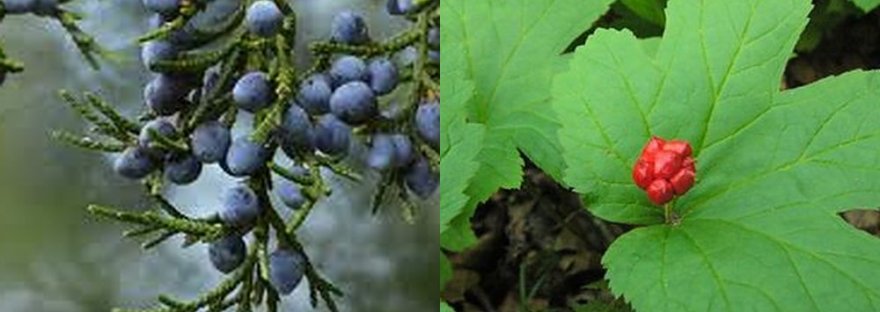
Cedar Berries, 16 parts. The master herb. Cedar Berries have long been used as a tonic for the pancreas, and time and again they have proven able to steady blood sugar issues without any ill effects.
Uva Ursi Leaf, 6 parts. Supports the urinary system through the extra fluid work that comes with blood sugar swings.
Licorice Root, 3 parts. Soothes and supports the adrenal glands, which work hand in hand with the pancreas to keep blood sugar on an even keel.
Mullein, 3 parts. A gentle, nourishing herb that rounds out the support for the glands.
Cayenne, 2 parts. Stimulates circulation, carrying the rest of the formula to the glands that need it.
Goldenseal Root, 1 part. A deeply nourishing herb for the glands, used to support and tone the pancreas.
“Parts” can be any measure you like, as long as you use the same one for every herb. By weight, that’s a pound of Cedar Berries, 6 ounces of Uva Ursi, 3 ounces each of Licorice and Mullein, 2 of Cayenne and 1 of Goldenseal.
Putting It Together
Put the dry herbs in a glass jar and pour in 80-proof vodka. Once the herbs have settled, you want about 60% herb sediment on the bottom and 40% liquid on top. Shake the jar every day. The traditional timing follows the moon, from the new moon to the full moon, about two weeks. I prefer to let my extracts sit a full three months, which makes them good and strong. Then strain and bottle the liquid.
How Much and How Often
1 teaspoon three times a day: first thing in the morning, at midday and last thing at night.
When you feel a drop coming on, take a teaspoon right away.
This is a nutritional formula meant for steady, ongoing use, not a quick fix. It can take six months or more of consistent use for its full support to come through. Results come faster the closer you stay to a clean, low-sugar diet, keeping added sugars, soft drinks, candy, pastries and refined bread to a minimum.
Other Ways I Use It
Because it supports the whole glandular system, this is the formula I reach for first whenever I feel “off,” not quite myself. It’s also excellent for marathon runners and other endurance athletes, who often pay for a long run with a serious blood sugar crash afterward. And it is very steadying in times of emotional trauma, when the body’s stress response can pull blood sugar down with it.
This is shared for educational purposes, from my own study and experience. It is not medical advice.
If you’ve ever dealt with the fatigue, gas, bloating and brain fog that come with an overgrowth of Candida albicans, you know how miserable and confusing it can be. Candida is meant to be part of a normal, healthy balance in the gut, a small and quiet resident. The trouble starts when it’s allowed to multiply unchecked, and the byproducts of that overgrowth show up as symptoms that don’t seem to add up to any one clear cause.
This is one of the few formulas that didn’t come out of my own kitchen alone. A group of my Natural Healing “daughters,” herbalists I’ve trained and mentored over the years, got on a conference call with me and we hammered this combination out together. I was the guiding force, but it reflects everyone’s input, and it has stuck around because my girls like it and keep asking for it.
What a Good Candida Formula Contains
A good formula for a yeast overgrowth might contain these six herbs, all powdered:
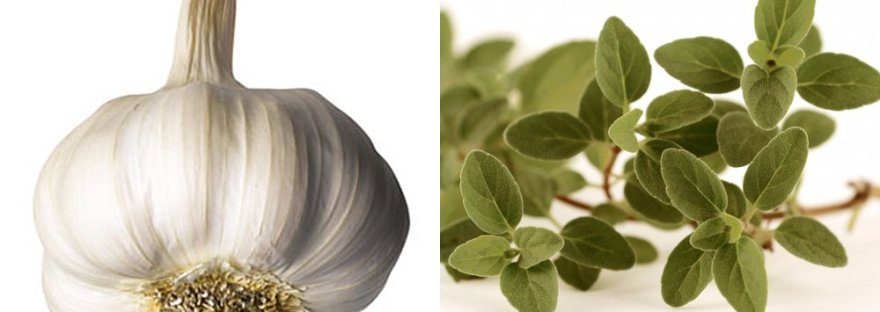
Garlic, 4 parts. The lead herb. A powerful antifungal against Candida that leaves the good bacteria you want to keep. It also gives the liver and colon a cleansing boost.
Oregano, 2 parts. One of the strongest natural antifungals there is. What I like most is that Candida doesn’t seem to build resistance to it the way it can to some other antifungals.
Pau D’Arco, 2 parts. Does two jobs at once. It gently loosens the bowels, not to the point of diarrhea, just enough to wash out the old waste the yeast hides in, and it is a strong antifungal in its own right.
Cat’s Claw, 1 part. Strengthens the white blood cells so they can go after Candida and other invaders, and calms inflammation in the gut.
Olive Leaf, 1 part. Stirs up the immune response and helps keep blood sugar steady, which matters more than people realize, since extra sugar is exactly what feeds a yeast overgrowth.
Ginger Root, 1 part. Ties it all together, easing digestion, supporting circulation and soothing the inflamed gut.
“Parts” can be any measure you like, as long as you use the same one for every herb. By weight, that’s 4 ounces of Garlic, 2 each of Oregano and Pau D’Arco, and 1 each of Cat’s Claw, Olive Leaf and Ginger.
Putting It Together
This one is different from most of my formulas. Instead of an extract, the powdered herbs are mixed well and put into capsules.
How Much and How Often
2 capsules three times a day.
With each dose, 15 drops of Black Walnut extract. Black Walnut is one of the strongest natural antifungals around, and it gives the whole approach more backup.
Clearing a Candida overgrowth is rarely a one-ingredient job. Changing what you eat and adding a good probiotic will do as much for your long-term balance as any antifungal. The antifungal herbs are what get you through the overgrowth; you won’t need them forever, just until things settle down. Track how you feel. As the yeast clears, the symptoms go with it.
My Own Approach
As much as I stand behind this formula, my own go-to for a stubborn yeast overgrowth is a strong standalone Olive Leaf extract. It is powerful, so build up to the full amount slowly over a few weeks rather than starting at full strength. That is how I cleared my own yeast issues, which I had in spades after nearly 15 years of living on antibiotics for kidney and bladder infections. If you’ve been on antibiotics for any length of time, you may be in the same boat I was, and there is a way back.
This is shared for educational purposes, from my own study and experience. It is not medical advice.
For years I resisted making a liquid calcium formula. Every calcium product I’d ever known was white and chalky: a pill, a powder, something solid you could see and trust. This one is a clear liquid extract, and I had a hard time believing something that looked like water could carry any real value.
But I genuinely needed a good source of calcium. Every calcium capsule I tried, no matter how well regarded, sent my kidneys into fits of pain after a single dose. That sensitivity has held true ever since, even after a great deal of healing in my kidneys over the years.
It took some serious coaxing from my mentor Jackie before I finally relented, collected the herbs and set the formula. When it was ready I took it alongside my daily Superfood, as always. That first evening I was pleasantly floored: my restless legs, which had plagued me for years, didn’t come to visit. Within about a month my fingernails had grown noticeably harder, no longer breaking or peeling the way they used to. And my kidneys had no complaint at all, because I wasn’t taking mineral calcium in the first place.
Why Plant Calcium Works
Calcium does far more than build bone. The body needs it for the nerve sheaths, the walls of the veins and arteries, and the teeth. But most calcium on the shelf is an inorganic mineral, the kind that can be swallowed but not truly assimilated. What the body can’t use, it has to deal with, and the kidneys are often left holding the leftovers.
Dr. Christopher taught that the minerals the body can actually use are the ones that have already gone through plant life: herbs, fruits, vegetables, grains, nuts and seeds. A plant takes the minerals out of the soil and turns them into a form our bodies recognize as food.
What a Good Calcium Formula Contains
A good plant-calcium formula might contain these four herbs:
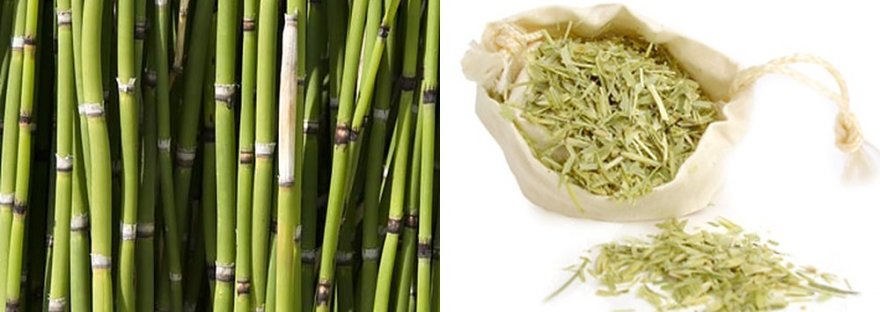
Horsetail Grass, 6 parts. The lead herb. It is rich in silica, which the body converts to calcium, and it carries manganese, zinc, iron, magnesium and phosphorus as well.
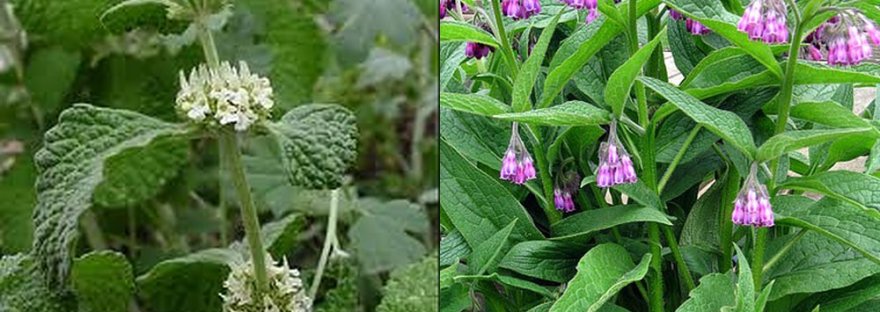
Comfrey Root, 4 parts. Adds its own calcium, phosphorus, potassium and iron, along with allantoin, long credited with speeding tissue repair.
Oat Straw, 3 parts. A nourishing herb for the nerves that adds more calcium, phosphorus, potassium and magnesium.
Lobelia, 1 part. A small amount that helps carry the rest of the formula where it is needed.
“Parts” can be any measure you like, as long as you use the same one for every herb. By weight, that’s 6 ounces of Horsetail, 4 of Comfrey, 3 of Oat Straw and 1 of Lobelia.
Putting It Together
Put the dry herbs in a glass jar and pour in 80-proof vodka. Once the herbs have settled, you want about 60% herb sediment on the bottom and 40% liquid on top. Shake the jar every day. The traditional timing follows the moon, from the new moon to the full moon, about two weeks. I prefer to let my extracts sit a full three months, which makes them good and strong. Then strain and bottle the liquid.
How Much and How Often
This is a food formula, so it can be used freely. I suggest 1 teaspoon three times a day.
Take it alongside a good whole-food nutrition blend. I discovered over the months that this formula needs that extra nutrition to do its job well.
Calcium from Eggshells
Dr. Christopher taught that sugar leaches the calcium out of the body, and that pregnancy and nursing draw on the mother’s calcium, from her bones and teeth if need be. Besides his calcium formula, he gave this old way of getting natural calcium from eggshells:
Pull out the thin membrane that lines the inside of each shell.
Dry the shells at room temperature, or in an oven under 130°F.
When thoroughly dry, powder them in a blender, nut mill or with a rolling pin.
Cover the powder from one dozen shells with one pint of apple cider vinegar (or lemon juice, which spoils sooner). Use a large container, because it foams.
Adults take two or more tablespoons, alone or in distilled water, tea or juice; children the same, in proportion. Some like to add a tablespoon of honey to each tablespoon of the vinegar-calcium mix.
This is shared for educational purposes, from my own study and experience. It is not medical advice.
Over the weekend a member texted me with a horrid cough, and I realized I had nothing on my blog to send him to. I’ve mentioned this formula in my flu posts for years but never written it up. So here it is.
The bronchial tubes carry air to and from the lungs. They’re lined with a thin layer of mucus that traps dust, germs and irritants before they can reach the delicate lung tissue beneath. When all is well, that mucus stays thin and is cleared quietly, without our ever noticing.
When the bronchial tubes are irritated, that mucus thickens into old, hard debris the body can’t seem to cough out on its own. Left there, it keeps irritating the airway, and the body keeps trying to cough it up. That is how a cold or flu turns into a nagging cough that hangs on for weeks. Stop the coughing by clearing out what is causing it.
One summer, in a vegan cooking class I was teaching, a woman couldn’t stop coughing. She’d been a missionary in Ecuador and had come home so her chronic cough could finally get some attention. She started on this formula, and a cough that had been with her for who knows how long was gone within a week.
What a Good Bronchial Formula Contains
A good formula for clearing the bronchial tubes might contain these seven herbs:
Comfrey Root, 4 parts. The lead herb. Comfrey soothes irritated tissue faster than almost anything I know, and it helps loosen the old mucus so it can come up.
Horehound, 4 parts. A classic bitter expectorant that breaks up thick, tough phlegm and moves it out of the chest.
Boneset, 4 parts. Long used for chest colds, flu and lingering congestion. Its old names, feverwort and ague weed, come from exactly this kind of use.
Coltsfoot, 4 parts. Its Latin name, Tussilago, means “cough dispeller.” It is soothing and slippery, and it calms an irritated throat and bronchial tubes while it helps clear them.
Elecampane Root, 2 parts. A warming bitter with a long history with old, stubborn chest congestion.
Ginger Root, 1 part. The circulation herb. It moves blood and clears waste at the capillary level, carrying the rest of the formula to the tissue that needs it.
Lobelia, 1 part. Just a small amount to relax the throat, stomach and bronchial tubes so the rest of the formula can do its work.
“Parts” can be any measure you like, as long as you use the same one for every herb. By weight, that’s 4 ounces each of the first four herbs, 2 ounces of Elecampane, and 1 ounce each of Ginger and Lobelia.
How It Works
Comfrey, Horehound, Boneset and Coltsfoot are all expectorants. Together they help the body loosen and bring up the old, hardened mucus that a cough alone can’t move. Elecampane adds its own warming help with stubborn congestion, Ginger carries the formula where it’s needed, and the touch of Lobelia relaxes the airway so the mucus can come up instead of the coughing just going on and on.
As the old debris clears, the irritation goes with it, and the cough quiets down because there’s nothing left to cough up. It also works very well for general chest congestion.
When a Coughing Spasm Hits
Sometimes a cough turns into a spasm, where you simply can’t stop. For that, take a full dropper of Lobelia extract by itself. Lobelia is one of the best antispasmodics there is, and it relaxes the bronchial tubes quickly so the spasm lets go. You can read more about this wonderful herb in my post LOBELIA.
Putting It Together
Put the dry herbs in a glass jar and pour in 80-proof vodka. Once the herbs have settled, you want about 60% herb sediment on the bottom and 40% liquid on top. Shake the jar every day. The traditional timing follows the moon, from the new moon to the full moon, about two weeks. I prefer to let my extracts sit a full three months, which makes them good and strong. Then strain and bottle the liquid.
How Much and How Often
The usual amount: ½ to 1 teaspoon every 3 to 5 hours.
When the cough is bad: 1 teaspoon in a mug, filled halfway with boiling water. Sip it warm, about every 3 hours, five times a day.
For a coughing spasm: a full dropper of Lobelia extract on its own.
Body size makes a real difference in how much of any formula a person needs, so a smaller person or a child needs less. Adjust the amount to what actually works.
Where It Fits
A cough is often the tail end of a cold or flu, and this formula works right alongside the rest of the infection support I use. For getting the body ready before the season hits, see Getting Ready for Flu Season. For fighting the infection itself, see Our Two Infection Fighters.
This is shared for educational purposes, from my own study and experience. It is not medical advice.
“Are we trying to arouse the Lord’s jealousy? Are we stronger than he?” Paul asks in 1 Corinthians 10:22 (NIV). He is still speaking to believers who thought they could eat at the Lord’s table and then sit down at the idol feasts as well. His question goes straight to the heart: do we really think we can handle the enemy on our own ground?
Jude gives us a scene that answers it. When Michael the archangel, whom I understand to be Christ himself, contended with the devil over the body of Moses, he did not argue. He did not debate Satan’s accusations. He simply said, “The Lord rebuke thee” (Jude 9), raised Moses up, and left the devil without another word. All the power in the universe, and he did not even mentally arm wrestle with the devil. He did not give Satan the satisfaction of an argument.
If Christ refused to contend with the devil, do we think it is our duty to spar with him?
Resisting is not sparring
James tells us, “Resist the devil, and he will flee from you” (James 4:7). But resisting the devil is not arguing with him. It is refusing to sit at his table, never putting ourselves on his ground, where we can easily come under his deceptions. Satan and his minions have no ability to distress or annoy us unless we sit down at their table and entertain ourselves there.
We are surrounded with all the support heaven has to offer: a full set of armor, the Holy Spirit as our constant guide, and our angels always with us. We alone can break faith with our Savior and wander into Satan’s dining room. Our only job is to choose which side we will join, and to accept the invitations that come to us each day to sit at the Lord’s table.
The wrath we do not want
Phillips renders Paul’s question, “Are we trying to arouse the wrath of the Lord?” Understood rightly, God’s wrath is letting us go, allowing us to experience the results of our own poor choices, just as Romans 1 says God “gave them up.” We do not want Christ to leave us to ourselves.
He is jealous for our loyalty, not out of pettiness, but because he knows that if we put our trust anywhere else, we will be destroyed. He is Love, drawing us to himself by his Love and Grace. If we resist him, we are left with no protection against the overwhelming deceptions of the king of fantasy land. Christ will lose us. The battle for our very existence is at stake.
No partial healing
The Remedy translation puts Paul’s second question in terms of healing: the Lord will not settle for a partial cure; he wants selfishness removed from the heart completely. Do we think we can heal ourselves, that we have a more powerful remedy than his?
Every time we choose to act in a better way, however small or inconsequential the choice seems, it has an effect on our minds. We are choosing to be healed, choosing to let Christ heal our hearts and minds. Once we make that choice, Christ through the Holy Spirit fills our lives with the power we need to stick with it. It all comes from him.
So let us protect our relationship with the Lord. Let us not entertain, even for a moment, the suggestions, thoughts or emotions that would draw us back to the old table. Fill the mind with uplifting thoughts, stay active, and build new habits. They will not feel as comfortable as the old ones at first. Stay with them, and we will discover this is who we truly are.
“You cannot drink the cup of the Lord and the cup of demons too; you cannot have a part in both the Lord’s table and the table of demons.” (NIV)
In Corinth, the question was literal. Meals were eaten in pagan temples, and the meat came from the altar. Paul tells the believers that sitting at a table means sharing fellowship with the one the table belongs to. You cannot eat at the Lord’s table and the idol’s table and remain undivided.
We may not face temple feasts, but the two tables are still set before us every day. The Remedy translation shows what is really at stake: we cannot internalize both the character of Christ and the character of demons. What we eat becomes who we are.
The choice must be made
You cannot choose both, and failing to make a conscious choice is itself a choice for the devil’s table. The Lord will not press Himself into your life or insert Himself where He is not asked. This is not because He does not care, but because no one can be healed without their permission and cooperation. Christ brings everything: the calling of your heart toward something better, the situations that make you face yourself, and the power to follow through. The one thing He cannot provide is your choice.
When Adam fell, God promised to put enmity between the serpent and humanity. That enmity works like a blanket of Grace around our world, a gentle tug on our minds and hearts upward to Christ. It is His invitation to His table. We are free to resist it, and every time we do, we build up muscles against the call to come and be healed.
Seated by small choices
We take our seat at Christ’s table through little things: each choice to bless someone at the expense of our own comfort, a simple kindness to a stranger, a helping hand when our time is rushed. These small choices are how we eat His bread and drink His cup.
In the same way, every missed opportunity Grace has made us aware of seats us at the other table: the person we passed on the other side of the road because we had important business. We go on unaware that we have just accepted bread and wine at the table of demons. Looking the other way gets easier, and the invitations to grow and become more lie unopened on the floor. Grace still draws, but we have trained ourselves not to feel it.
The other road is to answer the call: never passing a struggling soul without giving them something to brighten their day. And each time we give of ourselves, we find our cup refilled and our bread basket full. The Lord’s table is never lacking.
It is the heart that chooses
Outward kindness put on for show does not seat us at Christ’s table; it is still self-focused. The heart chooses the table. And when the heart of Christ is in us, we can see His presence flickering dimly in a wounded soul whose troubled life has left its marks. Let that person see you. Love them, value them as a child of God, and let the Spirit guide your time together. Trust comes first; then they will allow you to love them.
Two tables are set before us today. We cannot sit at both. Every small choice is a meal, and every meal is shaping who we are becoming. Which table will you choose?